Why the first clue is easy to miss
Bed bugs come out to feed while you are asleep and spend the rest of their time pressed into narrow gaps. A handful of them in a new infestation leaves very little behind, and what they do leave looks like dirt or fluff at a glance. The sooner you know what the real signs look like, the smaller the problem is likely to be when you find it.
Tiny dark spots on the sheets and seams
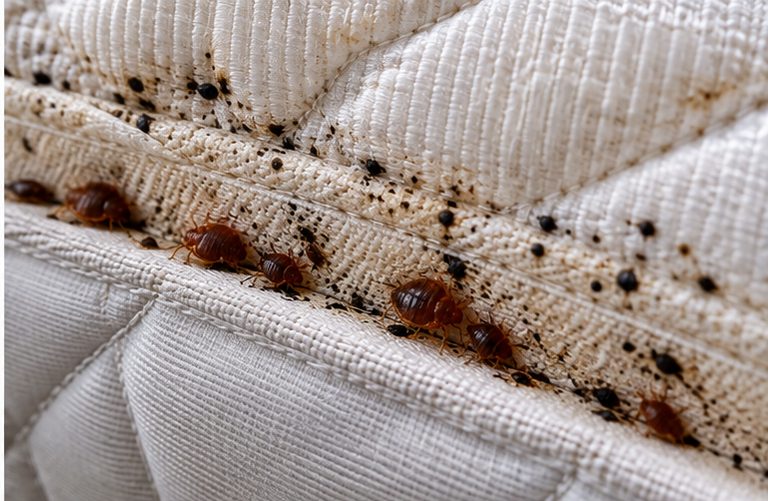
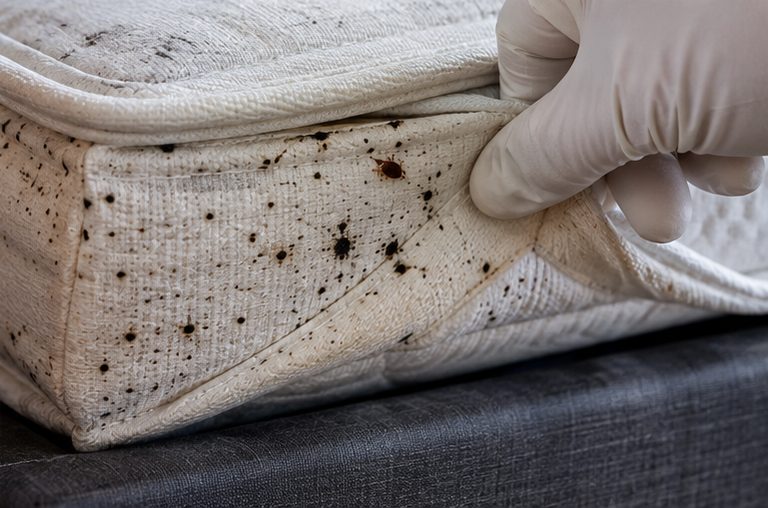
The most dependable early sign is a scatter of black or dark brown dots, roughly the size of a full stop. They are digested blood passed by the bugs, and they sit on fabric like ink from a fine felt-tip pen. Rub one gently with a damp cotton bud: bed bug spotting smears a rusty red rather than flaking away. Look along the seams and piping of the mattress, around the label and in the corners of the fitted sheet before anywhere else.
Shed skins and pale eggs
A young bed bug sheds its skin five times on the way to adult size. Each moult leaves an empty, see-through, light brown casing that keeps the outline of the insect. Eggs are about a millimetre long, pearly white, and usually glued in small groups inside a crease or crack. Both are easy to overlook without a torch; the zoom on a phone camera helps a lot.
The bugs themselves
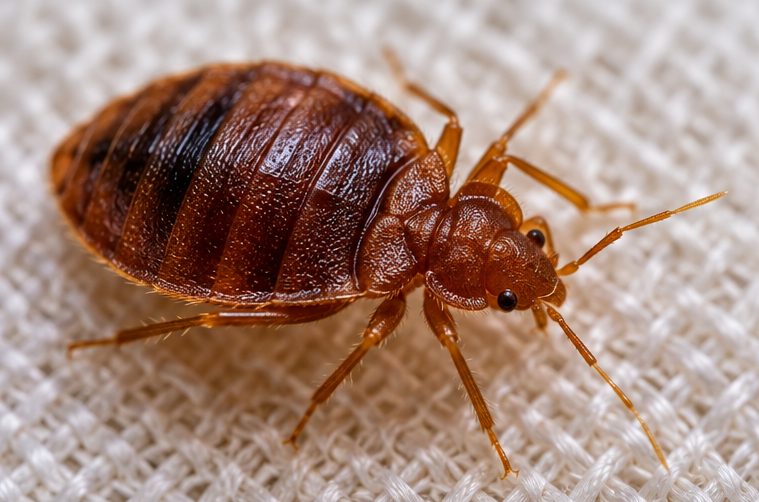
An adult is flat, oval and reddish-brown, about the size of an apple seed. After a meal it swells, darkens and looks longer and rounder. Nymphs are smaller and paler, almost straw-coloured until they have fed. Bed bugs cannot fly or jump; they crawl, and not especially quickly. If you catch one, stick it to clear tape or photograph it beside a coin, which makes identification far easier later.
Small blood marks on bedding
Rust-coloured streaks or smudges on a pillowcase or sheet can appear when a bug that has just fed is rolled on in the night. On their own they could come from a scratched bite or a nosebleed, so take them as a reason to look more closely rather than as confirmation.
A sweet, musty smell
Only a larger, long-standing infestation gives off an odour you would notice, often compared to damp laundry left too long in the machine. If you can smell it, there will almost always be plenty of other evidence close by. Not smelling anything rules nothing out.
Why bites on their own prove nothing
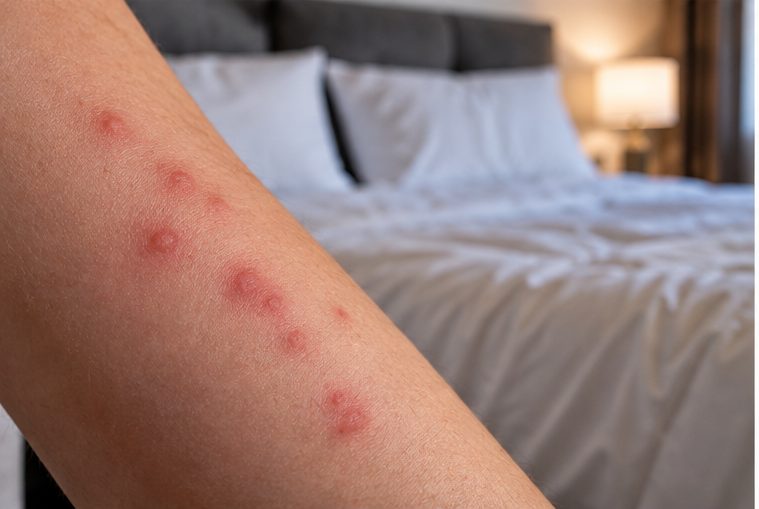
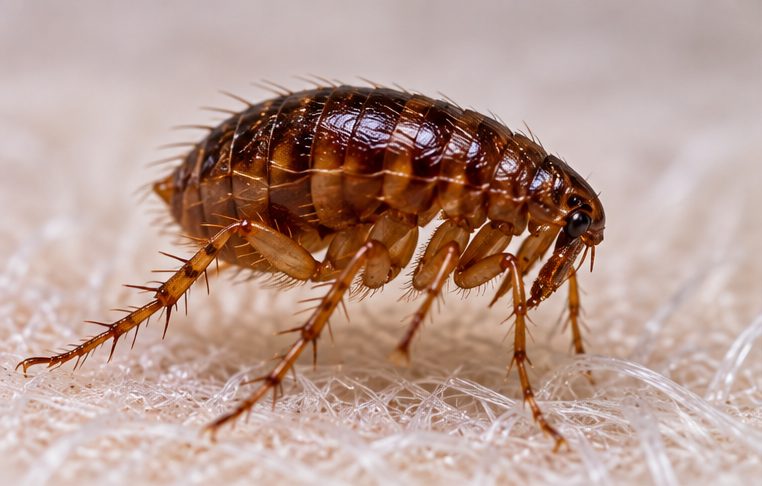
Bites are usually what starts the search, but they are not evidence. Reactions vary enormously: one person can wake with itchy red marks while the partner beside them shows nothing at all, and a reaction can take days to appear. Mosquitoes, fleas, mites and skin conditions can all leave similar marks. If you are unsure which insect is involved, bed bugs or fleas sets out the differences. For itchy or inflamed bites, speak to a pharmacist or GP, and call 999 if someone shows signs of a severe allergic reaction.
A five-minute check tonight
- Strip the bed and follow every seam, fold and label of the mattress with a torch
- Lift the mattress and look at the base, the slats and the corners of the frame
- Check the back of the headboard, especially where it is fixed to the wall or frame
- Shine the torch along the carpet edge on the side of the bed you sleep on
- Open the bedside table drawers and look in the gap behind the unit
A fuller search, room by room, is in where bed bugs hide during the day.
What to do once you are fairly sure
Stay in your usual bed rather than decamping to the sofa or a spare room, which only gives the bugs somewhere new to settle. Leave shop-bought sprays, foggers and bug bombs on the shelf — they are not recommended. If you rent a room in a shared house or HMO, in Kilburn or anywhere else, tell the landlord now, because neighbouring rooms may need checking. Remember that bed bugs say nothing about how clean your home is. Then book bed bug control in Brent, which costs £220 for the first room and £120 for each additional room. Wondering how they arrived? See how bed bugs get into a home.