Carpet beetles in London homes
The varied carpet beetle is the species most often found indoors in the UK. The adults feed on pollen outdoors and come inside to lay eggs; the larvae, known as woolly bears, eat wool, fur, feathers, silk and the fluff of hair and dead insects that gathers in any house. Older London houses give them plenty of cover in the gaps between floorboards, under the edges of fitted carpet, and in lofts where pigeons, sparrows or starlings have nested in the eaves. The adults are most often seen from spring into summer, but in a warm house the larvae can keep feeding through much of the year.
Beetle or moth? Read the damage
Both insects eat the same materials, so look closely at what has been left behind.
- Silk tunnels, webbing or small cases in the pile point to moths
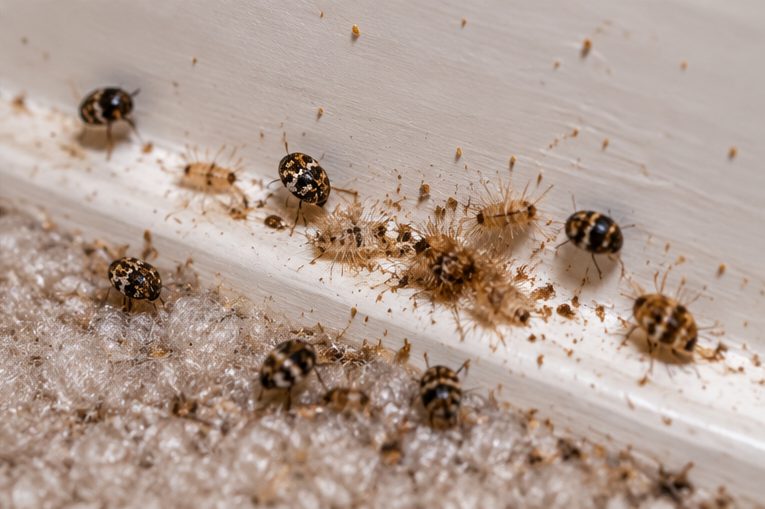
- Bristly, hollow, light brown shed skins point to carpet beetle larvae
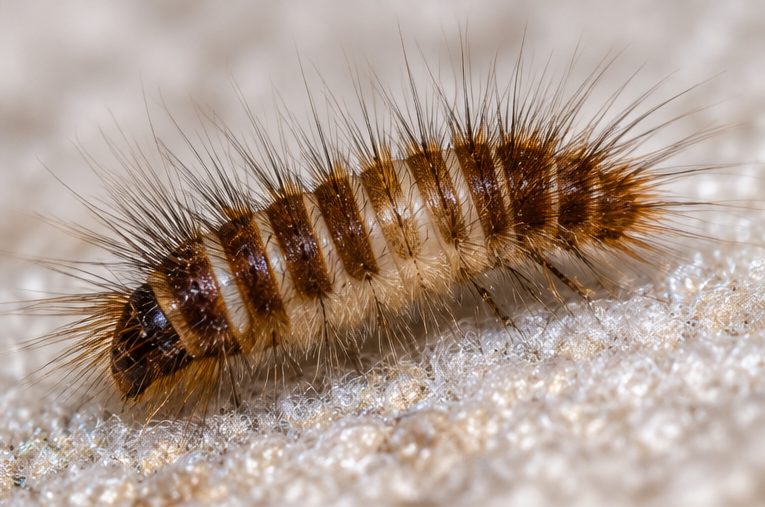
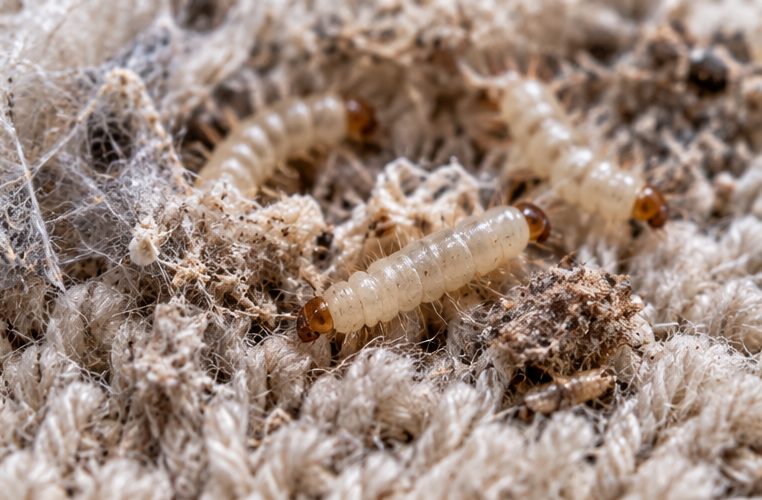
- Beetle larvae are short, oval, hairy and banded brown, and move slowly; moth larvae are smooth and creamy white
- Beetle damage is often a scatter of separate holes, where moths tend to graze broader patches
Carpet beetles and carpet moths compared and what carpet beetle larvae look like have the detail. If it proves to be moths, see getting rid of carpet moths.
Beetles on the windowsill
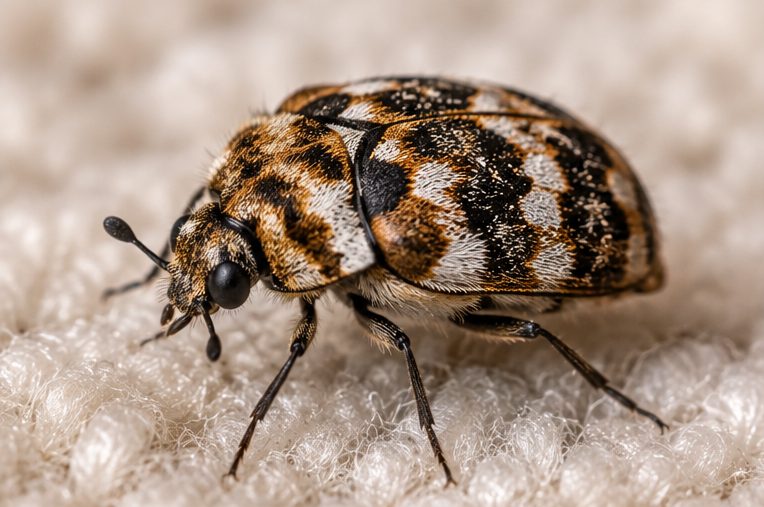
Small, round, mottled beetles on window ledges in spring and early summer are adults that grew up indoors and are now heading for the light and the flowers outside. A few every year is a sign that larvae have been feeding somewhere in the house. Why carpet beetles appear on windowsills explains how to use them as a clue. Collect them with the vacuum or a damp cloth, then check the curtains, the carpet below the window and, in a top-floor room, the loft above.
Finding where they breed
Larvae stay hidden, so the breeding site is rarely where the holes first show. Work through these, starting with the places nobody cleans:
- The loft and eaves, especially around old birds' nests
- Gaps between floorboards and under the edges of fitted carpet
- Under beds, sofas and heavy furniture that never moves
- Wardrobes, drawers, blanket boxes and bags of stored clothes
- Airing cupboards, and anywhere dead insects or pet hair collect
Where carpet beetles hide covers each spot. Clear an old bird's nest only once it is no longer in use: in the UK it is an offence to damage or destroy a wild bird's nest while it is being built or used.
What you can do now
- Vacuum floorboard gaps, carpet edges and under furniture with the crevice tool, then empty the cleaner outside
- Wash affected clothes and textiles at the highest temperature the care label allows, or have them dry-cleaned
- Store clean woollens in sealed bags or lidded plastic boxes
- Bag badly damaged items that cannot be cleaned before they leave the room, then throw them out
- Keep a larva or beetle in a sealed clear bag or jar so it can be identified
Pay attention to places where natural fibre and dust meet: under a radiator, round the edge of a wool rug, along a bookcase standing on carpet, or inside a piano, whose felts the larvae will eat. Old woollen underlay, dried pet food and dead flies on a sill can all keep larvae going too.
Clothes, furniture and other damage
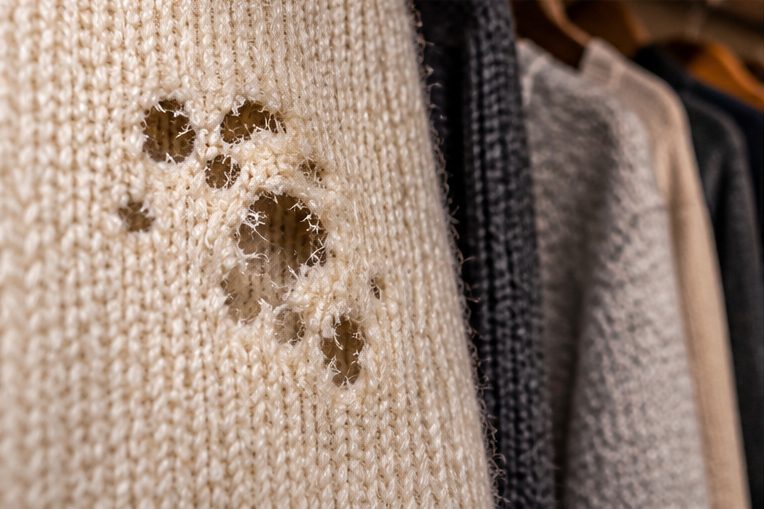
Beyond carpets, the larvae will eat woollen clothes, felt, fur trims, feather pillows and the natural fillings of some upholstered furniture. Carpet beetles in clothes and furniture helps you sort what to keep, and the damage carpet beetle larvae cause explains how to judge how far it has spread.
Itchy skin
Carpet beetles do not bite, but the tiny hairs on the larvae can irritate some people's skin and cause a rash that is easily mistaken for bites. Carpet beetle larvae and skin irritation explains more. Washing bedding and vacuuming the bedroom carefully can reduce contact while the source is found. If a rash does not settle, speak to a pharmacist or GP.
Mistakes to avoid
- Clearing beetles off the windowsill and assuming that is the end of it
- Treating one rug while larvae carry on breeding under the floorboards or in the loft
- Putting damaged clothes back in the same wardrobe
- Leaving an abandoned nest or a drift of dead insects in the loft
- Bringing home second-hand rugs or wool coats and storing them without cleaning them first
When to call, and cost
Call if you keep finding larvae after cleaning, the damage is spreading or in more than one room, or you cannot find the source. How long carpet beetle treatment takes explains what the timescale depends on, and preventing carpet beetles returning covers the habits that help afterwards. Before a visit, clear the floors, vacuum the edges and bag the textiles in the affected rooms, and tell us if birds have nested in the loft. Carpet beetle treatment in London is £180 for the first room and £60 for each additional room, so two bedrooms come to £240. Book carpet beetle treatment and say which rooms have signs.