Why the species matters
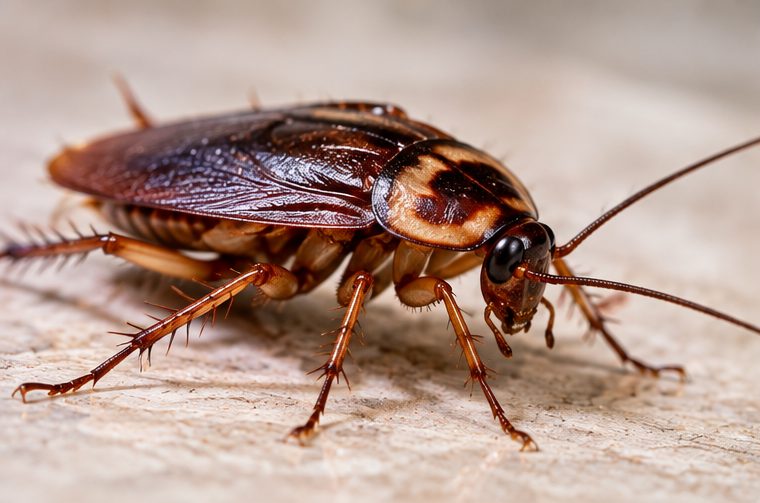
The species tells you where to look, how fast numbers are likely to grow and where the insects are probably coming from. It is one of the first things we ask about when you get in touch, so a clear description or a photo is genuinely useful.
The German cockroach at a glance
- Size: about 12–15mm long as an adult
- Colour: light brown to tan
- Markings: two dark parallel stripes on the shield just behind the head
- Wings: present on adults, though they seldom fly
- Preferred spots: warm, humid places indoors
The Oriental cockroach at a glance
- Size: about 20–25mm long as an adult
- Colour: dark brown to almost black, with a glossy shine
- Markings: no stripes behind the head
- Wings: shorter than the body in males and reduced to small stubs in females; they do not fly
- Preferred spots: cooler, damp areas, often at or below ground level
Where each one lives
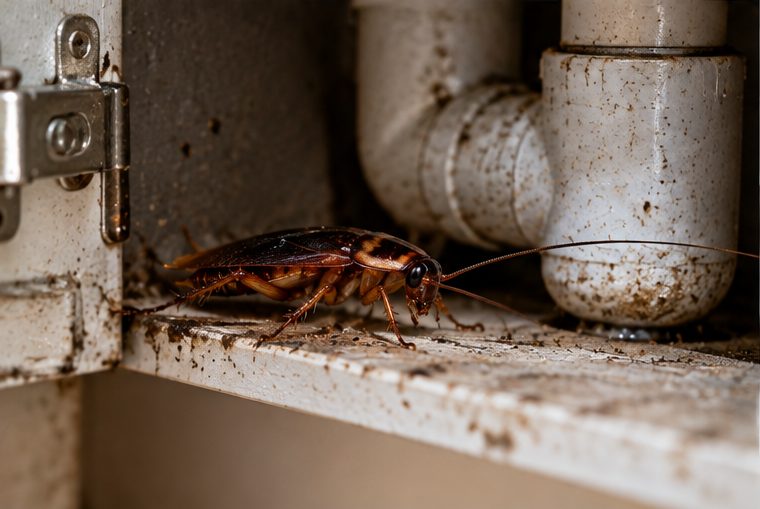
German cockroaches depend on heat and do poorly outdoors in a British climate. They stay behind fridges and cookers, inside dishwashers, microwaves and other appliances, and in boiler cupboards. Oriental cockroaches choose cooler, damper places: drains, basements, the voids under floors, ducts and ground-floor rooms. In the older terraces of Kensal Green they may come up from the drains, and in Willesden homes with suspended timber floors the space underneath can shelter them.
Climbing and movement
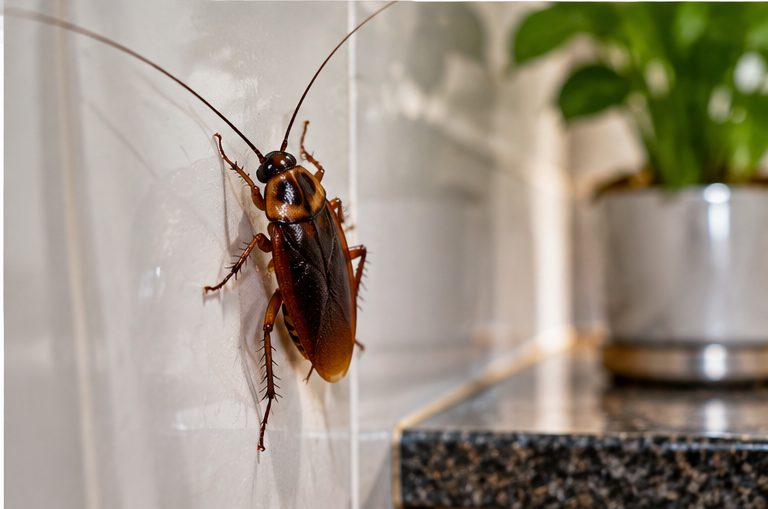
German cockroaches are quick and can run up smooth vertical surfaces such as glazed tiles and glass. Oriental cockroaches are slower and struggle on smooth vertical surfaces, so they tend to be found on floors, at low level and sometimes stuck in a sink or bath. A dark cockroach high on a gloss-painted wall is less likely to be Oriental.
Breeding speed
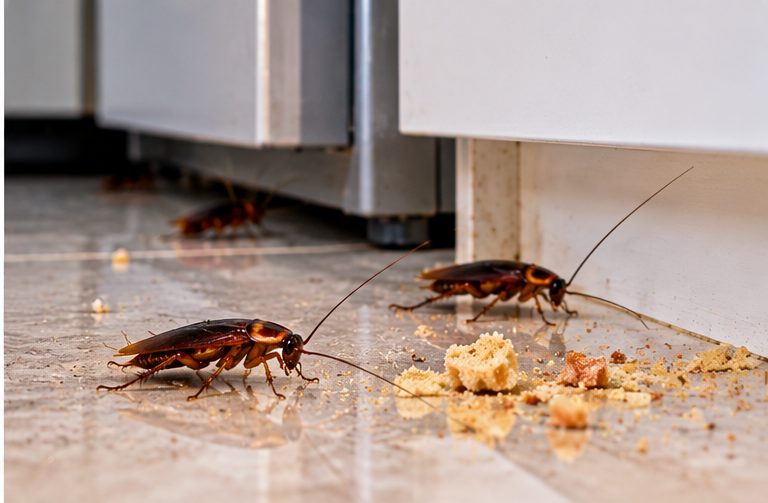
This is the difference that matters most in practice. A German female carries her egg case until the eggs are about to hatch, which keeps them protected, and each case holds dozens of eggs. The young mature quickly in a warm kitchen, so a handful of German cockroaches can become a serious problem within a few months. Oriental females drop their egg cases, which hold fewer eggs, and the young develop more slowly, so numbers build at a steadier pace.
Telling the young apart
Nymphs have no wings and can look quite unlike their parents. Young German cockroaches are dark, almost black, with a pale band running down the middle of the back. Oriental nymphs are reddish-brown to dark and resemble small, wingless versions of the adults. Finding young ones of either kind means the insects are breeding in the property rather than wandering in one at a time, a point covered in how cockroaches get into properties.
Seasons and sightings
German cockroaches live indoors in stable warmth, so they can be active in any month. Oriental cockroaches are often more noticeable in the warmer part of the year, when adults are out and about at ground level. Either species is mainly seen after dark, for reasons set out in why cockroaches appear at night.
Getting a positive identification
Trap one under a clear glass or photograph it beside a coin, then look at the area behind the head for the two stripes. Record where you found it and at what time. The rest of the evidence — droppings, egg cases and shed skins — is described in the signs of a cockroach infestation.
Beetles are sometimes mistaken for cockroaches. A beetle has hard wing cases that meet in a straight line down its back and usually shorter antennae; a cockroach has a flattened body and long, whip-like antennae that are always moving. Other cockroach species do occur in the UK but are far less likely to turn up in a home.
Dealing with either species
Both need proper treatment, and the approach takes account of which one is present and where it lives. What affects the timescale is explained in how long cockroach treatment takes. Whichever species you have, cockroach control in Brent is £190 for a flat or £240 for a house. Book cockroach control and tell us what you think you have seen.