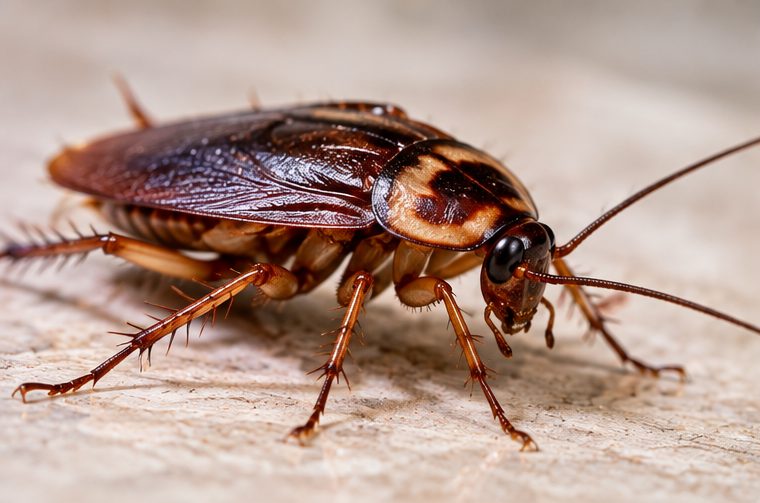
What makes a good hiding place
Cockroaches feel safest pressed into a crevice, and a gap only a few millimetres wide will hold a small German cockroach. Add the heat given off by appliances and the water around sinks and dishwashers, and the busiest spots are nearly always within a short run of a warm motor or a pipe. Food matters less than you might think, because a few crumbs go a long way.
Behind and beneath the fridge
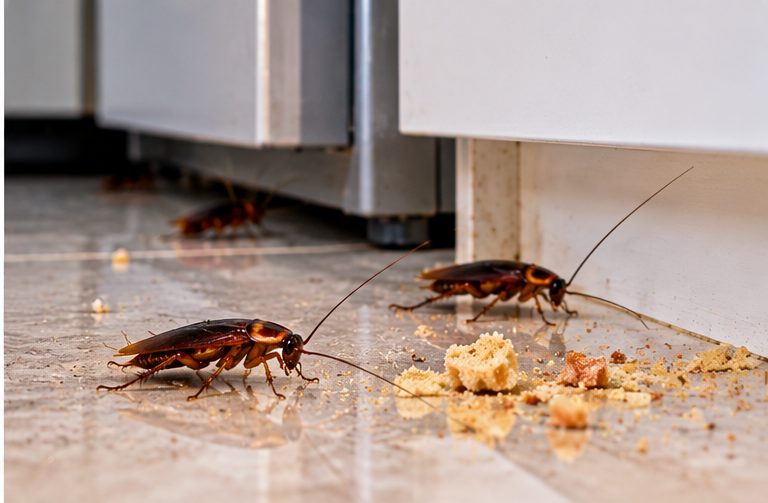
The compressor and coils at the back of a fridge or freezer stay warm day and night, and the drip tray underneath can hold standing water. Dust and crumbs gather behind it because it is so rarely moved. To check, ease the appliance out slowly and look over the back panel, the coils and the patch of floor where it stood.
Cookers, ovens and microwaves
Grease and crumbs slip down the sides of a freestanding cooker into the gap beside the worktop. Cockroaches also get inside the casings of ovens, microwaves and toasters, where the insulation holds warmth long after cooking has finished. Look along the side seams, around control panels and at the door hinges.
Dishwashers and washing machines
These appliances combine warmth with water. Check the space behind the kick plate, the door seal and the point where the hoses join the plumbing. A slow leak that nobody has noticed under a machine makes the area far more attractive.
Under the sink
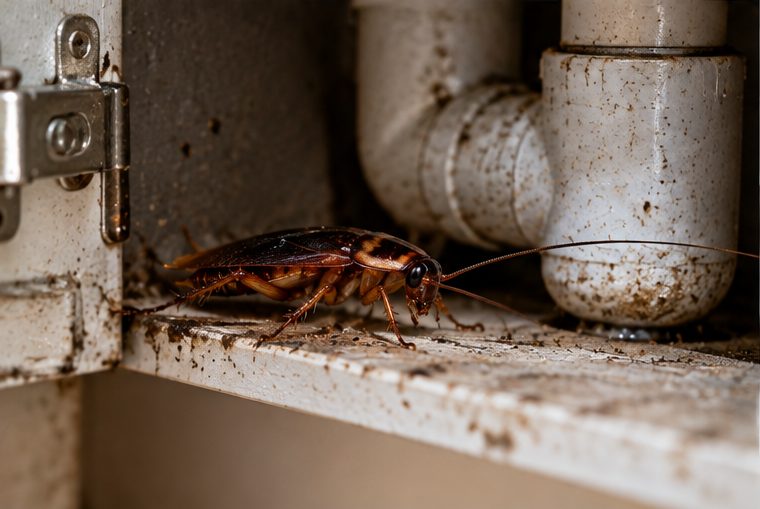
The cupboard below the sink has pipes passing through holes in its back panel, usually with room to spare around them, plus condensation and sometimes a drip. Oriental cockroaches in particular like this cool, damp space. In a block of flats those pipe holes may open straight into a service duct — see can cockroaches spread between flats.
Plinths, hinges and cupboard corners
- The void behind the plinth boards at the foot of fitted units
- Hinge recesses and the top corners of wall cupboards
- Cracks where a worktop meets a tiled splashback
- Holes cut in the backs of units for cables and pipes
- Folded cardboard packaging and paper bags kept in cupboards
If the plinth void holds droppings the size of rice grains and gnawed packaging instead, you are more likely looking at rodents — mice behind kitchen units covers that.
Boiler cupboards and electrical fittings
A boiler, a hot water cylinder or a run of heating pipes keeps a cupboard warm all year. Cockroaches also shelter behind plug sockets and light switches and inside the housings of electrical equipment. Do not open electrical fittings yourself; make a note of where you have seen activity and mention it when you get in touch.
Bins, pet bowls and recycling
The kitchen bin, the recycling box and the corner where the pet eats are feeding stations rather than hiding places, but cockroaches often rest in the nearest crack to them. Look under the bin, behind the recycling and along the skirting closest to the pet bowls. Tiny pale ants turning up in the same warm spots are a different problem, explained in Pharaoh ants vs garden ants.
When the best spots are full
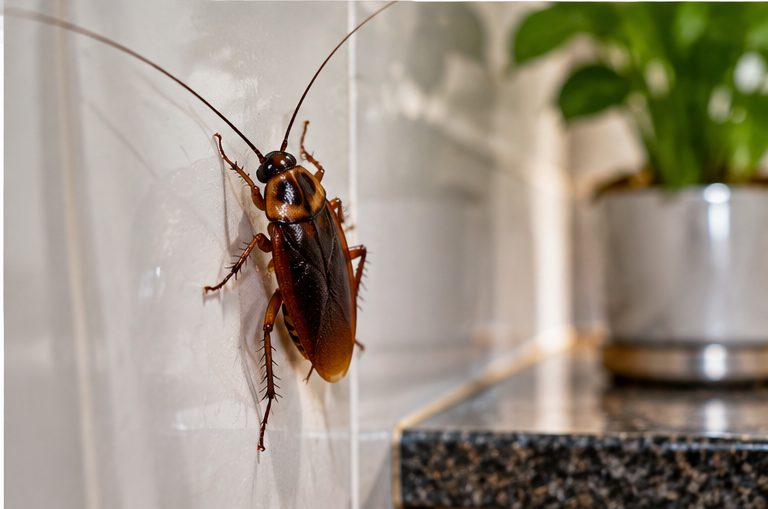
As a population grows, the ideal hiding places fill up and cockroaches move to less comfortable ones: a door frame, the bathroom, even the living room. Finding them away from the kitchen generally points to a larger problem, which is why it pays to look for the signs of a cockroach infestation throughout the home rather than in one room.
Getting the kitchen treated
Resist emptying an aerosol into the gaps you have found, because it can drive cockroaches into walls and neighbouring units while the egg cases stay untouched. In a shared kitchen, such as those in the HMOs and shared houses of Kilburn, everyone who uses the room needs to know what is happening. For a home, cockroach control in Brent is priced at £190 for a flat and £240 for a house, while restaurant and café kitchens, including premises in Park Royal, are quoted per site. Book cockroach control and say which appliances are affected.