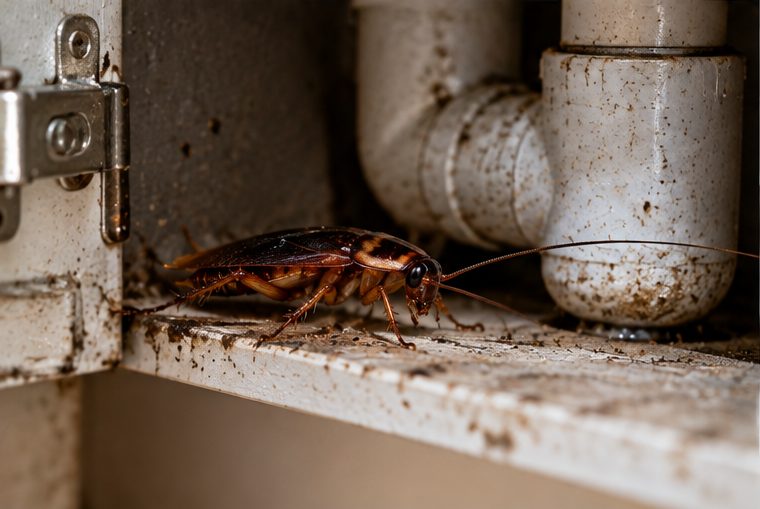
A nocturnal insect
Cockroaches are active mainly in the dark. They spend daylight hours packed into their refuges and emerge once a room goes quiet to search for food and water, returning to cover before morning. The rhythm comes from an internal body clock as well as from light levels, so it carries on even in a kitchen that stays dim during the day.
Why they run from the light
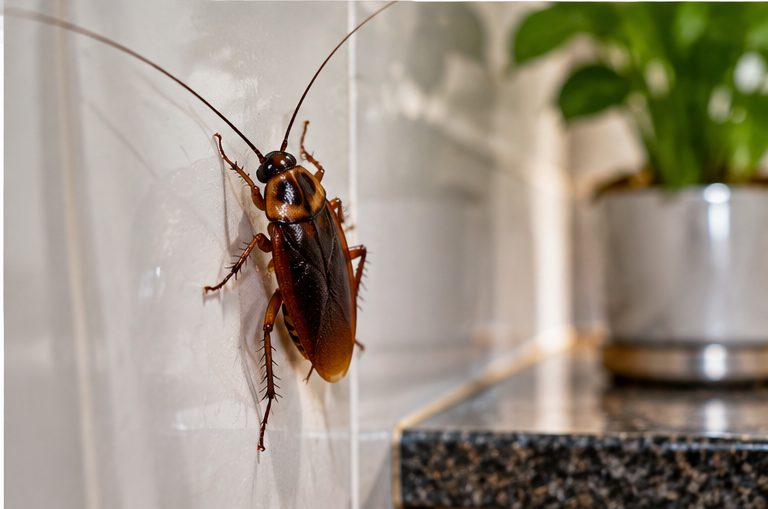
A sudden change in light is a warning. Cockroaches are also highly sensitive to vibration and to movements of air, and a person stepping into the room sets off an escape response in a fraction of a second. They race for the nearest crack, which is often the one they came from, so the direction they run shows you roughly where they are living.
Quiet homes and busy kitchens
In a family home the kitchen is often empty from late evening until breakfast, which hands cockroaches hours of undisturbed time. In a restaurant or takeaway, activity tends to begin once service ends and the lights go down. People who work shifts sometimes notice them at unusual hours for the same reason: the insects respond to quiet and darkness as well as to the time of night.
What a daytime sighting can mean
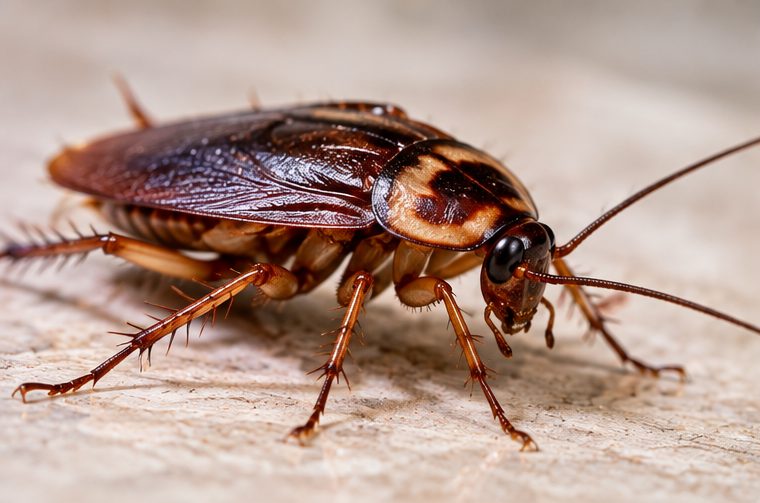
A cockroach out in the open in full daylight is behaving unusually. Often it means the hiding places are crowded and some insects are being pushed out to feed at riskier times, which suggests a sizeable population. It can also follow a disturbance: a kitchen being refitted, an appliance being moved, building work next door or a burst of DIY spraying. Renovation projects, like those in Queen’s Park, open up voids and can bring hidden cockroaches into view. Either way, it is a reason to look more closely.
Doing a night-time check
- Leave the kitchen dark and undisturbed for at least an hour
- Walk in quietly and switch the light on in one go
- Watch the floor, the worktops, the sink and the tops of the cupboards for the first few seconds
- Note which gap each insect makes for
- Repeat on two or three nights before drawing any conclusions
Pair what you see with the other evidence described in the signs of a cockroach infestation.
Where they go at dawn
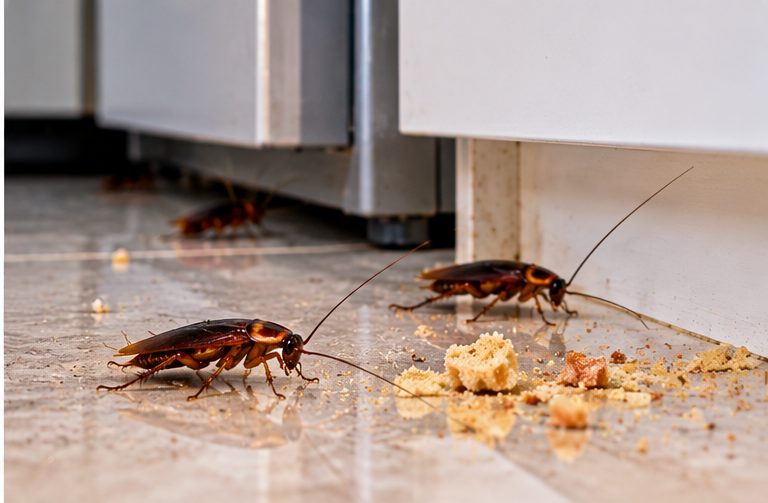
By morning they are back in warm, tight spaces behind appliances, beneath the sink, in hinge recesses and in the voids behind fitted units. Those daytime refuges are mapped out room by room in where cockroaches hide in kitchens.
Night-time travel through a building
After dark cockroaches cover more ground than you might expect, including along pipework and through ducts linking one home to the next. In the blocks of flats around Wembley, an infestation in another flat can show up in your kitchen at night — can cockroaches spread between flats looks at how.
Why leaving a light on does not help
It is tempting to keep the kitchen lit overnight, but cockroaches simply stay inside the dark voids behind units and appliances, where the light never reaches, and come out whenever the room is quiet enough. You will see fewer of them, which makes the problem harder to judge, while breeding carries on out of sight. Darkness is useful to you: it is when a check tells you the most.
Making their night less rewarding
Before bed, wipe the worktops and hob, rinse the sink and leave it dry, seal food away and take the rubbish out. Lift pet food bowls. None of this will clear an infestation, but it cuts down what cockroaches find on their rounds and makes fresh droppings easier to spot.
When night checks keep finding them
If cockroaches turn up night after night, or you have seen them in the day, arrange treatment rather than waiting to see whether they go; how long cockroach treatment takes explains what to expect. Cockroach control across Brent is £190 for a flat and £240 for a house. Book cockroach control and mention when and where you have been seeing them.