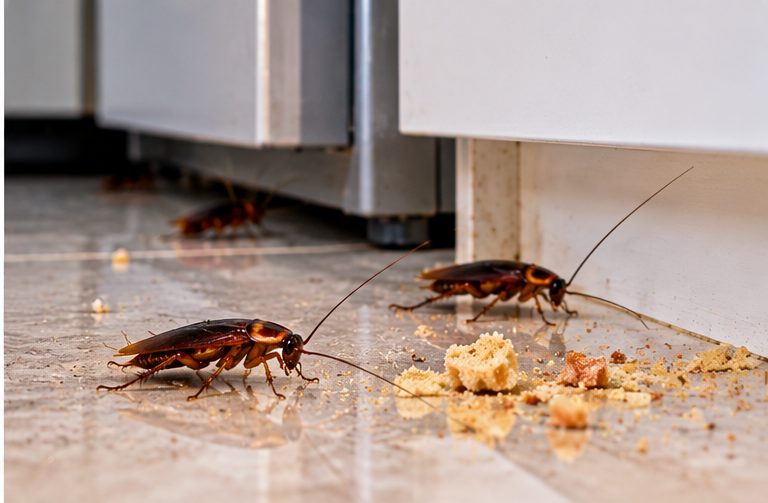
Why the evidence comes before the insects
Both of the common London species squeeze into narrow, dark gaps during the day and come out to feed when a room is quiet. You can share a home with a small population for weeks without seeing a single one. What gives them away is what they leave in the places they rest and travel: droppings, stains, egg cases and the skins that young cockroaches shed as they grow.
Droppings in corners and cupboards
German cockroach droppings are tiny dark specks, easily mistaken for spilled spice or dust. Look along the top edges of cupboard doors, in the corners of drawers, on shelves close to hinges and on the floor beneath the fridge. Oriental cockroaches leave larger, blunt-ended, cylindrical droppings, sometimes with faint ridges along their length. If what you have found is pointed pellets about the size of a grain of rice, the culprit may be mice — compare with the signs of mice.
Smear marks along edges
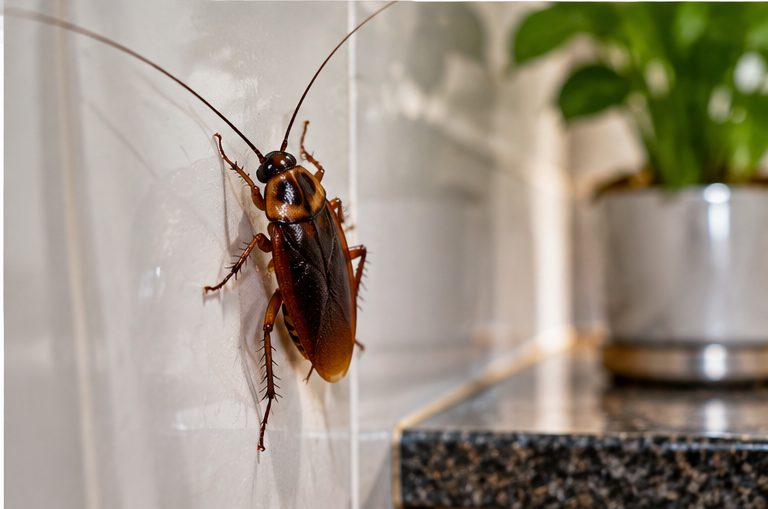
Where cockroaches pass the same spot night after night, they leave irregular brown smears. These show up best on pale surfaces: the line where a wall meets a worktop, the rim of a cable hole, the top of a skirting board. Smears build up where there is moisture and where numbers are high, so they usually point to a population that has been there for some time.
Egg cases
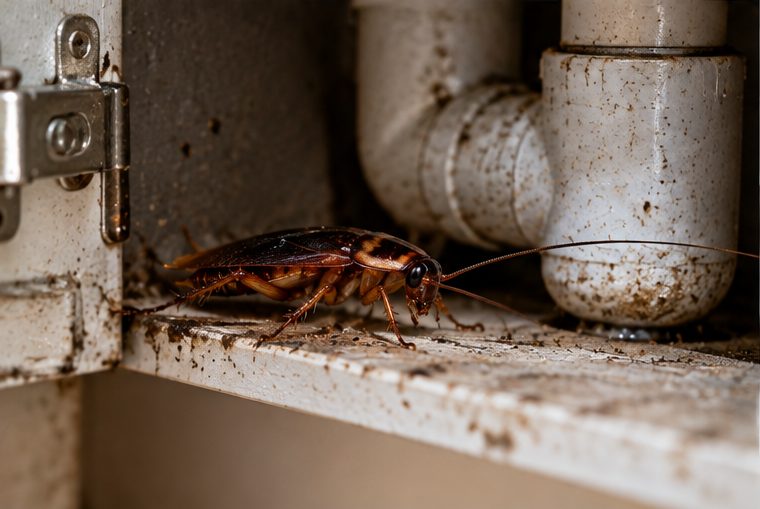
Cockroach eggs are laid inside a hard, purse-shaped case less than a centimetre long. A German female carries hers attached to her body until the eggs are almost ready to hatch, so the cases you find are usually empty, light brown and split along one edge. Oriental females drop or tuck their darker cases into sheltered spots. Either kind at the back of a cupboard means breeding is happening on site.
Shed skins and young cockroaches
Nymphs moult several times before they reach adult size, leaving pale, papery skins behind. Young German cockroaches are small and dark with a lighter stripe down the back, and are often taken for a different insect altogether. Nymphs of several sizes together tell you the colony has been breeding for more than one generation. If you are unsure of the species, German vs Oriental cockroaches sets out how to tell.
A musty, oily smell
A heavy infestation produces a stale, faintly sweet odour that lingers in cupboards and around appliances. It is not an early warning: by the time you can smell it, there are usually a great many cockroaches close by. Equally, the absence of a smell does not rule a problem out.
Live cockroaches
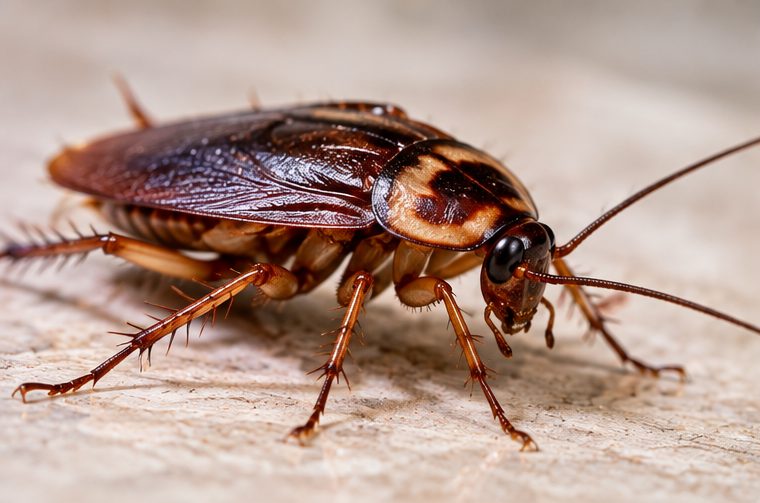
Insects darting under the cooker when you switch the kitchen light on late in the evening are the plainest sign of all. A cockroach wandering in daylight deserves more attention, because it can mean the population has outgrown its hiding places or that something has disturbed them. Why cockroaches appear at night explains what the timing of a sighting tells you.
Doing a proper check
- Leave the kitchen dark for an hour, then switch the light on and watch the floor and worktops
- Use a torch under the sink, behind the plinths and around the backs of the fridge, cooker and dishwasher
- Look at door hinges, cupboard corners and the rims of holes cut for pipes
- Stand sticky insect monitors from a hardware shop against the walls and look at them after a few nights
- Write down every spot where you find something, so you can describe it when you get in touch
What to do next
Wear gloves to clear droppings, keep food sealed, and hold back from spraying what you find: shop sprays can scatter cockroaches further into the building and do not reach the egg cases. The places to concentrate on are covered in where cockroaches hide in kitchens. If you live in one of the blocks of flats in Wembley, let your managing agent know as well. Cockroach control in Brent costs £190 for a flat or £240 for a house — book cockroach control and pass on what you have found.