Start with a slow walk round
On a dry day, go round the outside of the house and look closely at every window and door. You are looking for daylight gaps, cracked or missing sealant, broken weather strips, webs tucked into frames and plants touching the glass. Then repeat the check indoors in the evening with a torch, which shows gaps up as shadows.
Sealing around window frames
Old silicone and mastic shrink and split, especially where a frame meets brick or render. Cutting out the failed sealant and running a fresh bead of exterior-grade sealant closes the route spiders use. Inside, flexible decorator’s caulk along the frame and window board does the same job. Leave trickle vents and weep holes open, as they are there for ventilation and drainage. Older timber bay windows, like those on many interwar houses in Kingsbury, have more joints that open up as the wood moves, so check each section rather than just the corners.
Draught strips and door brushes
- Fit a brush or rubber strip to the bottom of external doors so there is no gap above the threshold
- Replace flattened foam strips around opening windows and doors
- Add a brush to letterboxes and check cat flaps close properly
- Check the door between an attached garage and the house, often the worst-fitting door in the home
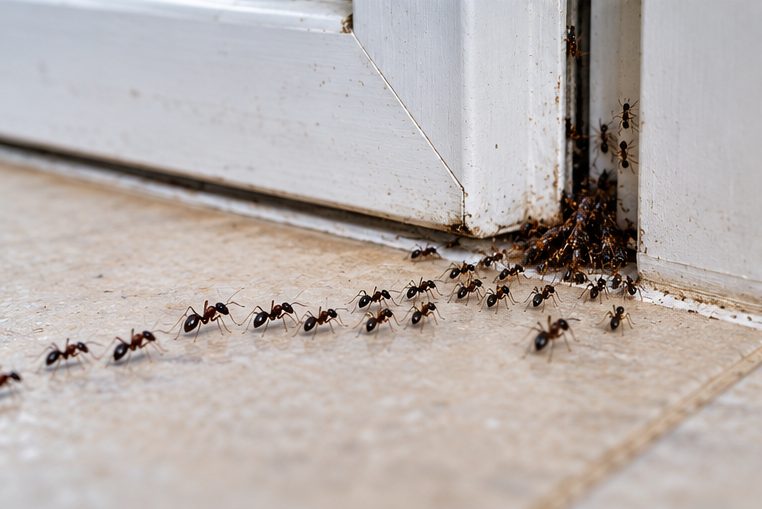
The gap under a door that lets spiders in also lets in ants, beetles and other crawling insects. How to stop ants entering your home looks at the same weak spots from the ants’ side.
Fly screens for windows you open
If a kitchen or bedroom window stays open on summer evenings, a fitted mesh screen stops flying insects getting in, which removes much of the reason for a spider to set up in that frame. Magnetic and roller screens can be taken down in winter.
Lights near doors and windows
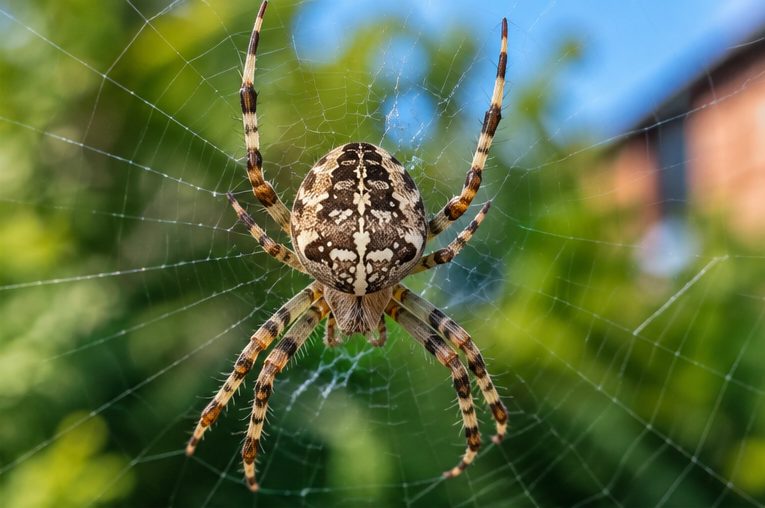
A lamp directly above the back door is a beacon for moths and midges, and a web beside it will be well fed. Move fittings a little away from doors where you can, switch to warm-toned bulbs, or put the light on a motion sensor so it is not on all night. Draw curtains or blinds in lit rooms after dark so fewer insects gather on the glass.
Clearing webs and egg sacs from frames
Brush webs off the outside of frames, sills and door surrounds every couple of weeks in late summer and autumn, and vacuum the inside corners of window reveals. Taking egg sacs away as you go means fewer young spiders in that spot next year. Wear gloves and use a long-handled brush on frames where false widow spiders have settled, rather than reaching in by hand.
Sills and the insects that collect there

Dead flies gather on sills, and live insects crawl up the glass towards the light; both feed spiders. Wipe sills and window runners regularly. If you keep finding tiny, round, patterned beetles on a sill, they may be adult carpet beetles, which fly to windows in spring and early summer — why carpet beetles appear on windowsills explains what that means.
Plants around doors and windows
Ivy, climbing roses and shrubs growing across a frame give spiders a direct path onto the window. Trim growth so it does not touch the frame or the glass, and stand pots and planters a short distance from the door. Height is no protection on its own: in blocks of flats like those in Wembley, balcony doors and window frames still collect webs, because spiders climb walls and young spiders drift on the breeze on silk threads.
If they keep coming
Windows and doors are one part of the picture; what attracts spiders into a property covers the rest. For rooms where spiders keep building up once the gaps are sorted, spider control in Brent costs £180 for the first room and £60 for each further room. Book a spider treatment and mention which windows and doors seem to be the problem.