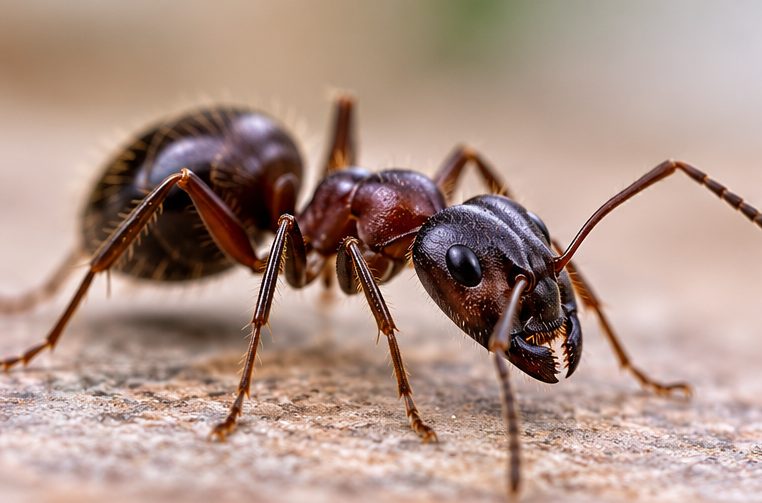
The trail is a map

Worker ants lay a scent trail from the nest to food and back, and every ant that follows it makes it stronger. That is annoying on a worktop but useful to you: the line points straight at the source. If you understand why ants keep coming into the kitchen, you will see why wiping the trail away only resets it.
First, what kind of ant?
Black or dark brown ants a few millimetres long, most noticeable in warm weather, are almost certainly garden ants. Tiny pale yellowish ants in a heated flat, active through the winter, may be Pharaoh ants, and those need a different approach from the start. Read Pharaoh ants vs garden ants before following the steps below if yours look like the second kind.
Step one: find where they enter the room
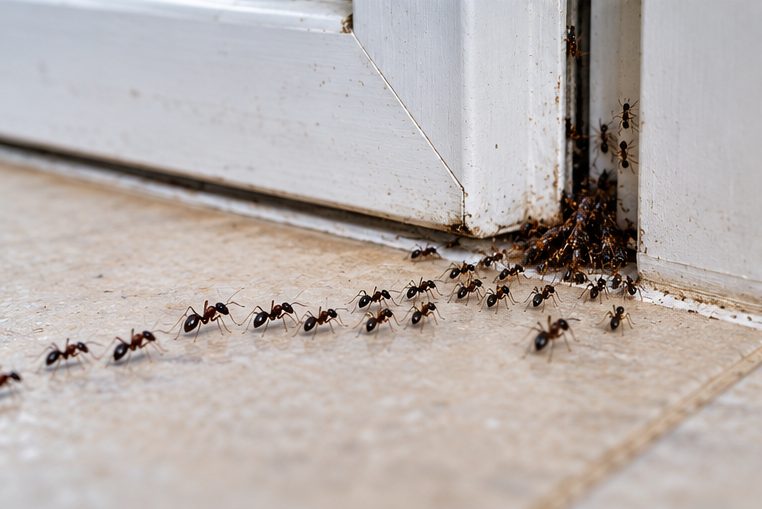
Pick a warm afternoon when the trail is busy, leave it undisturbed and follow it away from the food. Typical entry points are the back door threshold, the gap where pipes leave the kitchen wall, a crack along the join with an extension and the edge of a window frame. Mark the spot with a small piece of tape. If the trail seems to start from several places, pick the busiest line; it is usually the one closest to the nest.
Step two: pick the trail up outside
Go to the other side of that wall and look for ants arriving. Start at the base of the wall and the nearest paving, then widen the search slowly. Garden ant nests give themselves away with small heaps of fine, dry soil at the edge of paving, in the joints between slabs or at the foot of the wall. How to find an ant nest has the full method, and where ants nest around houses lists the spots worth checking.
Patios, paths and extensions
Across the north of the borough, the long gardens behind interwar houses have patios laid against rear extensions, and those joins are warm, dry and ideal for a colony. The Queensbury page describes how ants reach kitchens through patio doors, and in Preston the busy season runs from spring through the summer. Ground-floor flats with a patio, such as those in parts of Wembley, see the same pattern. In a flat higher up, the trail may come through a shared wall or along a pipe run instead, and the nest can be in a part of the building you cannot reach, which is worth telling the managing agent.
When the trail ends indoors
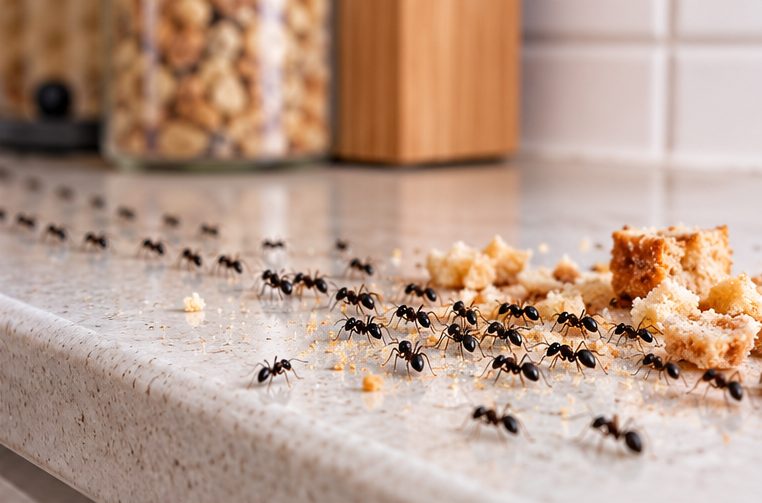
Sometimes the line disappears into a skirting board or comes up through the floor. A colony may then be inside a wall cavity or under a warm floor, which can ants nest inside walls explains. Winged ants coming out indoors on a humid summer day are a strong sign of a nest close by or beneath the house; why flying ants appear indoors covers what that means.
What to leave alone for now
- Spraying the trail: it kills the foragers and leaves the colony intact
- Pouring boiling water into paving, which can damage mortar and rarely reaches the queen
- Filling the entry gap before the nest is dealt with, which sends the ants to a new gap
- Drilling into walls to find a suspected nest
- Scattering powders along the trail, which can split a colony into several smaller ones
If you have already tried the shop-bought options, why ants come back after DIY treatment explains what happened.
When to call someone in
A few ants on a hot day do not need a professional. A trail that returns week after week, a nest you cannot reach, ants indoors in winter or anything that looks like Pharaoh ants are different, as when an ant problem needs professional treatment sets out. Summer brings wasps to the same gardens, and the wasp nest overview covers those.
After the nest has been treated
Ants do not disappear the moment a visit ends, and seeing a few on the usual route for a while is normal. How quickly activity settles depends on the colony, the species and the property, as how long ant treatment takes explains. Leave the trail alone during that period rather than wiping it with bleach or spray.
Closing the way in afterwards
Once the colony has been treated, seal the handful of gaps the trail actually used: thresholds, pipe holes, cracked mortar. Keep weep holes and air bricks open, because they ventilate the building and keep walls dry. A flexible sealant suits the gap under a threshold; cracked mortar is better repointed. How to stop ants entering your home goes through each spot.
Booking ant control in Brent
Ant control in Brent is £190 for a flat and £220 for a house; the Brent ant control page has the detail. When you book ant control, tell us where the trail enters the room and where you think the nest is, as that saves time on the day. Mention too whether the ants are winged, whether they appear in winter and whether a flat above or below is affected.