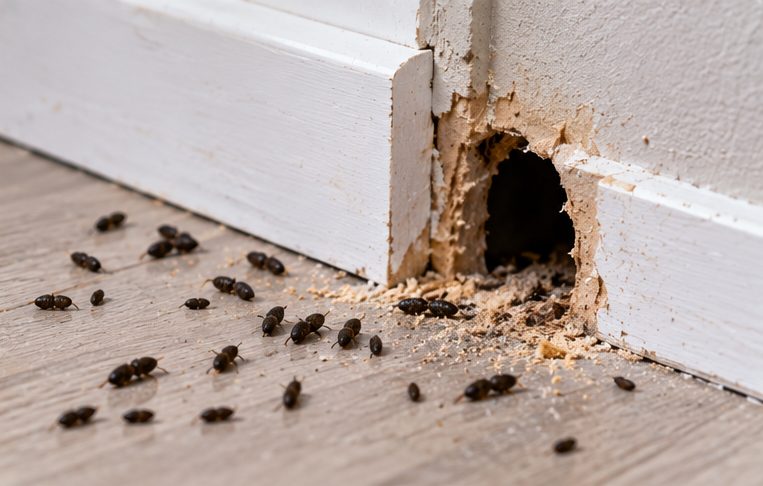
Why Brent's housing suits mice
A mouse wants warmth, a steady supply of crumbs and a network of hidden passages. Brent's older terraces, many of them split into flats, supply all three: boxed-in pipes, gaps behind kitchen units and floor voids that run beneath several rooms. Newer blocks are better sealed, but they still carry pipes and cables between floors. Wherever you live, the building is part of the story, and it explains why a tidy kitchen is no protection on its own.
Signs in a flat

In a flat the first clues usually cluster in the kitchen: droppings in the cutlery drawer, a nibbled cereal box, something moving behind the fridge late at night. Because a flat has fewer hiding places, signs often appear quickly and in the same spots. The signs of mice goes through each one and what it tells you. If the scratching comes from behind the cupboards, mice behind kitchen units covers what to do straight away.
Signs in a house
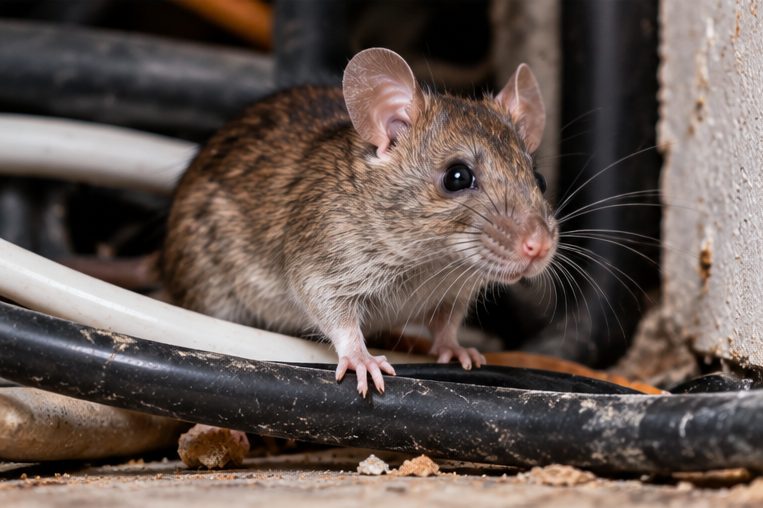
A house spreads the evidence out. Droppings under the stairs, noise in a bedroom ceiling and chewed insulation in the loft can all belong to the same mice, using the voids between floors to move about. A loft is a common winter refuge in the interwar semis of the north of the borough, as can mice get into a loft explains. If the sounds are heavy rather than light, check the difference in the Brent rat overview.
Shared walls and hidden voids
This is the part that decides whether mice come back. In a converted terrace, the flat below, the flat above and the house next door are joined by party walls, joists and service runs, and mice treat the whole structure as one territory. The shared houses of Kilburn and the suspended floors of Willesden are typical. Purpose-built blocks, such as those around Wembley, connect through risers and ducts instead. Can mice travel between flats explains the routes and why treating one home on its own can fall short.
Finding the way in and the nest
Mice rarely come through an open door. The route is usually a gap around a pipe, a hole behind the kickboards or a worn threshold, and in a terrace it can start inside the house next door. How mice are getting into your house helps you narrow it down. The nest is almost always a few metres from food, often inside a kitchen void or under the floor nearby, as where mice nest describes. You do not need to find it yourself, but knowing the likely area tells you where to keep food locked away.
What to do this week
- Move dry food, pet food and bird seed into sealed containers
- Pull out the cooker or fridge if you safely can, and clear what has built up behind it
- Note where droppings appear, and whether they return after cleaning
- Ask your neighbours, landlord or managing agent whether anyone else has seen signs
- Keep an eye on cables and pipes behind appliances for fresh gnawing
That last point matters more than it sounds: mice chewing wiring and pipes is one of the strongest reasons not to wait and see. Plug-in ultrasonic devices are no substitute for any of the steps above, and the evidence that they clear an established problem is weak.
Treatment: your home or the building?
In a house with no attached neighbours, the treatment can focus on your property. In a terrace or a block, it helps if everyone affected acts around the same time, so mice cannot simply move next door and wait. If you rent, your landlord or managing agent should hear about it as soon as you notice the signs. Mice do not vanish overnight, and how long it takes depends on the building, the numbers and whether food is still available; how long mouse treatment takes covers what normally happens.
Closing the gaps afterwards
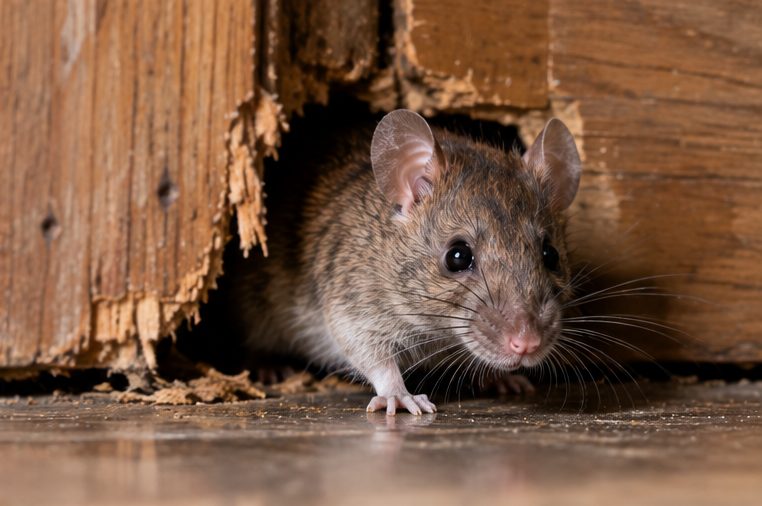
Once activity has stopped, the routes need closing, in the right order and with materials a mouse cannot chew through. How to mouse-proof a property sets out the steps. Kitchens are the priority, and building work is a good moment to do it: when floors come up during a renovation, as in many Queen’s Park houses, the gaps are easier to reach than they will ever be again.
Why they return every autumn
Cooler nights push mice indoors, and a gap that went unnoticed in summer becomes a doorway in October. If mice seemed to go and then came back, why mice keep coming back works through the usual causes, from open gaps to a neighbour's untreated flat. Checking the kitchen and loft each September is a simple habit that catches the first arrivals, and so is keeping the recycling and bird seed away from the back door.
Booking mouse control in Brent
Mouse control in Brent costs £190 for a flat and £240 for a house, and the Brent mouse control page has the rest of the detail. When you book mouse control, say whether the building is converted or purpose-built and whether neighbours have mice too. A rough note of where droppings keep turning up is also worth having to hand.