




What a Preston Back Garden Offers a Rat

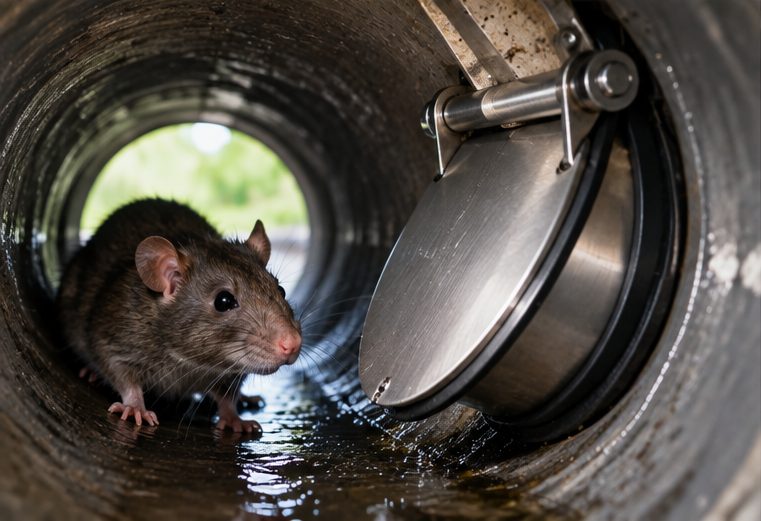
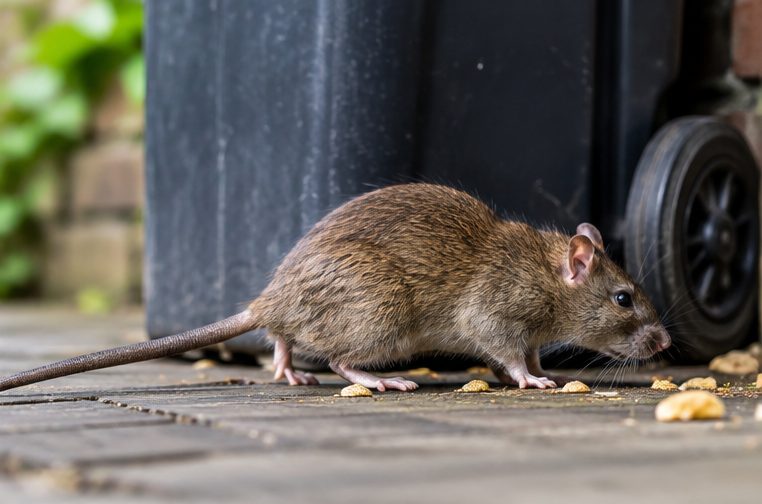
A tidy garden is not automatically a safe one. What counts is whether there is a dry, undisturbed space at ground level that nobody ever looks into, and whether a run of cover joins that space to something worth eating. On these plots both are usually in place long before anyone starts wondering: the cavity beneath a shed, the parted edge of a garage slab, the base of a hedge that has thickened over decades. A rat seen in the garden sets out what one sighting outdoors does and does not prove.
The shed at the bottom and the garage at the side
A shed bedded on timber bearers or a pair of slabs leaves a shallow void underneath that stays dry in any weather and is beyond the reach of a spade. A garage is the same proposition with better walls, since the floor slab has generally parted from the brickwork somewhere along its edge. What is kept in either — bags of compost, rolls of old carpet, cardboard saved for the tip — counts as bedding rather than food. Standing stored things on shelving and keeping a clear strip of ground along each wall removes most of the reason to burrow there at all.
Compost, fallen fruit and what goes out for the birds
An open compost heap, a bin set straight onto soil, apples or plums left lying under a tree and a feeder that scatters more than the birds take are the usual supply. None of it has to be given up. A compost bin with a lid standing on a hard base, windfalls picked up through the season and seed swept off the paving each week change what the plot is worth to an animal deciding where to settle.
Hedges, fence lines and the front drive
Rats travel along edges rather than across open lawn, so a mature hedge, the foot of a close-boarded fence and the narrow strip between a garage wall and the boundary form a network that carries on through several gardens with nothing ever showing itself in the middle of one. At the front, bins standing on a block-paved drive add a second feeding point a few paces from the bay window, which is why activity at the front and noise at the back are not a contradiction.
The Low Ways Into a Metroland Semi
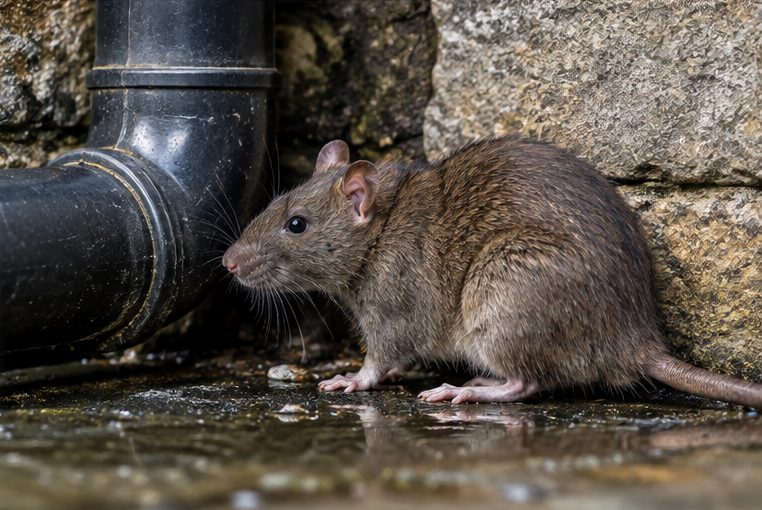
Getting inside the building is a separate step, and it happens low down. The air bricks that ventilate the timber ground floor, the oversized hole where a kitchen waste pipe leaves the brickwork, a worn threshold under a back or side door, the edge of a garage door that no longer meets its slab, and the vertical joint where a rear extension was tied into the original wall: any one of them will do for an animal that has already decided to move in. How rats get into houses takes the routes in order, and where rats nest indoors covers the floor void and what lies beyond it.
Reading the Garden Before Anything Is Moved

- Holes two or three fingers wide with a fan of loose earth beside them, at a shed base, along a garage slab or in the hedge bottom
- Smooth runs pressed flat through grass, ivy or bark chippings between one patch of cover and the next
- Gnawing along the bottom rail of a shed door, a side gate or a plastic compost bin
- Droppings on the garage floor, across a patio or along the top of a boundary wall
- Bird seed going overnight rather than through the day
- Heavy scratching beneath the floorboards once the house is quiet, rather than anything overhead
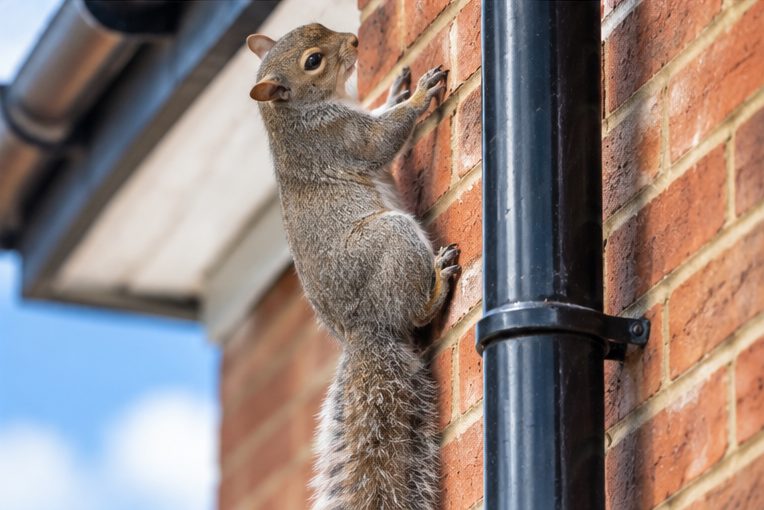
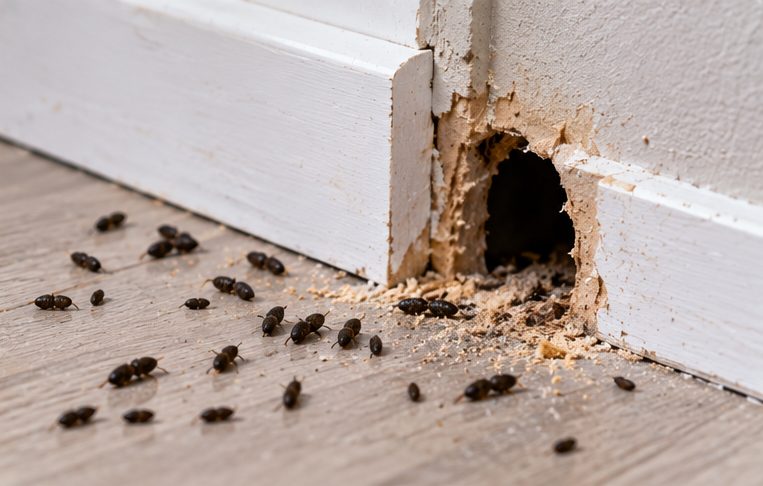
The first signs of rats shows what each of those looks like close up. Droppings no bigger than a grain of rice belong to something else, and mouse control in Preston is the booking for those; weight and movement overhead in broad daylight points instead to squirrel control.
The Order to Do Things In
- Deal with the food first: lids down, compost enclosed, windfalls picked up, spilled seed swept off the paving
- Walk the plot with a torch and write down every hole, run and gnawed edge before anything gets tidied away
- Book treatment for the animals already there rather than filling holes around them
- Leave the openings in the brickwork as they are meanwhile, because an animal cut off from its route will make another
- Clear the ground afterwards — under the shed, along the garage wall, at the hedge bottom — so nothing easy is left to dig into
- Close the small openings last, which is the job rodent proofing in Preston does
- Keep shop-bought poison out of a garden that cats, foxes, birds and children all pass through
Booking Rat Control in HA3 and HA9
What to tell us
Say whether the address is a whole house or a self-contained flat, whether there is a garage and whether it opens into the house, and where the activity is: the garden, a shed, the garage, under the floor or in a room. Mention the compost, the feeder and where the bins stand, since between them those usually explain why your plot was picked.
Getting ready
Unlock the side gate or leave someone there with the key, clear a path along the back of the house and down to the shed, and empty the cupboard under the kitchen sink if droppings have turned up in it. Boxes stacked against a garage wall hide precisely the brickwork that needs looking at.
Afterwards
What was found and what happens next is explained at the time. How long the whole thing runs depends on the plot, on what the gardens either side offer and on how settled the rats already are, which this guide to timings goes into. Get back in touch if fresh droppings or a new hole turn up after a quiet spell.
Making the Plot Less Worth Living On
Once activity has stopped, the garden is the part you keep control of. Raise the shed or close its base, leave a hand's width of bare, visible ground along the garage and the boundary, enclose the compost and cut the hedge bottom back far enough to see the soil under it. Rat proofing sets out what actually lasts, and why rats come back after treatment is largely a question of what was left outdoors. For the borough as a whole see Rat Control Brent; the long gardens of neighbouring Kingsbury back onto one another in the same way.