Where Mice Actually Live in a Preston Semi
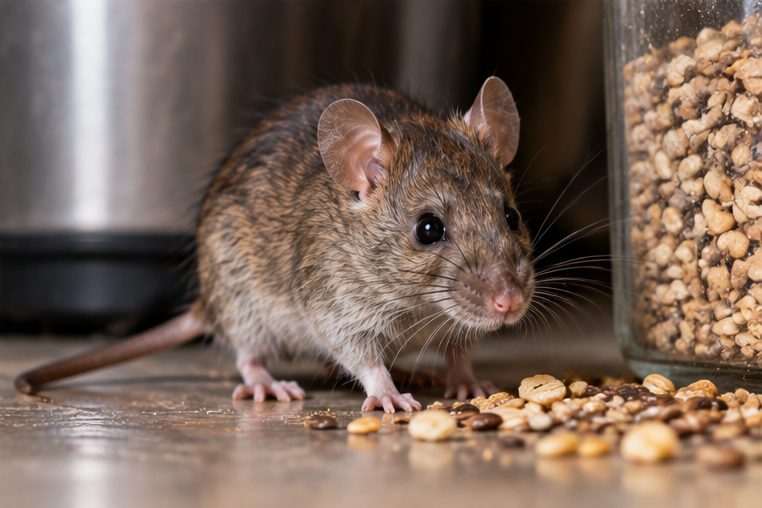
A house built between the wars and altered several times since holds far more hidden volume than its floor plan suggests: a ventilated void beneath the ground floor, boxed-in pipe runs, a cupboard under the stairs, a shallow space behind the bay roof, a garage tied onto the flank wall and a loft over the whole lot. Mice nest in whichever of those is quietest and nearest to something to eat, then come out to the kitchen after dark. Where mice nest indoors describes what a nest looks like when you finally uncover one.
The cupboard under the stairs
That cupboard is dark, warmed by the hall, hardly ever emptied to the floor and stocked with ideal material: coats, bags, shoes, boxes of paperwork, a vacuum cleaner. On many of these houses the staircase above it is open at the back, so the cupboard runs into the joist space of the first floor without anything having been cut. Shredded paper or fabric gathered in a back corner, behind the stored things rather than in front of them, is the sign worth going in for.
Behind and beneath the kitchen units

These kitchens have been replaced two or three times over, and every fit left its own concealed run: the channel behind the kickboards, a box built round a waste pipe and never closed at the top, the space under a built-in oven, the gap where a run of units stops short of the chimney breast. Food reaches all of it as crumbs and spills rather than as packets. Mice behind kitchen units explains how to look into that space without taking a kitchen apart.
The garage, and the ceiling above it
Where the garage runs along the flank wall or sits beneath a bedroom it becomes overflow storage, and cardboard, cushions, camping gear and offcuts of carpet are nesting material rather than a meal. An integral garage has a floor above it, and the void between its ceiling and that bedroom floor is one of the warmest and least disturbed spaces in the building. Noise that seems to be coming from inside a bedroom wall has often begun there.
The little roof over the bay window
A bay on one of these houses carries its own small tiled roof, tucked into the wall below the first-floor window. That junction has been repainted many times and renewed rarely, and behind it lies a shallow space above the bay ceiling. Mice that have reached the eaves or climbed a downpipe use it, and what you hear arrives in the front room or the front bedroom rather than the kitchen. Mice in lofts and roof spaces covers the floor above.
What a boiler move or an extension left behind
Every alteration punched a hole in something. A boiler taken off the kitchen wall and rehoused in a utility room or an airing cupboard leaves a flue hole, a condensate pipe through the brickwork and pipework chased through a floor. A rear extension leaves a joint between old and new walls, a stepped void above its ceiling and services dropped down through the ground floor. None of it is visible once the plastering was done. How mice get into a house covers what to look for from outside.
Working Out Which Part of the House They Are In
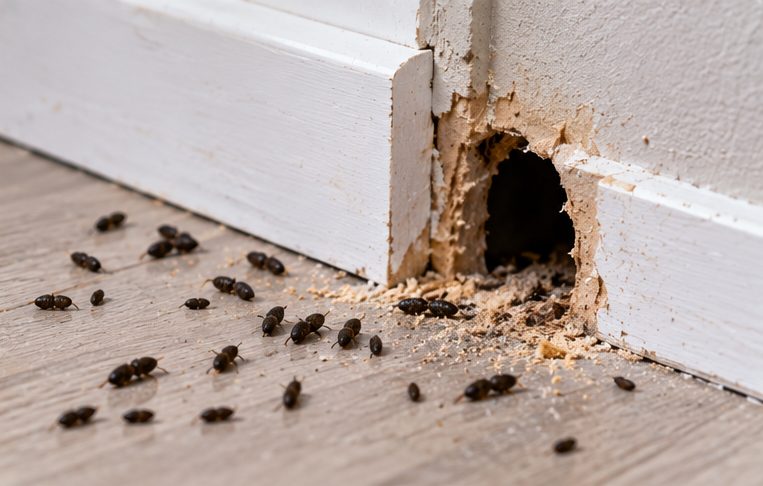
- Droppings in a drawer or cupboard show the route; a heap of shredded paper or insulation shows the nest
- Note the room and the time you hear scratching, over several nights, before deciding anything
- A dark greasy mark at one end of a kickboard or along a pipe means the same few centimetres are used nightly
- Nibbled corners on cereal, rice, flour or dry pet food at the back of a low cupboard
- A close, musty smell in a fitted cupboard that does not clear when the door is left open
- Sound in a bedroom wall or above a bay ceiling rather than in the kitchen, which moves the search upstairs
The signs of mice goes through each of those properly. Larger tapered droppings, gnawing on a shed door or digging outside mean rat control in Preston is the right booking instead.
Worth Doing This Week
- Move dry food and pet food into tins or hard boxes with a lid that clips shut
- Empty the under-stairs cupboard right down to the floor and look at the corners rather than the middle
- Lift off whichever kickboards come away easily and clear what has collected behind the units
- Leave holes open while mice are active: anything sealed inside boxing or a ceiling void cannot be got at afterwards
- Keep poison out of a house where a dog or a cat goes into the same cupboards you do
Around the Visit
When you book
When you book mouse control, say whether the address is a house or a self-contained flat, which rooms have droppings, which room the noise is in and at what time, and whether there is a garage, a rear extension or a loft conversion. Mention a boiler that has been moved, because the hole it left behind is usually still open.
Getting ready
Clear the cupboard under the sink and the floor in front of the units, empty the cupboard under the stairs, and make sure the loft hatch and the garage can both be reached. Somewhere to stand at each place with signs saves the visit being spent shifting belongings.
Afterwards
You will hear what was found and what to do next. How long it takes depends on the size of the house, how many of those voids are involved and whether food is still within reach, as how long mouse treatment takes sets out. Come back to us if droppings appear somewhere new.
Shutting the Nesting Places Down
Two jobs follow treatment. The first is storage: cardboard, textiles and paper lifted off the floor in the garage and the under-stairs cupboard, and kept in boxes with lids where it matters. The second is the openings — the flue hole, the condensate pipe, the open top of a pipe box, the gap under the door from the garage — and the small reachable ones are what rodent proofing in Preston is for. Mouse-proofing a property covers the rest, and why mice keep coming back is usually a list of the ones nobody closed. Mouse Control Brent has the borough-wide picture, and neighbouring Queensbury looks at what an extension leaves behind.