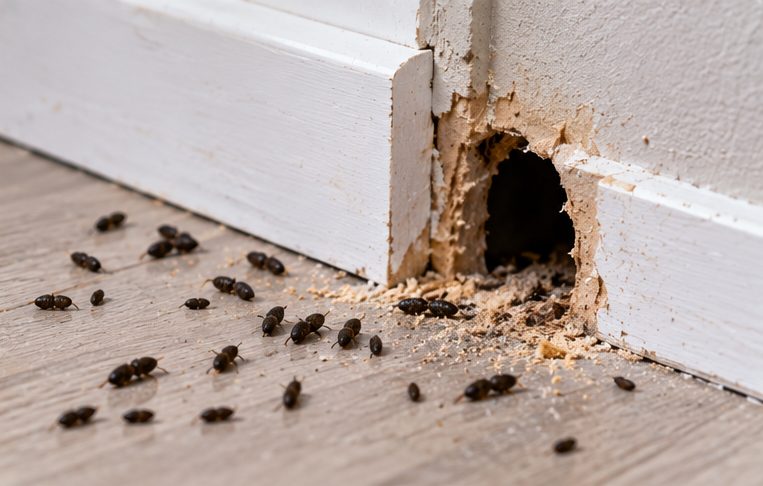





Work Up the Building, Not Round the Room
The useful way to look at one of these houses is as a stack: a ventilated void under the ground floor, walls full of service holes, the junction where the bay roof meets the brickwork, the eaves, and the loft above everything. Rodents move up through that stack rather than around it, so a list written from the ground upwards catches what a room-by-room search walks past. Write it before the visit, because an hour spent hunting is an hour not spent sealing. The most common entry points is a good page to walk round with, and what size hole a mouse can get through will change what you bother writing down.
Ground Level: Air Bricks and the Floor Void

Air bricks sit a course or two above the drive or the path, and they have a job to do in keeping air moving under a timber ground floor. That rules out simply filling one in. A cracked clay air brick, one with a corner crumbled away or one whose plastic grille has gone brittle is replaced or covered in a way that still passes air freely, which proofing at air bricks describes. Where a border or a raised bed has been built up over one, it is the ground in front that wants lowering rather than the opening blocking.
The Garage Doors and the Way Through Into the House
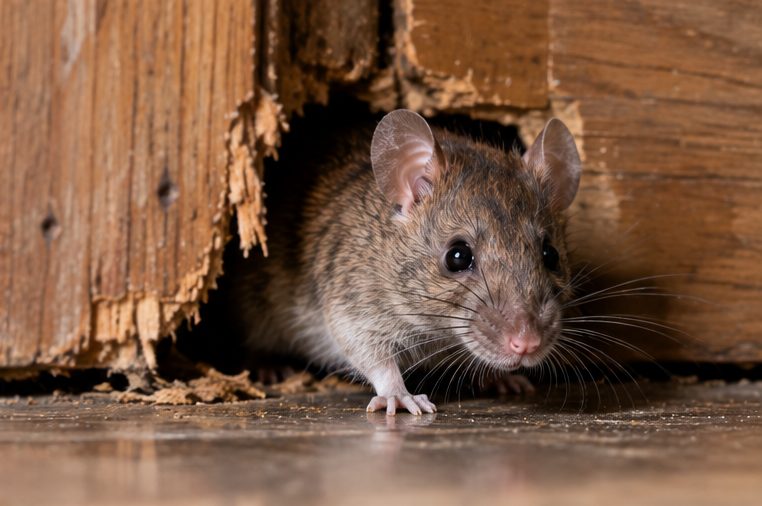
An up-and-over door is hung to sit on a slab that has usually lifted or settled somewhere along its length, and the perished strip along its bottom edge no longer bridges the difference. The side door out to the garden is often older than the house's own back door and soft along the bottom rail. Neither is the real issue on its own. The one that counts is the door from the garage into the hall or the kitchen: once that bottom edge has worn, whatever the garage admits has reached the house. A small gap under a door that still hangs true can be closed inside the hour; a dropped door or a broken-up threshold wants a joiner or a builder first.
Pipe, Flue and Cable Holes Around the Back

The back and flank walls carry the alterations: kitchen and bathroom waste, an overflow, a boiler flue and its condensate pipe, an outside tap, a satellite or broadband cable drilled through and never made good, an extract duct from a cooker hood. Each was cut oversize to get the pipe in and packed with mortar that has since shrunk back from it. These are sealed around the pipe rather than over it, so nothing traps water behind them — proofing pipe and utility gaps covers how that is done. The vertical joint where a rear extension meets the original wall belongs on the list as well.
Higher Up: the Bay Roof Junction and the Eaves
Above head height the list gets shorter and harder to reach. The junction where the small tiled roof over the bay runs into the wall, the ends of the deep timber soffits at the eaves, the gap behind a hopper or a downpipe bracket and the plastic collar round a soil vent are all openings, and a rat climbs a great deal better than most people expect. What can be got at from a step or a short ladder may fit into the hour; anything needing a proper ladder, a tower or work on the tiles is a roofer's, and you will be told so rather than have it attempted.
Inside: the Loft Hatch, the Boxing and the Kitchen
Indoors the list is short but it matters. A loft hatch is often just a board dropped into a rebate, which means anything in the first-floor ceiling void has the run of the loft as well; a hatch that seats properly and seals round its edge is a real improvement. Then there is boxing that stops an inch short of the floor or is left open at the top, the hole where an old boiler or radiator was taken out, and the space behind and beneath the kitchen units, which stopping mice getting behind kitchen units deals with properly.
What the Hour Does Not Stretch To
Rehanging doors, rebuilding a garage threshold, repointing crumbling brickwork, renewing soffits and fascias, re-bedding tiles and anything below ground are other trades. A drain fault is its own case: a drainage contractor surveys the pipe with a camera and either repairs it or fits a one-way blocker, as rats and drains explains. You will be told plainly which of those applies rather than having the hour spent on something that will not hold.
Treatment First, Proofing Second
Sealing a route that is still in use drives the animal further into the structure instead of out of it, and a house with a floor void, a garage ceiling and a loft offers a great deal of structure to go further into. Book rat control in Preston or mouse control first, let things go quiet, then close the gaps. Before or after treatment gives the reasoning, and telling a live hole from an old one helps you mark the list up.
Booking Proofing on a Preston House
What to tell us
Say whether it was rats or mice and when treatment finished, whether the address is a house or a flat, and whether there is a garage, a rear extension or a loft conversion. Then read the list out from the air bricks upwards, and say which items on it can be reached from the ground.
Clearing the way
Move bins, planters, log stores and bicycles back from the walls, cut back whatever is growing across an air brick, clear the strip along the garage and empty the cupboard under the sink. An hour spent shifting things is an hour not spent sealing anything.
After the work
You will hear which openings were closed, which were left and why, and what wants another trade. If gnawing or fresh droppings appear beside something that was sealed, say so. Rodent Proofing Brent covers the same work across the borough, and the houses of neighbouring Kenton are built to much the same pattern.