




What a Long Garden Offers a Rat
Food, water and somewhere dry and undisturbed to nest: a garden that runs a long way back, with mature trees at the end of it, supplies all three without a rat ever coming indoors. For most of the year that is where one stays, which is why the first thing anybody notices here is usually outside rather than in a cupboard.
Compost heaps, bird feeders and windfall fruit

An open compost heap with cooked food or bread in it is a larder. Seed dropped from a hanging feeder onto the grass feeds a good deal more than the birds it was bought for, and fruit left lying under an old apple or pear tree does the same job in autumn. None of that means there is an infestation indoors — a rat in the garden sets out what it does and does not tell you — but it decides whether one passing through has any reason to stay.
Studio and shed bases, and the space under decking
A garden room on a timber frame, a shed on bearers and a deck laid over soil each leave a sheltered void at ground level that stays dry and out of sight. Rats burrow into it, and nothing above the boards gives the first hint. An insulated studio wall keeps that space warm through the winter, which makes it one of the better addresses in the garden. Where rats nest covers the equivalents indoors.
Boundary walls, mature trees and the run back to the house

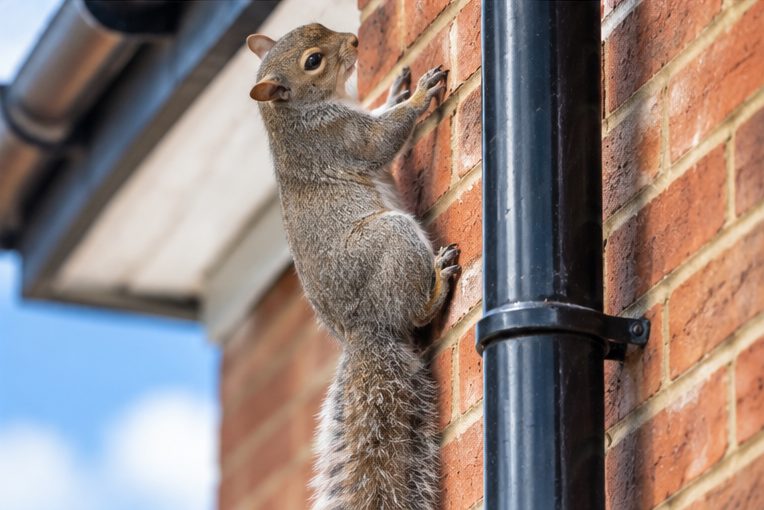
Old brick garden walls, trellis, ivy and the branches of a mature tree make a road system above the ground as well as along it, and rats climb better than most people allow for. The route tends to end at the back of the house, where a side return, a rear extension and rooms at garden level put doors, waste pipes and air bricks at or below the level of the soil. How rats get in goes through what they use once they arrive. Where the noise is under a floor and there is nothing at all to find outside, the drainage beneath an old house is the other explanation, and that is a drainage contractor's work rather than ours.
Signs in the Garden and at the Back of the House
- Smooth burrow holes a few centimetres across in a bank, under a shed base or against a wall
- Runs worn through long grass, or a flattened path along the foot of a boundary wall
- Gnawing on the lid of a compost bin, or spilled seed and droppings under a feeder
- Dark tapered droppings on the steps down to a garden-level door, or inside a studio or shed
- Scratching behind the units of a back kitchen after dark, rather than inside a wall upstairs
The first signs of rats goes through droppings and smear marks close up. Anything the size of a grain of rice belongs to something smaller, and mouse control in Queen’s Park is the booking for that.
What to Change This Week
- Keep cooked food, bread and meat out of the compost, and turn and cover what is there
- Move bird feeding to a tray you can sweep, or stop for a few weeks and watch what alters
- Pick up windfalls, cut long grass back from the foot of walls and lift stacked timber off the soil
- Store birdseed, bulbs and pet food in lidded bins rather than open sacks in a studio or shed
- Leave air bricks as they are, and keep shop-bought poison out of a garden used by cats, foxes and children
Booking a Rat Visit in NW6
What to tell us
When you book rat control, say whether the address is a whole house or a flat within one, and whether the signs are in the garden, in a studio or shed, or inside. Mention a kitchen at garden level, a side return, decking or a compost heap, and say whether the garden can be reached without walking through the house.
Getting ready
Unlock the side gate where there is one, clear a path down to the end of the garden, and pull stored bags and boxes back from the walls of a studio or shed. Indoors, empty the cupboard under the sink and any cupboard where droppings have turned up.
Afterwards
You will hear what was found and what happens next. How long it takes depends on the property and on how much food and cover the garden still holds, which this guide to timescales explains. Ring again if droppings start turning up after a week or two of nothing.
Making the Garden Less Worth the Journey

None of it is dramatic. Cover the compost, take the feeders down over the worst of the winter, leave a hand's width of daylight under stored timber, and cut planting back from the rear wall so that a run along it is exposed rather than sheltered. Where a studio or a deck sits on soil, closing the space underneath for good means a mesh skirt taken down into the ground, which is work for whoever built it. The small openings at the house itself — around a waste pipe, at the foot of a garden-level door, in a cracked air brick — are what rodent proofing in Queen’s Park closes, and rat proofing describes what holds. Rat Control Brent covers the borough, and the older terraces of neighbouring Kensal Green stand over much the same Victorian drainage.