Fluff Under Beds and Inside Fitted Wardrobes
The mat of hair, fibre and dust that collects under a divan with drawers, in the base of an alcove wardrobe and behind a chest of drawers is a complete diet for a larva, and it builds up faster in a room where the bed is never pulled out. A bedroom can keep larvae going for years without a bare patch ever showing on the carpet. Pull the drawers right out and put a torch under the frame; where carpet beetles hide around the home covers the rest of the house.
Children's Rooms, Sheepskins and Wool Rugs
A child's room is the one place where the floor is properly in use and the furniture never is. Sheepskins beside a cot, a wool rug at the foot of a bunk, knitted blankets, a box of dressing-up clothes with felt and fur in it, soft toys bagged under the bed - all of it at floor level, in the dark, for months at a time.
Nests in the High Eaves
These roofs are tall and steep, with deep eaves, valleys and chimney stacks, and birds use the gaps in them. A nest that has done its work leaves behind a packed heap of feathers, droppings and dead insects, and the larvae raised in it travel inwards and down - past a loft hatch, along a ceiling void, over the top of a partition - which is why a converted loft bedroom or a top-floor room usually meets them before anywhere else. The law protects a wild bird's nest while it is being built and while it is in use, so an active one is left exactly where it is. Dealing with an old one, and shutting the gap behind it, calls for safe access at that height: a roofer's job.
Adults on the Sash Windows in Spring
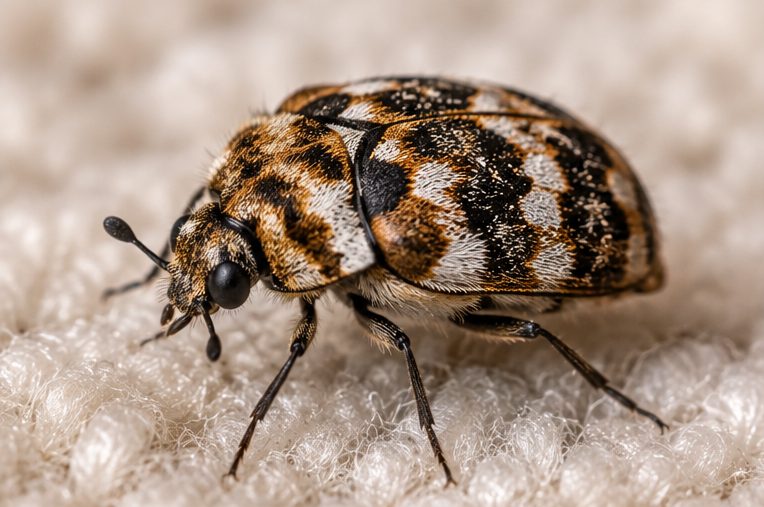
Adult beetles feed on pollen, so once they emerge they head for daylight and gather where they can see the garden: on the meeting rail of a sash, in the channel the lower one slides in, and along the sill. A house can therefore go quietly through the winter and hand you a dozen beetles at one window in April. The timing is the subject of a guide on beetles at windows, and another on being sure separates a few wanderers in off the garden from larvae actually living in the room.
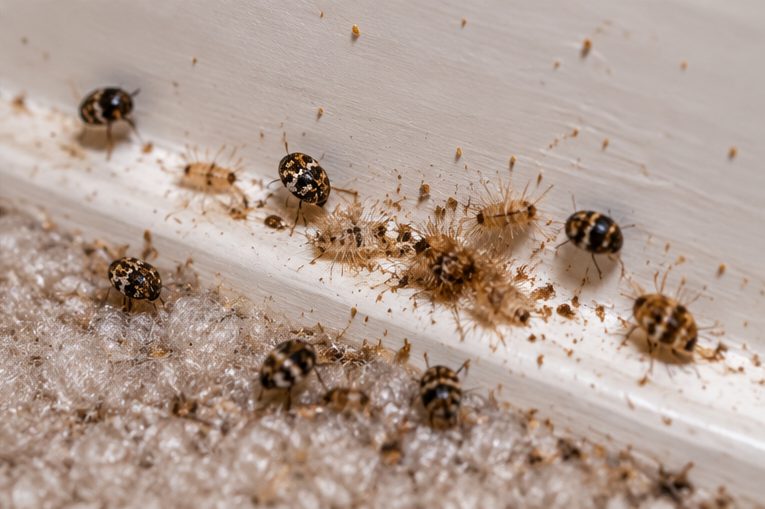
- Beetles a couple of millimetres across, oval and mottled in brown, cream and yellow, sitting still on the glass
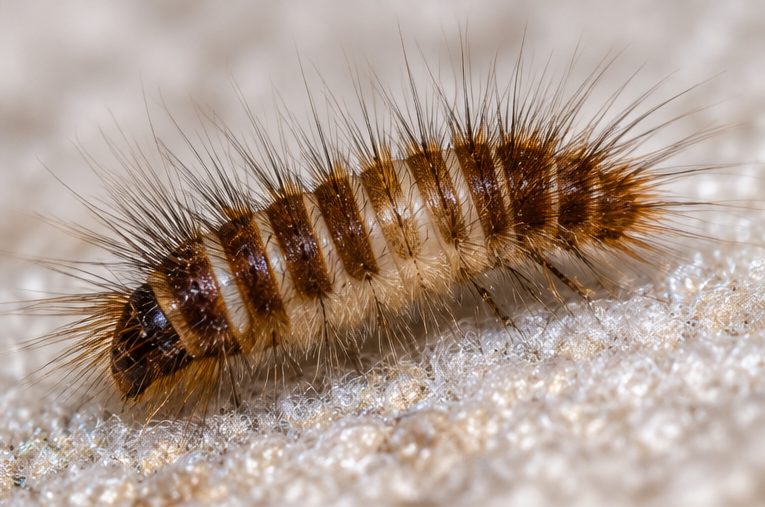
- Bristly brown grubs in the dark strip under a bed, in the base of a wardrobe or against a carpet edge
- Cast skins - hollow, pale and grub-shaped - turning up in a drawer, a cupboard corner or a toy box
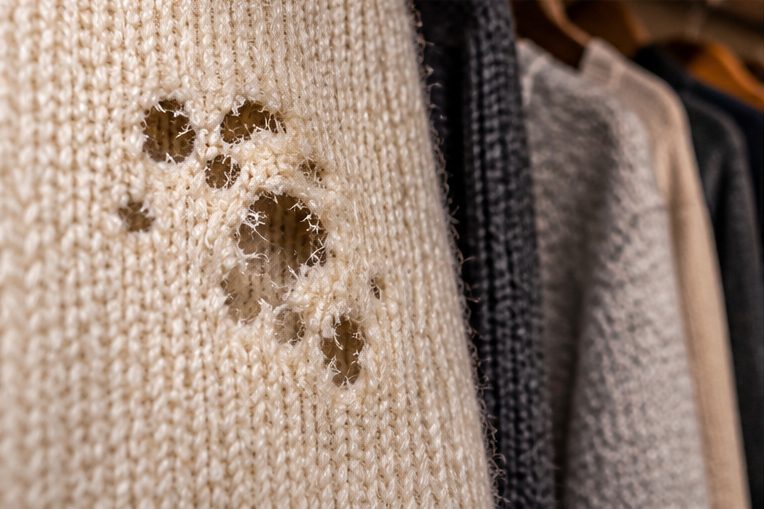
- Irregular holes through a blanket, a jumper or the back of a rug, with nothing silky left behind
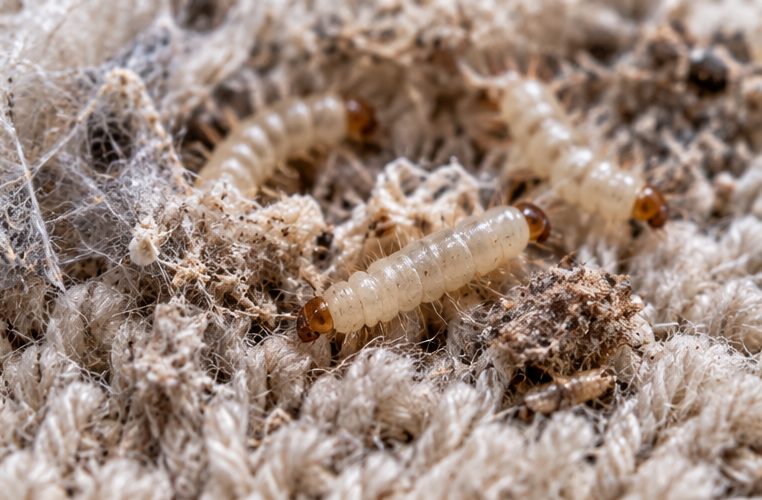
Smooth pale grubs spinning silky casings are the other pest entirely; a comparison of the two will settle which you have, and if it is moths then carpet moth treatment in Queen’s Park is the page you need.
The Larvae and Itchy Skin
Those bristles are enough to irritate some people's skin, and the rash that follows is regularly mistaken for bites - which is worth knowing when somebody is itching and the bed has nothing in it at all. A look along the mattress seams for bed bugs in Queen’s Park settles the other possibility. For a rash or any other symptom, speak to a pharmacist or GP, and call 999 for signs of a severe allergic reaction; the guide to skin irritation says more.
Booking and Preparing the Rooms
What we need from you is the list of rooms with larvae, beetles or damage, a word about whether birds use the eaves above you, and an idea of what wool the house holds. Rooms count singly; the hall, the landings and the stairs do not count at all. The preparation is straightforward - carpet edges, the floor under beds and the insides of wardrobe bases vacuumed, the cleaner emptied outdoors, stored woollens bagged where they stand. Spring will still throw up the odd adult at a window afterwards, and the time it all takes turns on the house and on whether an outside source has been sorted out. Fresh larvae past the period we give you deserve a call.
Keeping the Numbers Down in a Tall House
- Take the drawers right out from under a bed a few times a year and vacuum the floor they stand on
- Sheepskins and children's rugs are worth shaking outdoors and vacuuming on the underside, not only the pile
- Wool, fur and feather items go away clean and sealed, whether that is a loft, an alcove cupboard or a bed base
- Pick the spring beetles up with the vacuum at the window, so that they cannot simply walk back in
Lifted floorboards often turn up decades of fluff with larvae living in it, and Pest Control Queen’s Park covers pests and building work. How to prevent carpet beetles returning has more on prevention, the Brent carpet beetle advice covers identification, and Carpet Beetle Control Brent is the borough page.