
23A Walm Lane, London NW2 5SH · Covering all 33 London boroughs
Wasp Nest Removal Brent — Pest Control London 24. Wasp nest removal £90 fixed price. Call 0800 955 2347.

Wasp Nest Removal Queen’s Park

Garden studios, hedges, lawns and tall stacks in NW6 · £90 fixed price

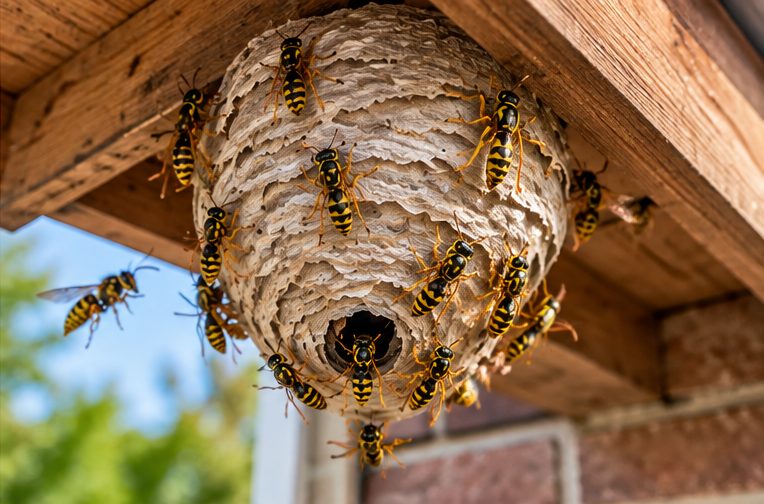
A Queen’s Park garden is long, old and full of timber. There is usually a studio or a workshop at the far end, a shed beside it, a clipped boundary hedge, mature trees and a lawn that nobody ever digs over. A queen coming out of hibernation in April reads all of that as shelter, and by August the nest she started can sit between the house and the part of the garden everyone uses.

Where wasps are going in and out of one fixed opening, book a wasp nest treatment at £90 fixed price. Call 0800 955 2347.

£90 fixed price
Studios, sheds and hedges
Holes in the lawn
Stacks and parapets
Wasp nest removal in Queen’s Park: £90 fixed price for a standard nest · if it is still active within 30 days we come back at no extra cost

Wasps at the Bottom of a Queen’s Park Garden
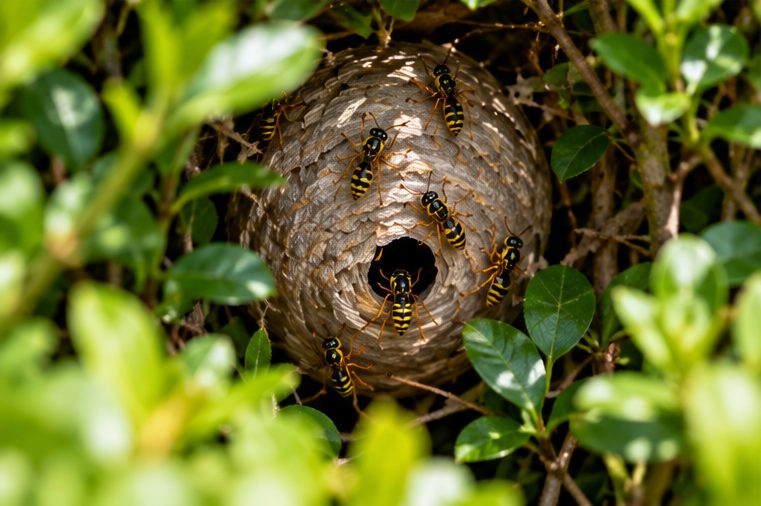
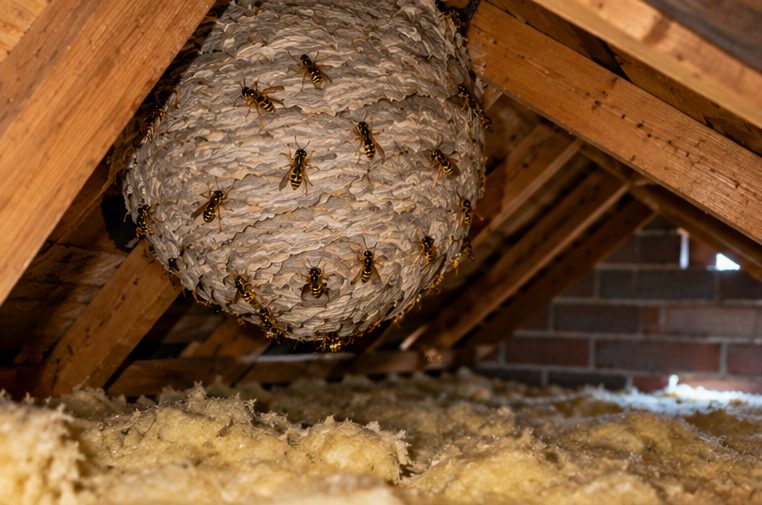
Wasp nest in a garden hedge

The far end of a long garden is the quietest ground on the plot. It has cover, weathered wood to chew into paper, and a whole summer in which nobody looks closely at the fascia board of the studio or the underside of a shed roof. That is why so many nests here are found in August by somebody fetching something, rather than in June when the nest was the size of a plum. Where wasps build nests around houses runs through the openings worth checking.

Garden studios, sheds and hedges

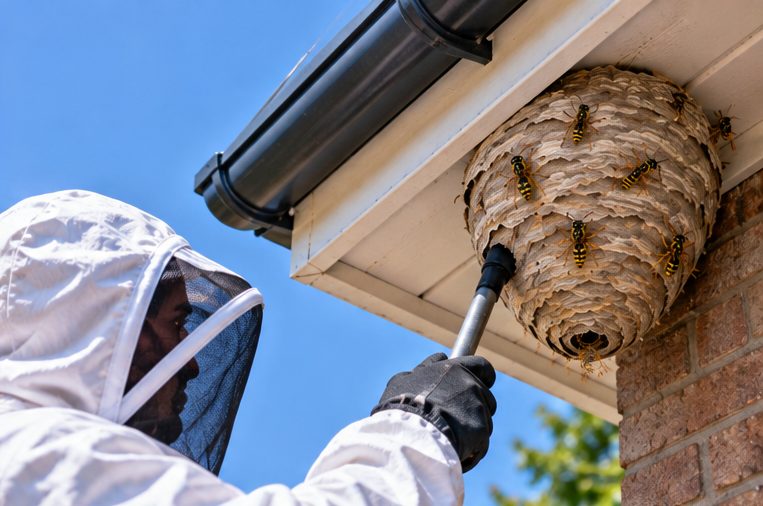
On a garden studio the weak points are the gap behind the fascia, the joint where a flat or shallow-pitched roof overhangs the frame, and the ventilated space above the ceiling lining. A studio used as an office makes this urgent in a way a shed does not: somebody is sitting under the nest with the doors open for eight hours a day. Sheds take nests under the felt, behind stacked pots and in folded garden furniture, and a thick boundary hedge will hide one completely until it is trimmed. Ivy over an old garden wall does the same. Nests you cannot see into explains why the entrance tells you more than the shape.

Ground nests in the lawn
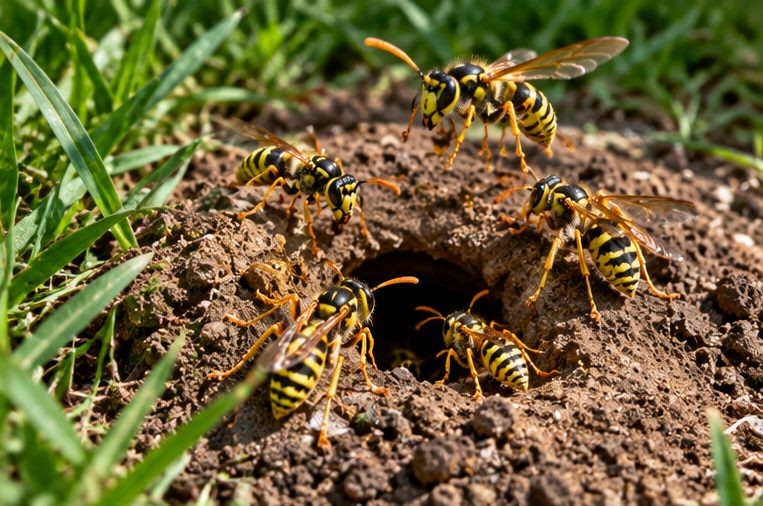
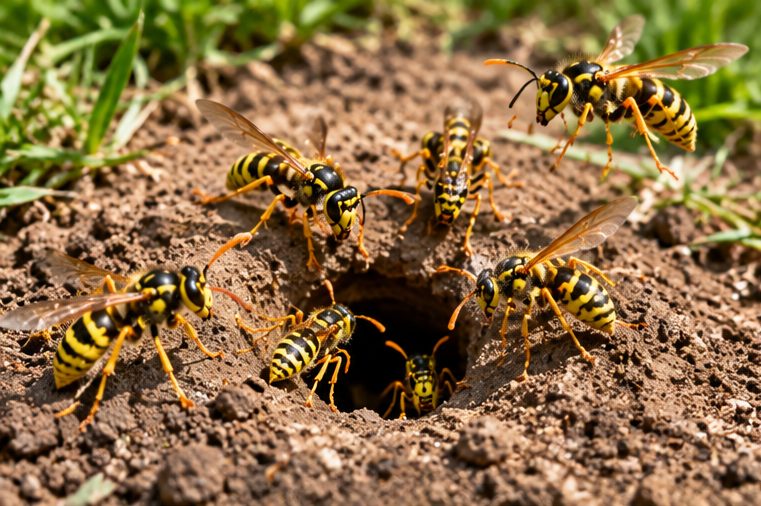
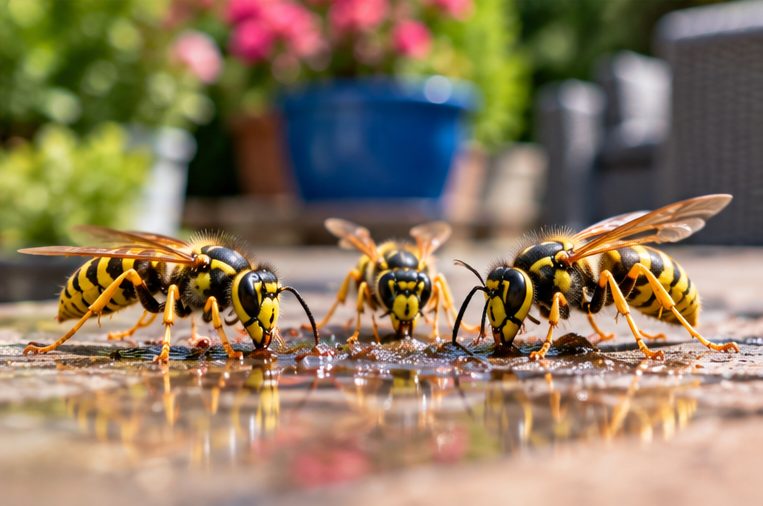
Wasps at a nest hole in a lawn

An undisturbed lawn under mature trees is good ground for a nest built underneath it, often in an abandoned mouse hole or a soft patch by a tree root. What you see is a bare hole a couple of centimetres across with a steady stream of traffic low to the grass and no paper visible at all. This is the type worth taking seriously before anyone brings out a mower or a strimmer, because vibration close to the entrance provokes a response from the whole nest at once. If you have a gardener coming, tell them where the hole is and keep them off that section. What to do about a nest in the ground covers the rest, and flying ants pouring out of a paving crack for one afternoon are something else entirely.

Higher Up: Stacks, Parapets and the Front Lightwell
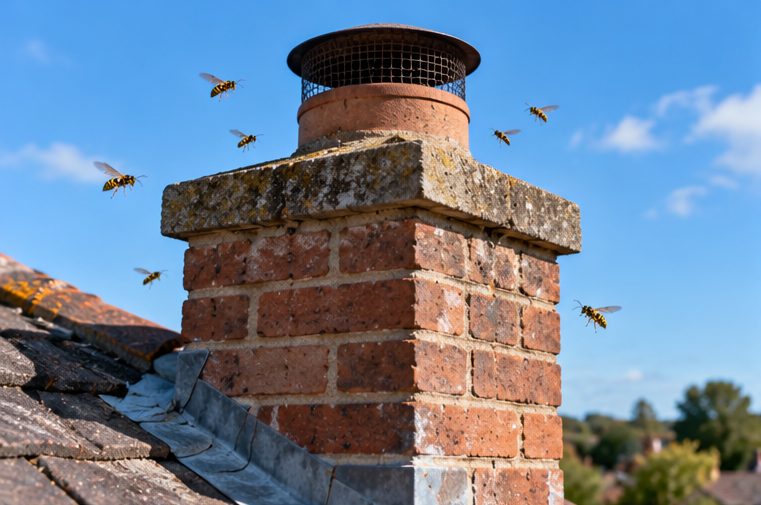
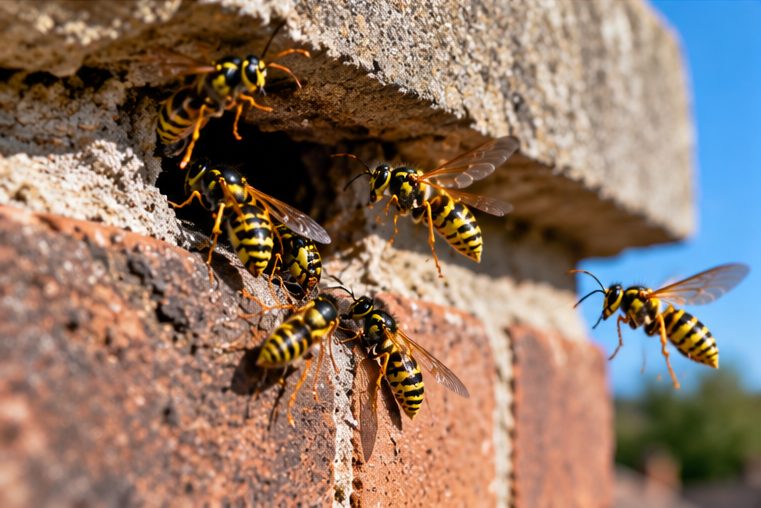
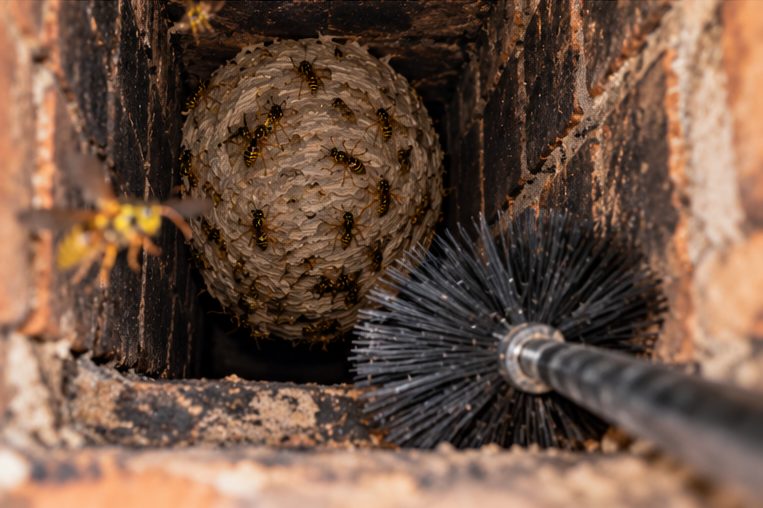
Wasps flying around a brick chimney

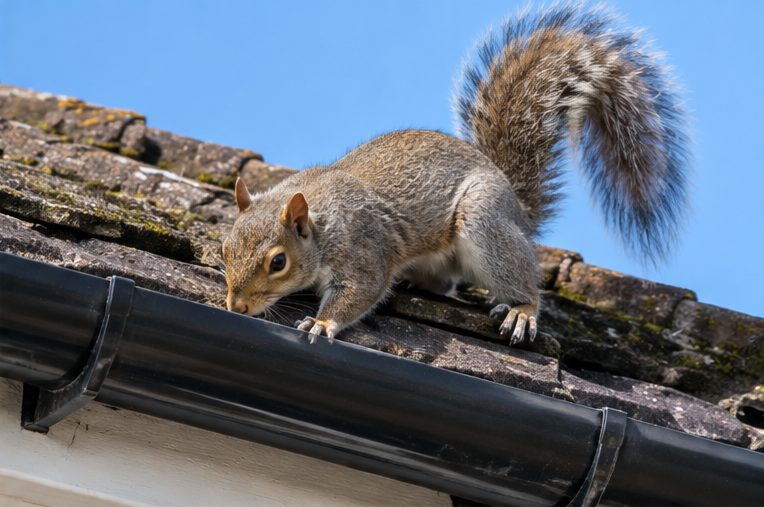
These houses are tall, and the roofline carries a lot of edge — a stack with several unused flues, a parapet gutter behind the front wall, deep eaves and the small roof over a bay or a rear addition. A nest up there announces itself as a thin line of wasps crossing the same patch of sky, and the flight path often runs straight down over the steps and the front lightwell, which is exactly where people come and go. If your home is one flat in a converted villa, say which windows look onto the line, and let the freeholder or managing agent know when the opening is on the roof or the stack rather than beside your own window. The signs of an active nest helps you separate a nest from wasps merely passing through, and telling wasps from bees is worth a minute before you call anybody. Noise is a poor guide on its own: a dry, papery rustle inside a chimney breast on a hot afternoon can be a nest in the flue, whereas a heavier thump and scrabble overhead at dawn and again at dusk is a squirrel in the roof.

What not to do while you wait

  • Leave the opening alone — filling it while the nest is live pushes the wasps to find another way out, which can be inwards through a ceiling or a lower-ground room
  • Keep mowers, strimmers and hedge trimmers away from a ground nest or a hedge nest, and warn whoever cuts the grass
  • Do not lean a ladder against a parapet or a studio roof for a closer look
  • Shut the windows nearest the entrance, especially any directly under it
  • Keep children, pets and garden meals out of the flight line across the lawn

Booking a Wasp Visit in Queen’s Park

Tell us where you think the entrance is, roughly how high, and how we reach it: through the house to the garden, along a side return, or through a gate onto a rear path, and whether that gate is kept locked. If the nest is at the studio, say whether it is unlocked and whether anything needs moving away from the wall. Anyone in the household who has reacted badly to a sting before should stay indoors and well away from the flight line, and signs of a severe allergic reaction after a sting mean calling 999. Prices for the rest of the borough are on Wasp Nest Removal Brent.

The days after the visit

Wasps returning to the entrance for a while afterwards are normal rather than a sign that nothing happened, so leave the opening open, keep the nearest windows shut and stay off that part of the lawn for a few days. An old nest is not taken over the following year, because next spring’s queens start again somewhere new, so a dead nest in a flue or above a studio ceiling can usually be left where it is. If it is still active within 30 days we come back at no extra cost — will wasps return after treatment? sets out what to expect in between.

Fewer Nests Around the Garden Next Spring

Nothing makes an old roof or a timber studio wasp-proof, but a short list of winter jobs cuts down the openings on offer. Our Brent wasp advice goes wider, and neighbouring Kensal Green has much the same roofs and gardens.

  • Once the nest is dead, have the fascia and the roof junction on the studio repaired, and ask a roofer to look at the stack and any capped flue
  • Walk the garden in April and May and look for a small grey ball the size of a golf ball under the studio eaves, in the shed and inside the hedge — call rather than knock it down
  • Keep the shed shut through spring and shake out stored furniture and covers before you use them
  • Cut hedges early in the season rather than in August, when a nest inside will be large
  • Lidded bins, cleared windfall fruit and covered drinks make the garden far less interesting to foraging wasps in September
£90 fixed price — guaranteed
£90
Fixed Price
30-day guarantee

One Price for a Standard Wasp Nest in Queen’s Park

£90 fixed price for a standard wasp nest treatment in Queen’s Park — and if the nest is still active within 30 days, we come back at no extra cost.

  • Eaves, soffits and lofts
  • Sheds, walls and the ground
Book £90 Fixed-Price Treatment →
Price

How Much Does Wasp Nest Removal Cost in Queen’s Park?

A standard wasp nest in Queen’s Park is £90 fixed price, and the figure does not move with where it sits: the fascia of a garden studio, deep in a boundary hedge, a hole in the lawn or the top of a chimney stack all cost the same. If the nest is still active within 30 days we come back at no extra cost. Where a nest is somewhere genuinely out of the ordinary we say so before you book rather than after.

TreatmentPrice
Wasp Nest Treatment£90 fixed price – guaranteed (return visit if the nest is still active within 30 days)
FAQs

Wasp Nest Removal Queen’s Park FAQs

Wasps are going into the fascia of our garden studio. Can we carry on using it?

Not comfortably, and not with the doors open. Shut it up, keep the desk chair and anything else away from that wall, and leave the gap exactly as it is. Book the £90 fixed price treatment and say which side of the studio the entrance is on and whether the building is unlocked.

There is a hole in the lawn with wasps flying into it. What should we do before the visit?

Mark it from a distance with a cane pushed in a metre or so away, keep everyone off that part of the garden and do not mow, strim or water anywhere near it. Pouring anything into the hole is the one thing most likely to get somebody stung.

Our gardener is due this week. Should the visit be put off?

Tell them about the nest either way. Cutting a hedge that holds a nest or running a mower over a ground nest is how most stings in a garden happen, so it is better to have the section left alone until the nest has been dealt with.

There is a steady line of wasps at the very top of the house. How do you get to a nest that high?

Tell us what you can see from the garden or the street — which slope, which side of the stack, and roughly which floor it is above — and we will tell you what is possible at your address before you book. Access from the back, and whether there is a side gate or a rear path, makes more difference than the height itself.

Wasps keep turning up in the lower-ground room by the lightwell. Is the nest in there?

Usually not. Single wasps working their way down inside a wall or a flue often appear at the lowest opening in the house, so the nest can be several floors above the room you are finding them in. Look outside for the point where they are going in and out steadily, rather than searching the room itself.

It is April and one very large wasp keeps bumping against the studio window. Is that a nest?

Not yet. A queen looking for somewhere to start will investigate sheds, studios and lofts for days before choosing, so one big insect in spring is a queen house-hunting. It is worth checking the same spot a few weeks later for a small papery ball. Is it safe to remove a wasp nest yourself? explains why a small nest is still not a job to take on.

Can we leave a nest in a tree at the end of the garden alone until winter?

If it is genuinely out of the way and nobody has to pass it, a nest does die off naturally as the season ends. It is a different matter where the nest is over a path, near the studio door or where children play, or where anyone in the house reacts badly to stings. Why wasps become more difficult in late summer is worth reading before deciding to wait.

Something is going in and out of a hole in the lawn — could it be bees rather than wasps?

It could. Solitary mining bees use bare soil and worn lawn patches in spring and are harmless, whereas a wasp ground nest builds through the summer and gets busier. A clear photo taken from a safe distance and sent with your enquiry settles it, and bees are not treated in the same way as wasps.

Guides

Wasp Guides for Queen’s Park Homes

More in Queen’s Park

Other Pest Control Services in Queen’s Park

Across Brent

Wasp Nest Removal in Other Brent Areas

Wasp Nest Removal Brent → · Pest Control Queen’s Park →

Get in touch

Wasp Nest in Your Queen’s Park Garden or Roof?

Tell us where the entrance is, roughly how high, how we get to the back of the house, and your NW6 postcode. Pest Control Queen’s Park covers our other services here, and Wasp Nest Removal Brent has the borough-wide page.

Prefer to talk? Call 0800 955 2347 or WhatsApp us. Read how we use your details in our privacy policy.

WhatsApp Us
Call NowWhatsApp