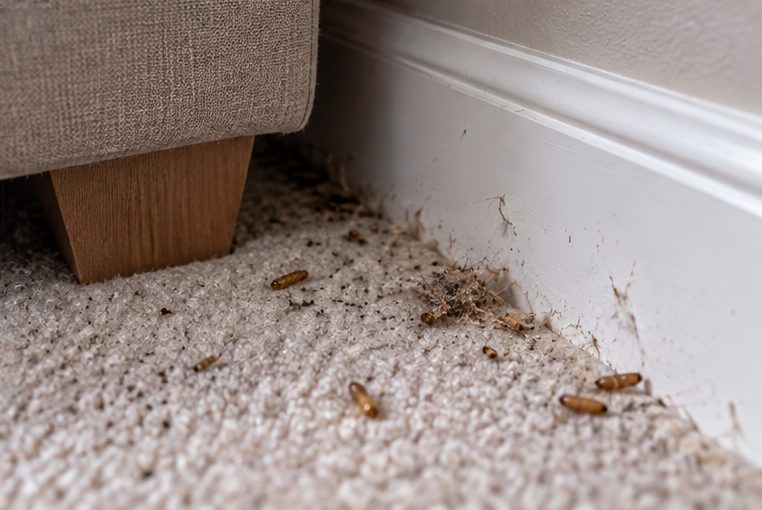

The Stair Runner and the Boards Each Side of It
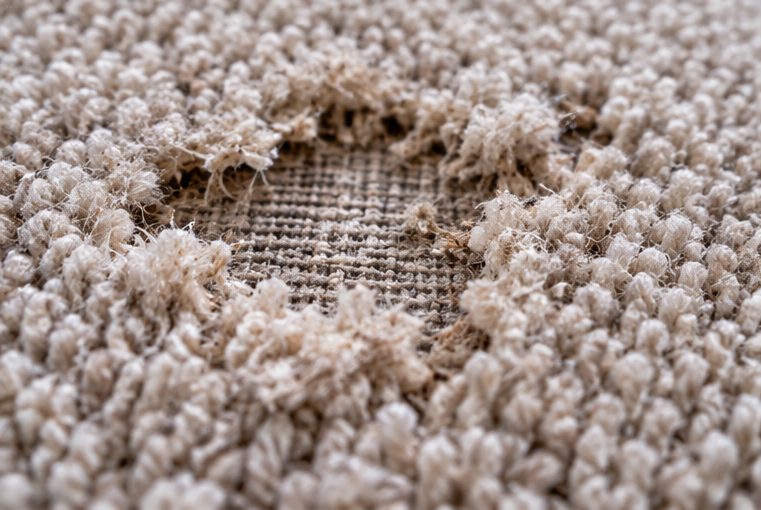
A runner held down with rods is a particular case. The pile that matters is not the part you walk on but the few centimetres tucked under each nosing, the turned edges against the bare board either side, and the underside where it passes over the rod. None of that gets a vacuum head near it in an ordinary week, and a half landing where nothing stands can go years without being looked at. Where a house has a runner from the garden floor to the top, that is one long strip of undisturbed wool linking every room in the building.
If moths keep turning up on a landing while the bedrooms look sound, the stairs are the place to start. Holes appearing in a carpet helps you separate moth damage from ordinary wear on a stair tread.
Rugs in a Long Through Room
Reception rooms here are often two rooms opened into one, with a rug at each end: one under the dining table and one under the sofa in the front half by the bay. The parts at risk are the quarter of a rug that lives under the sofa, the fringe pressed against a skirting and the pile beneath a table leg that has not moved since it was bought. Turn a rug over and look at the back rather than studying the top of it.
Wardrobes, Coats and the Spring Change-Over
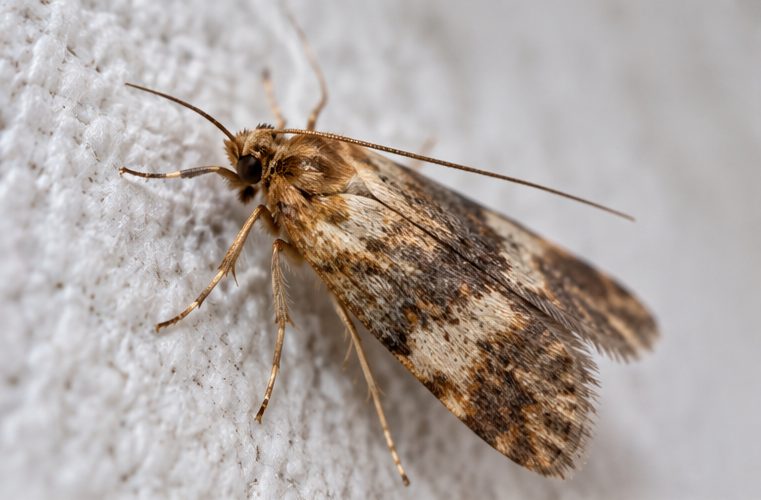
The alcove cupboards beside a chimney breast and the fitted wardrobe on a landing are where winter goes in April: coats worn all season and hung up unwashed, jumpers folded into a lidded box, blankets pushed to the back of a shelf. Wool put away dirty is better food than wool put away clean, and a closed cupboard nobody opens until October gives larvae half a year without interruption. Stored things have their own guide, on clothes and furniture, and the hiding-places guide is worth a read before you decide a room is innocent.
Making Sure It Is Moths
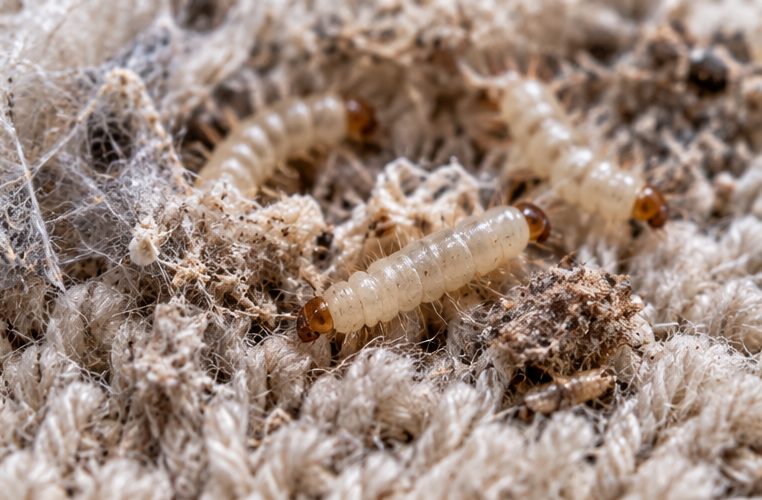
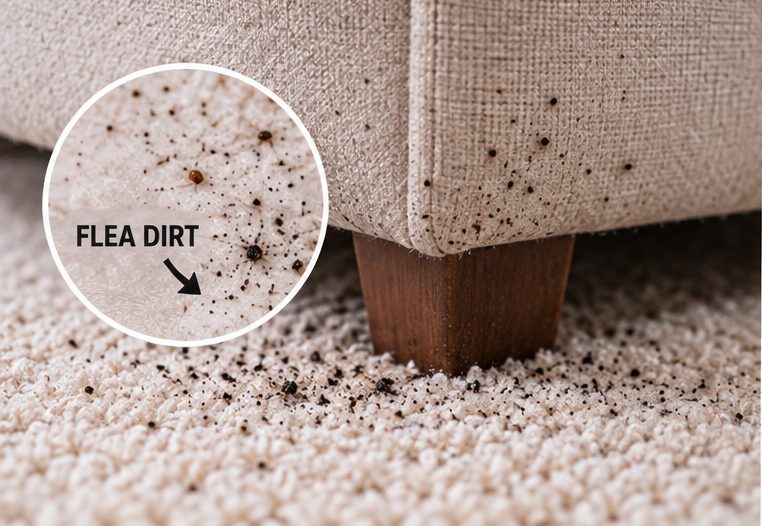
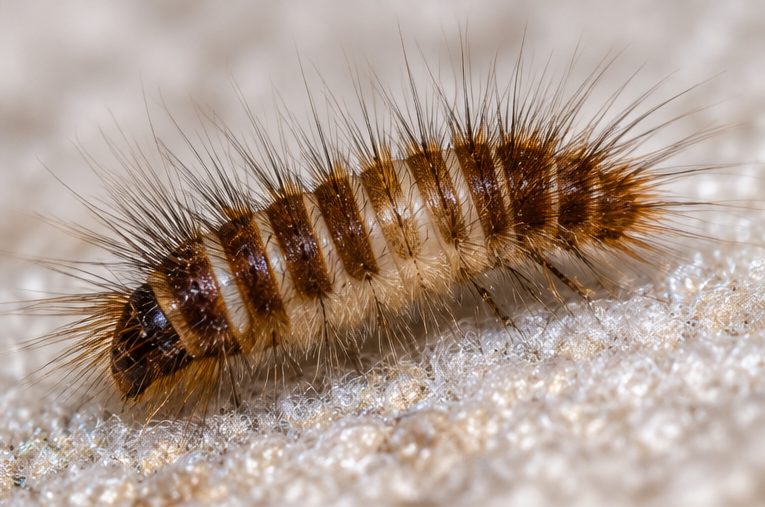
You are looking for pile worn thin without any traffic to explain it, tufts coming away, grit in the carpet and cream-coloured grubs in silky casings. Set what you find against the list of signs and the photographs of the larvae. Short bristly brown grubs with little empty skins instead point to carpet beetles in Queen’s Park, and nothing here bites anybody, so itching in a room the dog sleeps in is a reason to look at fleas.
- Start where the floor is furnished rather than walked on: behind the sofa, under the table, along the bay
- Take the crevice tool down the stairs under each nosing and along both edges of the runner
- Lift the corner of every rug and look at the backing and the fringe before calling a room clear
- Seal what comes out of a wardrobe into bags in that room, and empty the vacuum into a bin outdoors
- Anything old or inherited is a question for a specialist rug cleaner before it is written off
Rooms, Counting and Getting Them Ready
Give us a room-by-room account when you book - damage, webbing or larvae, and whether the wool concerned is carpet, a rug, a wardrobe of coats or a box of clothes - and say if the runner is part of it. However big a room is, and however many rugs are lying in it, it counts once; the hall, the landings and the staircase are not rooms of their own. Floors and wardrobe bottoms want clearing beforehand so that edges and the space beneath furniture can be got at, which the preparation guide describes.
A stray adult or two afterwards is ordinary; the timescale follows how much wool was involved and how much of it nobody could see. Carry on vacuuming under the furniture, and let us know if new grubs or fresh bare patches show up after the period we give you.
Protecting Wool in a Queen’s Park House
- Give the heavy furniture a shift now and again - a sofa or a dining table that has not moved in years is the risk
- Swap a rug end for end when you clean it, so the shaded quarter under the sofa is not always the same quarter
- Coats and jumpers go away clean, in a lidded box or a zipped bag: wool stored dirty feeds larvae better
- Open the alcove cupboards in the summer months rather than leaving them shut from April to October
- While stair rods are off for decorating, look at the underlay and the board margins under the runner
Floors and coverings come up during building work anyway, which is why Pest Control Queen’s Park takes that subject on. For prevention there is a guide of its own; storage is handled by the Brent advice on carpets, clothes and furniture; and the borough service sits at Carpet Moth Control Brent.