Where Ants Nest Around a Queen’s Park House

Garden ants want loose, dry, sun-warmed material that drains quickly, and a hundred-and-thirty-year-old house supplies it in several places at once: the sand bed under side return paving, the crumbling mortar at the foot of an old garden wall, the gravel strip along a boundary, and the soft ground beside a tree root where the lawn has thinned. A colony that is not disturbed will hold the same spot for years, which is why the trail reappears at the same door every June rather than wandering about. Where ants nest around houses lists the rest, and how to find an ant nest shows what to follow.
The side return and the garden door threshold
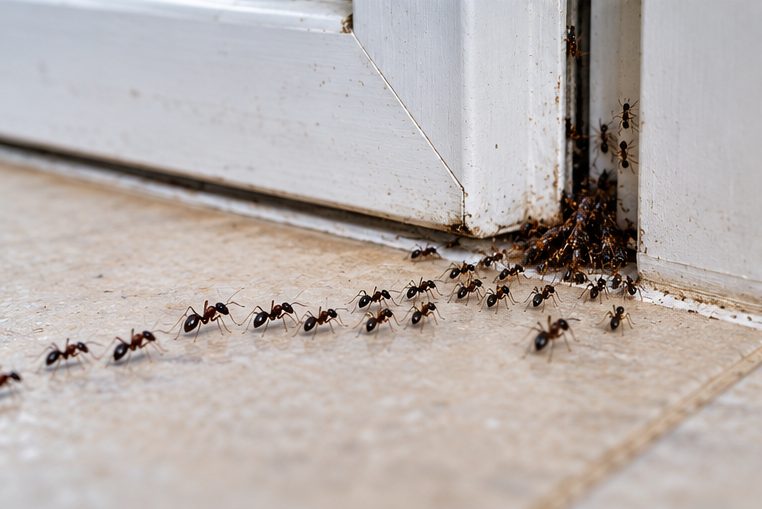
Stand in the side return on a warm afternoon and watch where the line disappears. It is nearly always at floor level: the joint where the paving butts up against the house, a worn mortar bed under a threshold, the hole where a waste or condensate pipe leaves the kitchen wall, or the track of a sliding or folding garden door. Then go indoors and find the same point from the other side — the answer is generally within a few inches of where the trail vanished outside. Why ants keep coming into the kitchen explains what draws them the last stretch.
Under a garden studio base
A studio at the end of the garden sits on a concrete pad or a raised timber frame, and the space under it stays dry, sheltered and warm through the summer. That is good nesting ground on its own. What makes it useful to a colony is the trench that was dug to take the power supply out to the studio: the duct runs back towards the house at a steady depth, and ants use the loose backfill along it as a covered road. If you find a trail running dead straight down the garden towards the back door, the cable route is worth a look. Fine soil heaped at the corner of the base is the other giveaway.
Why the Trail Ends in a Lower-Ground Kitchen
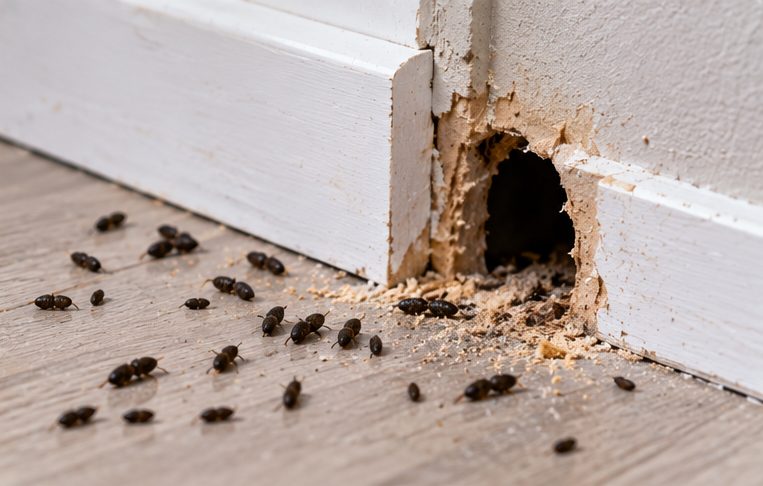
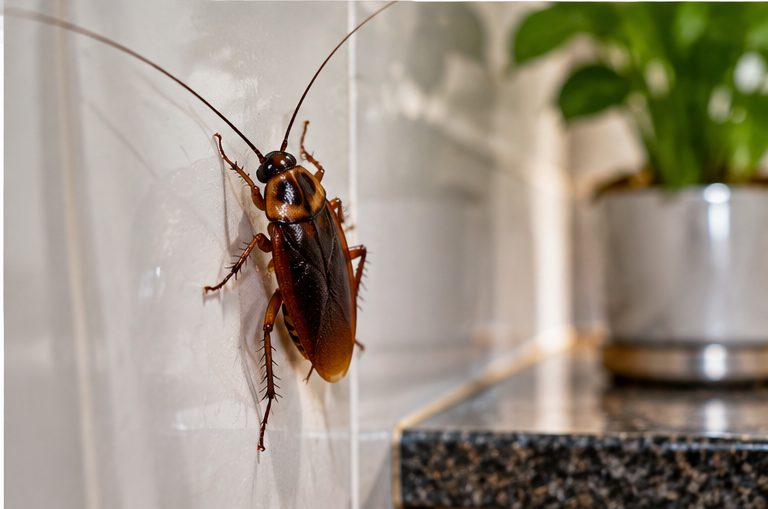
In a lot of these houses the kitchen sits at lower-ground level or in the back addition, level with or slightly below the garden. That puts the warmth, the food and the nest on the same plane, with only a threshold between them. Once inside, ants use the gap behind a deep skirting, the joint between original boards, and the warm run behind a range or a boiler, so the trail can surface in the middle of a room a long way from the door it came in by. Very small pale yellowish ants indoors in the middle of winter are a different insect with different habits — read Pharaoh ants vs garden ants before buying anything for them. Small brown insects that scatter from under a kickboard when the light goes on are more likely cockroaches.
Flying Ant Days Over a Long Lawn
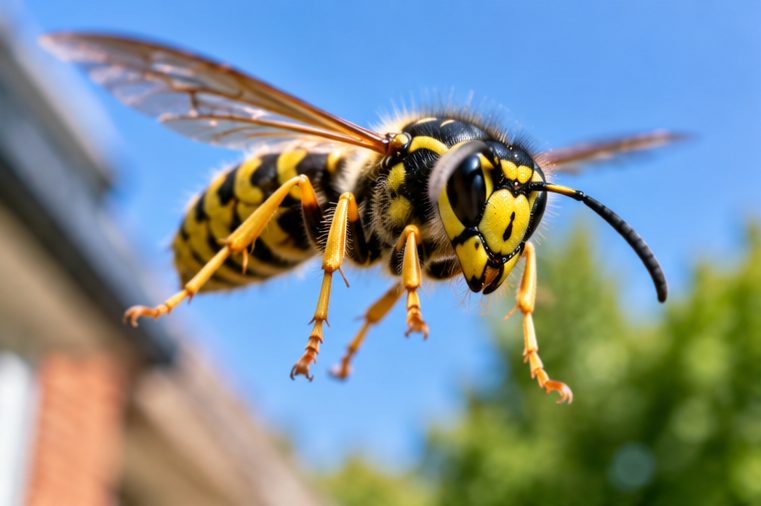
For a few humid days in July or August every colony in the neighbourhood sends out winged queens and males at once, and a long garden with old trees can seem to be steaming with them. Outdoors it is over in a day or two and needs nothing more than keeping the garden doors shut. Winged ants coming up inside the house — through a gap in the boards, from behind a skirting or around a hearth — are saying the nest is under the building rather than under the paving, and that is worth mentioning when you book. Why flying ants suddenly appear indoors covers what is going on. Insects using one fixed opening in the roofline all summer are a wasp nest instead.
Booking Ant Control and the Weeks After
- Say whether the address is a whole house or a self-contained flat, and which floor the kitchen is on
- Describe the entry point: the garden door track, the side return threshold, an air brick, a pipe hole or behind the units
- Stop spraying the trail before the visit — the ants need to be findable, and warm soapy water is enough for the worktop
- Note where the line goes outside: into a paving joint, along the side return, down towards the studio or under the garden wall
- Keep sweet foods sealed, rinse recycling, and lift pet bowls overnight in hot weather
You may still see ants for a while afterwards, and how long that lasts depends on the size of the colony and how far it runs under the paving; how long ant treatment takes goes into it, and when an ant problem needs treatment helps you judge whether you are at that point. If activity has not dropped away, get back in touch and tell us what you are seeing and where. Borough-wide prices are on Ant Control Brent.
Keeping Ants Out of a Queen’s Park Kitchen
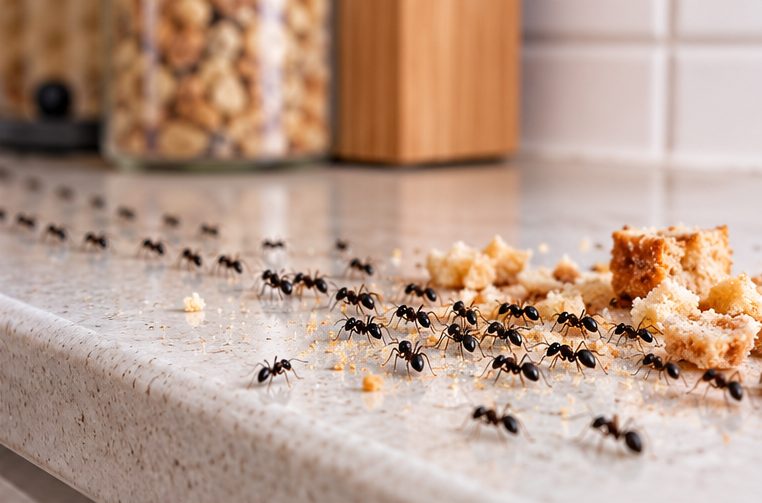
Once the colony has been dealt with, the work that pays off is all at ground level around the back of the house. How to stop ants entering your home has more, and nearby Willesden has the same paved back yards and thresholds.
- Re-point the joint where the side return paving meets the house, and pack out the gap under a worn threshold
- Brush kiln-dried sand into paving joints each spring and re-bed any slab that rocks underfoot
- Seal round the waste and condensate pipes where they pass through the kitchen wall
- Keep a hand’s width between the house wall and stacked pots, bags of compost, bikes and bin stores
- Sweep up under a bird feeder and keep the compost bin on a solid base rather than bare soil