




Walk Round First and Write the List
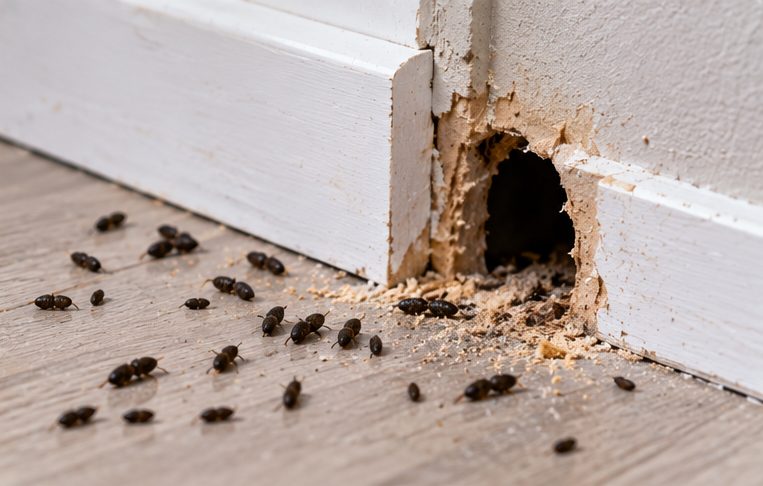
An hour is not long, and an hour spent hunting for openings is an hour not spent closing them. Before the visit, take a torch round the outside of the property and then the kitchen and bathroom, starting low and working up, and write down everything you could get a finger into. Photograph anything awkward. The most common entry points makes a good list to walk with, and what size hole a mouse can get through will change what you bother to write down.
The Front: Path, Bay and Bin Standing

Air bricks sit at path level under the bay, and after a hundred-odd years plenty are cracked, missing their grille or painted half shut. They still have a job to do, so blocking one off invites damp in the timbers underneath: a damaged one is replaced or covered in a way that still passes air, which proofing at air bricks describes. Add to the list the void under a raised front step, the hole drilled through the wall for a television or broadband cable and never made good, and, where the bins stand on soil rather than paving, the strip of ground they sit on.
The Back Addition, Where Most of the Holes Are

The back addition is where the plumbing went, so it is where the wall has been punched through most often: waste from the kitchen sink and the bathroom above, the soil stack, a boiler flue and its condensate pipe, an outside tap, an extract duct. Each hole was cut oversize so the pipe could be pushed through and hardly any were filled afterwards. The vertical joint where the back addition meets the main house belongs on the list too, and so does the gap behind a hopper or a downpipe bracket. Proofing pipe and utility gaps covers how these are closed without trapping water behind them.
Gullies at the foot of the wall
Kitchen and bathroom waste usually discharges into an open gully at the bottom of the back wall. The surround cracks, the grid goes missing and the space around it fills with leaves. Small work at the surround is within this service. What is not is anything in the pipework below it: a defective drain is repaired, lined or fitted with a one-way rat blocker by a drainage contractor, and Pest Control Kensal Green explains when that is the answer.
Doors, Thresholds and the Cellar

Timber moves. A back door onto the yard wears at the threshold and drops on its hinges until there is a gap at one corner; a gate onto the alley rots along the bottom rail; a side passage door hangs badly enough to walk under. Where there is a cellar, there is usually an old way into it as well, whether that is a hatch in the yard or a cover set into the front path, and those covers split or get replaced with a board and a brick. Where the surround is sound this is small work; where the brickwork has gone it is a builder's.
Inside: the Kitchen, the Bathroom and the Floor
Indoors the list is shorter but busier. The space behind and under the units and the gap behind the kickboard, the holes left when an old kitchen or bathroom was ripped out and the pipework moved, boxing that stops short at floor level, a fireplace boarded over rather than sealed, and in a flat the gap under your own front door onto the stair. Stopping mice getting behind kitchen units explains why that first one is usually the busiest route in the property.
What Fits Into the Hour, and What Does Not
Realistically the hour covers a damaged air brick grille or two, the openings around a few pipes at the back, the foot of a door and two or three gaps in a kitchen, depending on how easily each can be reached. A gap that needs the units taken apart or a ladder up to roof height is not an hour's work.
Rehanging a dropped door, rebuilding crumbling brickwork, making good a collapsed hatch surround and any repair to the drainage are other trades, and you will be told plainly when that is what the building needs rather than having it squeezed into the visit.
Treatment First, Then Proofing
Proofing follows treatment; it does not replace it. Close a hole that is still in use and the animal on the wrong side of it gnaws another, often somewhere no one can reach, or dies where the smell will last for weeks. Book rat control in Kensal Green or mouse control first and proofing once things have gone quiet. Before or after treatment sets out the reasoning.
Booking Proofing on a Kensal Green Property
What to tell us
Say whether you have had rats or mice and when treatment finished, whether the address is a flat or a whole house, and whether there is a cellar. Then read out your list. If the property is a flat, say which parts of the building you can authorise work on, because the stair, the roof and the outside walls are usually the freeholder's.
Clearing the way
Move bins, planters, stacked timber and bicycles back from the front and rear walls, unlock the yard or alley gate, and empty the cupboard under the sink. An hour spent shifting other people's boxes is an hour not spent sealing anything.
After the work
You will hear which openings were closed and what, if anything, needs a builder, a roofer or a drainage contractor. If gnawing or fresh droppings appear beside a sealed spot, get in touch, because telling a live hole from an old one takes a second look. Rodent Proofing Brent covers the same work across the borough, and neighbouring Queen’s Park looks at what a renovation can open up.