




Walking the Outside Wall of the House
It takes ten minutes to walk round a house looking at nothing above knee height, and that is where nearly everything is: the line where brick meets ground, the bottom edge of every door, and each point at which a pipe or a cable disappears into the wall. The most common entry points all sit on that line, and most people have walked past their own for years.
Air bricks on the original walls

These houses were built with air bricks feeding the void under a timber ground floor, and they have to go on doing that job. What changes is their condition: a clay grille loses a bar, mortar crumbles at one corner, or a later render job leaves a ragged edge around the frame. A damaged one can be covered so that air still moves through and a rodent cannot, which is a different thing from filling it in. Stopping rats at air bricks sets out the options.
Pipe and cable holes at the extension

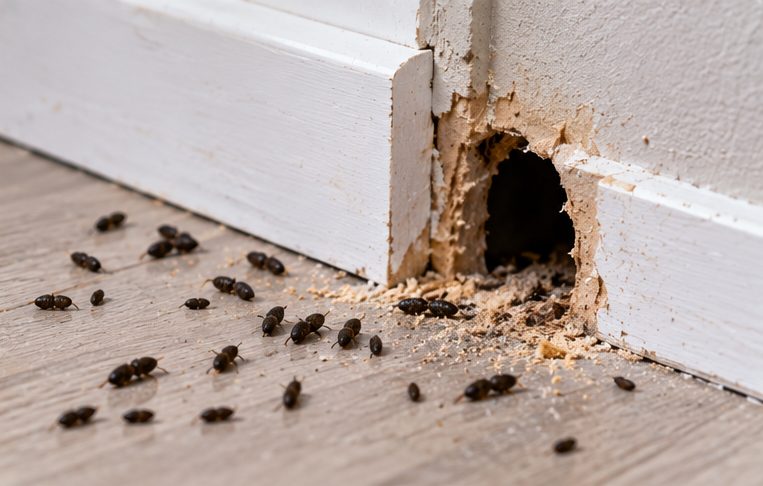
Every rear extension has a handful of holes through masonry: sink waste, the washing machine outlet, a boiler condensate pipe, a cable run out to a socket or a light. They are cut oversized for sensible reasons and then filled casually, or not at all. Closing them is quick work with the right materials, and proofing pipe and utility gaps describes what actually holds.
The threshold of the patio doors
Sliding and bi-fold doors run on a track, and the track sits on a threshold that has to drain. Over the years the paving outside settles, the seals at each end of the track perish, and a gap opens at floor level with a warm kitchen on the other side of it. It needs a careful fix rather than a quick one, because the drainage has to keep working afterwards.
The garage and the side door
Most of these houses have a drive and a garage, attached or a step away, and many keep a side door into the passage. An up-and-over door rarely meets an old concrete floor along its full width, and a side door wears at the foot of the frame before anywhere else. Where the garage has a connecting door, a pipe run or a shared wall with the kitchen, the strip of daylight beneath its door is not a garage problem at all.
What the Hour Covers
The service is up to one hour of work on small holes and gaps that can be reached from the ground. On a typical Queensbury house that might be two or three pipe entries at the extension, a damaged air brick and the foot of a side door, depending on how many there are and how awkward they are to get at. If there is more than an hour of work you will be told at the time rather than afterwards.
Some jobs belong to other trades and are better done properly by them. Rebuilding soft brickwork, hanging a new side or garage door, relaying a settled patio, or repairing the flashing where an extension roof meets the house is builder, roofer and door-fitter work. Rats coming up from a damaged drain need a drainage contractor rather than any amount of sealing, and rats and drains explains how that fault gets identified.
Why Treatment Comes First
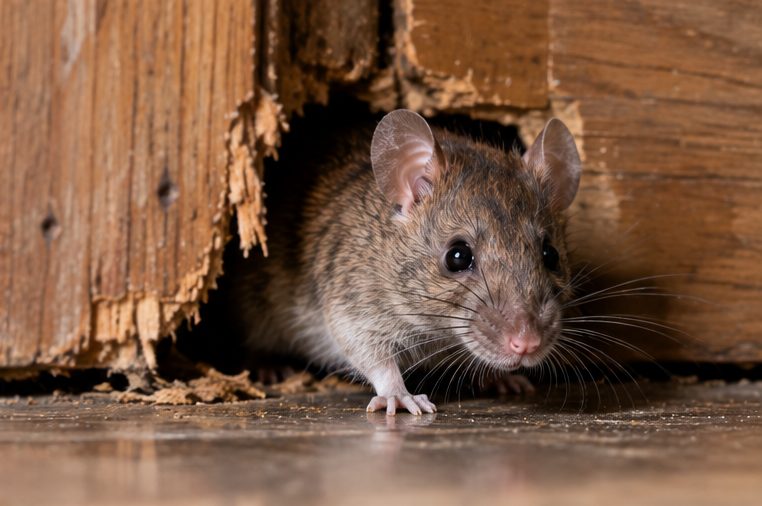
Proofing is the second half of the job, never the first. Sealing a hole that is in use can trap a rat or a mouse inside a floor, a wall or the space above an extension ceiling, and it will gnaw itself a new exit, occasionally into a room. Book rat control or mouse control first, then proofing once activity has stopped; before or after treatment explains why the order is not a technicality.
Booking Proofing in NW9 and HA8
What to tell us
Say whether it was rats or mice, whether treatment has finished, and which of the openings above your house actually has. Photographs taken at ground level along the back and side walls save a good deal of time.
Clearing the way
Move bins, planters, stacked timber and anything else standing against the walls, unlock the side gate, and clear the strip of drive in front of the garage door. Indoors, make sure the cupboard under the sink and the boiler cupboard can be opened. A gap nobody can reach is a gap nobody can close.
Once the work is done
You will hear which gaps were sealed and which need another trade. If droppings or fresh gnawing appear near something that was closed, get in touch — telling a live hole from an old one helps you judge what you are looking at.
Plug-in devices are no substitute for any of this, and ultrasonic repellers looks at what the evidence shows. The borough-wide page is Rodent Proofing Brent, and nearby Kenton has the same style of house and the same short list of gaps.