The Rooms Nobody Walks Through
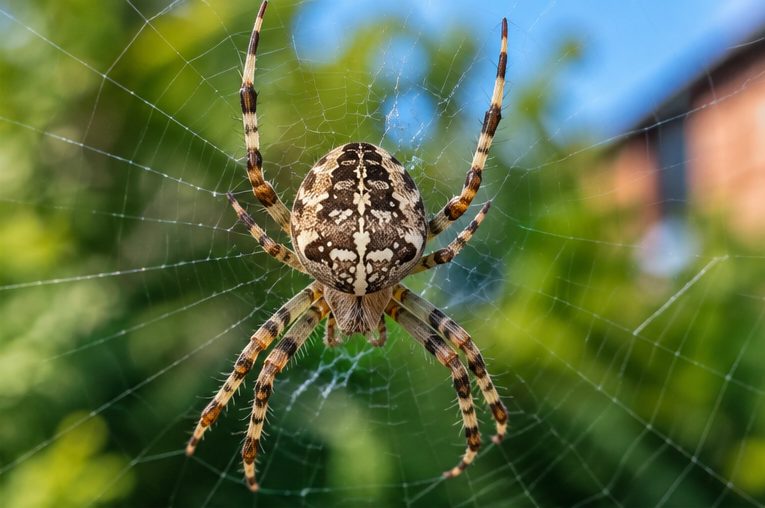
Two things decide how many spiders a place holds: how much there is to catch, and how seldom anything disturbs the web. A generous house is generous with both. The garage keeps its corners, the box room keeps its suitcases, and stored cardboard is the worst offender of all — it holds its shape, leaves gaps behind and between the boxes, and is almost never moved. Webs are not a verdict on housekeeping; they are a map of where small flying insects pass often enough to be worth ambushing. What attracts spiders into a property explains why the food supply matters more than anything you can scrub.
Eaves cupboards behind a loft conversion
Where a loft has been turned into a room, the leftover triangle under the slope usually ends up as a storage cupboard with a small door in the new wall. It is unheated, unlit and full of things that will not be looked at again for years, and insects drift into it from the roof edge all summer. The same goes for the boarded part of a loft that is still a loft. Why spiders gather in lofts covers the roof space properly, and where spiders hide inside homes is the place to start looking downstairs.
Garages, sheds and the cellar under the front room
An attached garage gets the traffic of a doorway and the stillness of a store room at the same time, which is an unusually good combination for a web. A shed at the bottom of the garden is the outdoor version. A few of these houses have a cellar under the front room, reached by a door beside the stairs, and it stays cool and dim the year round with nobody in it — webs gather on the joists overhead, behind the meter and across whatever is leaning on the walls.
False Widows on Frames, Sills and Outside Fittings

The noble false widow is glossy and dark, with a rounded body and pale markings across the back, and it favours precisely what these houses offer: the gap beside an old timber window frame, the underside of a deep sill, the back of a porch light, the corner of a shed. It is not regarded as a dangerous spider and being bitten is an uncommon event; where it happens the feeling is generally likened to a bee or wasp sting. Speak to a pharmacist or GP about a bite that swells badly or looks infected, and call 999 for signs of a severe allergic reaction after any bite or sting. Whether any spider here can genuinely hurt you puts the risk in proportion.
The Autumn Wanderer on the Landing
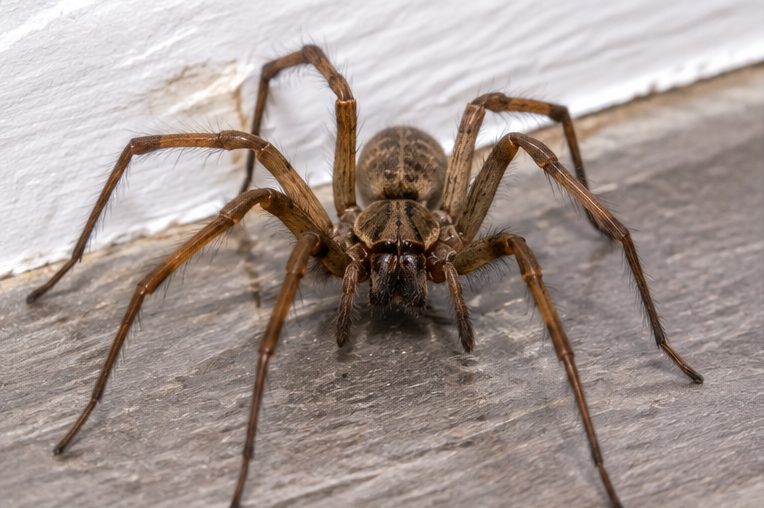
From late August the adult male house spiders leave the gaps they have spent the year in and go looking for a female, which is why one crosses the landing at eleven at night or sits in the bath at breakfast. They are not building, they have not moved in, and in a house with a garden this size a few of them over an autumn is simply the season. The pattern worth acting on looks quite different: webs, egg sacs and shed skins returning to the same room week after week whatever you do about them. Why spiders keep appearing in the same rooms draws that line, and why there seem to be so many at once explains the seasonal swing.
What a Room Treatment Changes, and What It Does Not
Treatment is aimed at rooms inside your own property where the numbers keep building, and it can bring those numbers down. It cannot cut a house off from a long garden full of insects, and nobody should promise you a spider-free home. What pest control can do about spiders is honest about the limits, while reducing spiders around windows and doors covers the part that is yours to do.
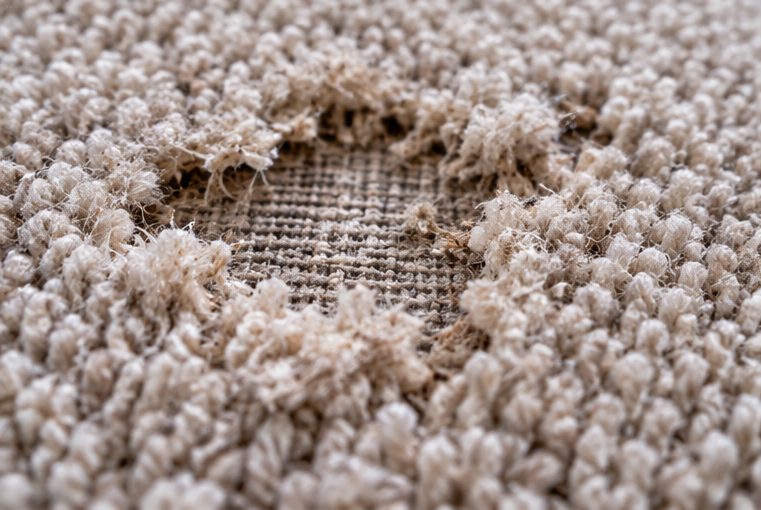
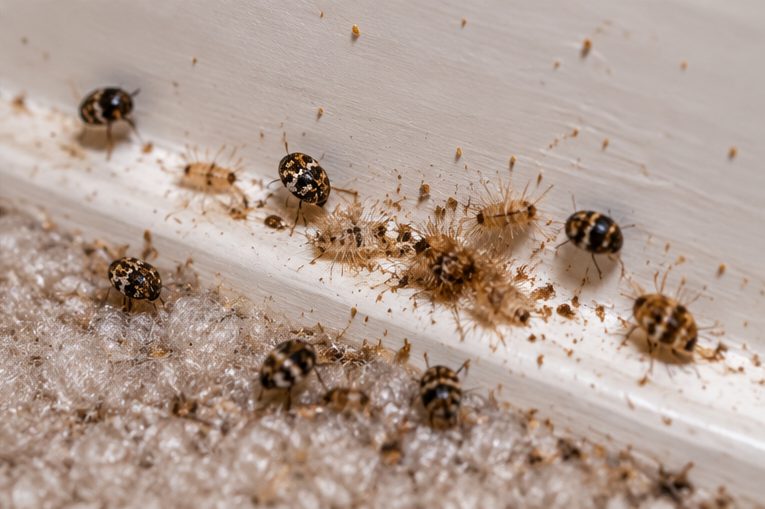
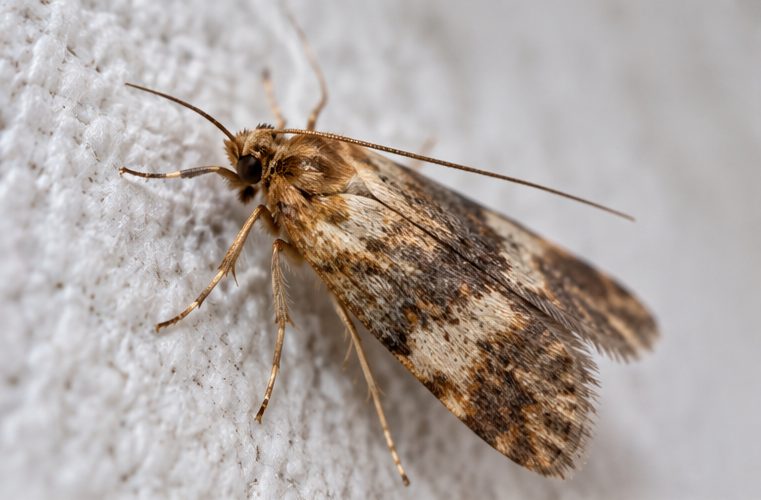
It is also worth asking what they are living on indoors. A room where small insects are breeding will hold spiders all year, so if there are also larvae or damage in the floor coverings it is worth ruling out carpet beetles and carpet moths at the same time. Whether lots of spiders mean another pest problem is the guide for that question.
Before you book
- List the rooms inside your own home where webs keep coming back, leaving out the hall, the landing and the stairs
- Say whether a cellar, an eaves cupboard or an attached garage is part of what you want done, so the count is agreed first
- Say whether a shed or other outbuilding is included, and we will confirm how it is counted before you book
- Pull stored boxes and cases away from the walls and out of the corners so those areas can be reached
- Send a photograph of anything you take for a false widow, taken from a comfortable distance
Spiders from the garden will still wander in afterwards, particularly in autumn. If the treated rooms start filling with webs up again, ring and say which ones.
Fewer Webs in a House With a Long Garden
Over a year, what you store where and how much light you throw out into the garden count for more than anything else. How to stop spiders coming back goes further, Spider Control Brent covers homes across the borough, and the houses in neighbouring Cricklewood have the same quiet corners.
- Brush webs and egg sacs off garage and shed corners, eaves cupboards, window reveals and the wall behind the downpipe every few weeks
- Swap cardboard for lidded crates, and keep them off the floor and a little away from the walls
- Turn the porch or garage light off when it is not needed, or fit a warmer-coloured bulb, which draws fewer insects
- Fill the gaps round old window and door frames, which keeps out the insects as well as the things that hunt them
- Cut ivy and climbers back off the frames and the eaves, and keep the shed, garage and cellar doors shut