
Deep Eaves and Soffits on a Dollis Hill Roofline
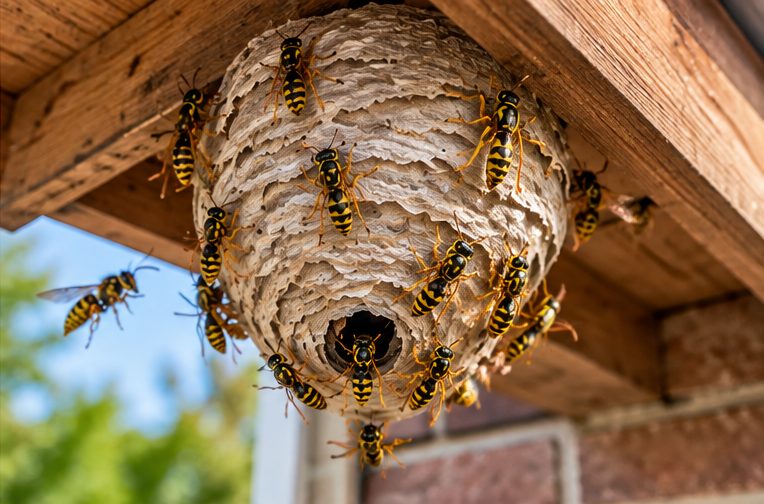
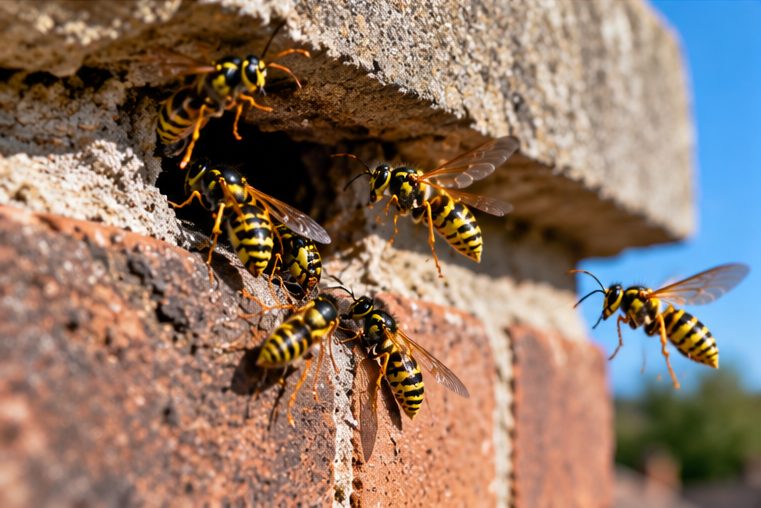
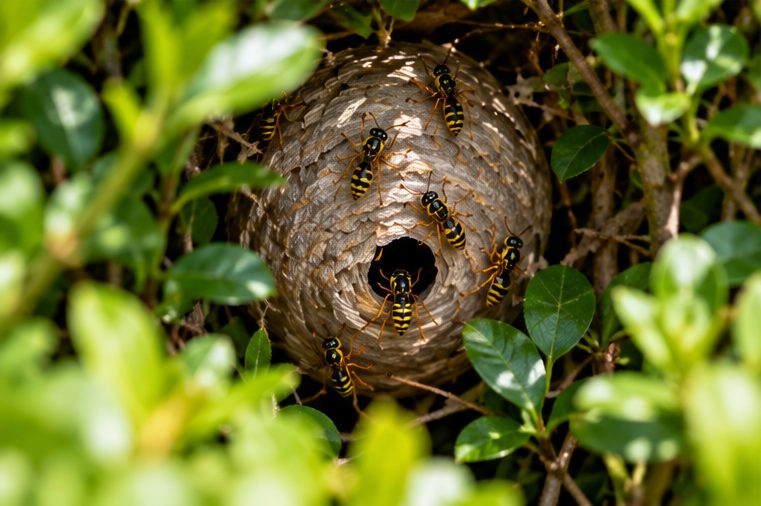
Behind the fascia of a house like this there is a long, dark, weatherproof void that nothing ever disturbs. Timber shrinks over a century of summers, a board drops a couple of millimetres at a joint, a tile lifts at the edge where a bird has been at it, and that is opening enough. Nothing is visible from the front garden: the giveaway is an unhurried two-way line of insects arriving at a single fixed point on the roofline and setting off again from it. Where wasps build nests around houses goes through the openings worth a minute of your attention on a period roof.
Bay roofs, gable verges and boxed-in loft conversions
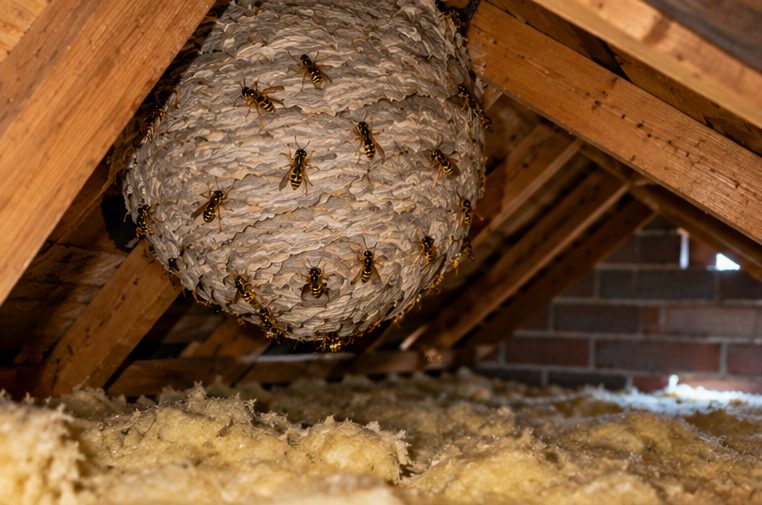
The little roof over a bay is tucked against the main wall with a flashing along the top, and it moves independently of everything around it, so the joint opens. A gable verge loses its mortar fillet. Where a loft has been converted, the eaves have usually been boxed in behind a new wall, leaving a triangular void the length of the room with nothing in it but a small access hatch — a colony can build there through July and August before anyone has cause to open it. What to do about a nest in the loft covers the next step, and whether wasps nest inside walls explains a rustle with no nest in sight.
Disused Flues and the Bedroom Below Them
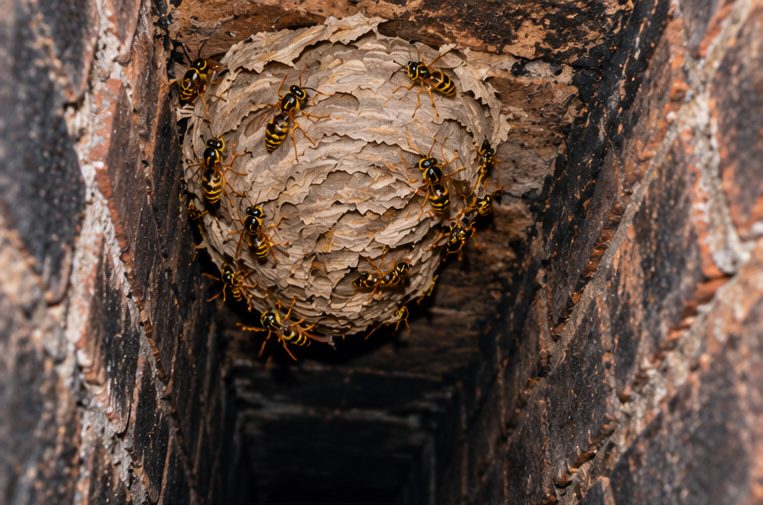
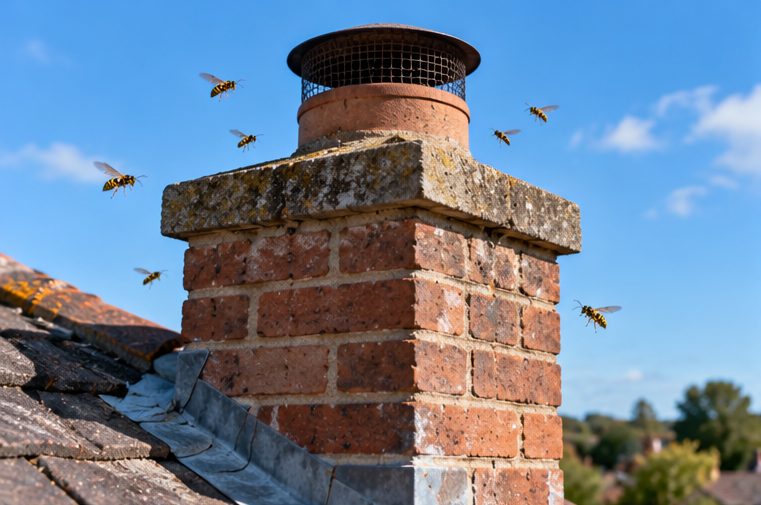
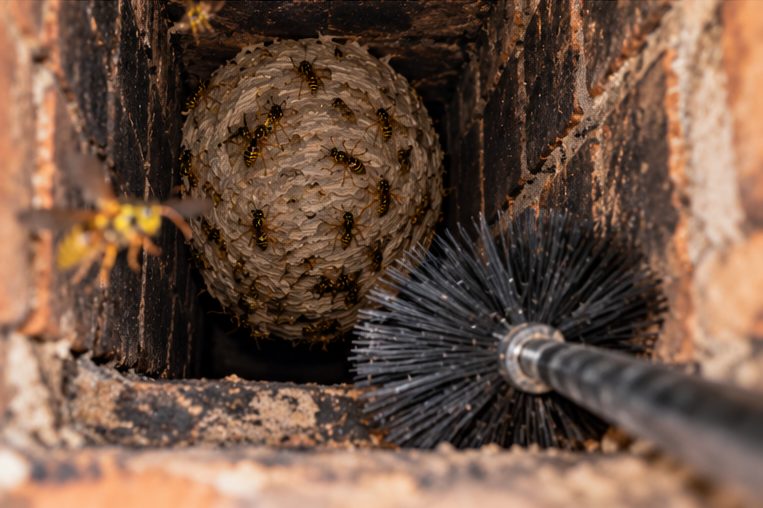
Nearly every house on these streets still carries its stacks, and nearly all of those flues stopped taking smoke a long time ago. A cracked pot, a missing cowl or an open flue above a fireplace that was blocked up years back gives a queen a sheltered shaft with a draught up it. What people notice is rarely the nest — it is a dry rustling in the chimney breast of a bedroom, or one or two insects turning up in a room with the windows shut. Do not light a fire to drive them out and do not poke anything up the flue; both push insects down into the room rather than out of the pot.
Garages, Sheds and Hedges Down a Long Garden
The side garage, the shed at the bottom, the stack of chairs under a cover and the thick boundary hedge between two gardens are all dry, still and left alone for months at a time. A nest in any of them tends to be discovered in one go, by whoever is cutting the hedge or reaching past the mower for a trowel. Garages here often hold the freezer and the recycling as well, so the discovery happens with a wheelie bin already half pulled out. Stop, shut the door and leave the rest of the clearing until afterwards.
Nests in a Lawn That Falls Away From the House
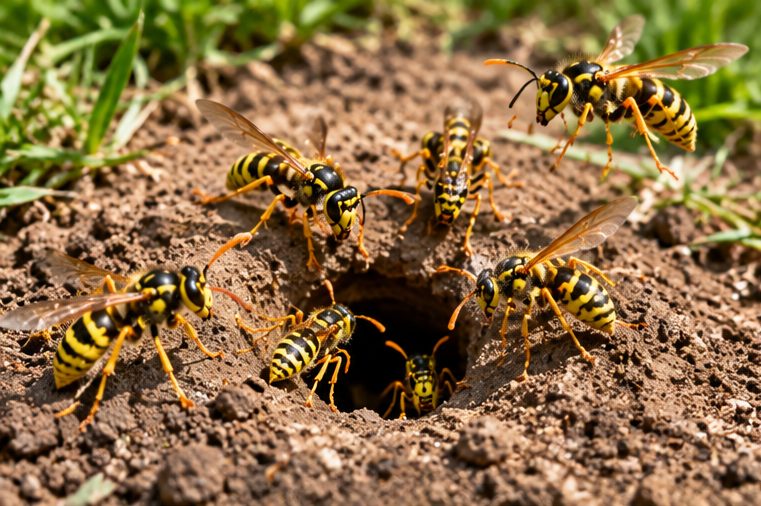
Ground nests want a bank, and a garden that drops away downhill provides plenty: the soil behind a low retaining wall, the edge of a lawn where it meets a step, a slope under a mature tree, an old rockery. The entrance is a neat hole with bare, worked soil round it and a constant stream in and out, and it is usually a mower or a strimmer that finds it. What to do about a nest in the ground explains how those differ from one in a roof, and the price is not different: a standard ground nest is the same £90 fixed price.
Making Sure There Is Actually a Nest
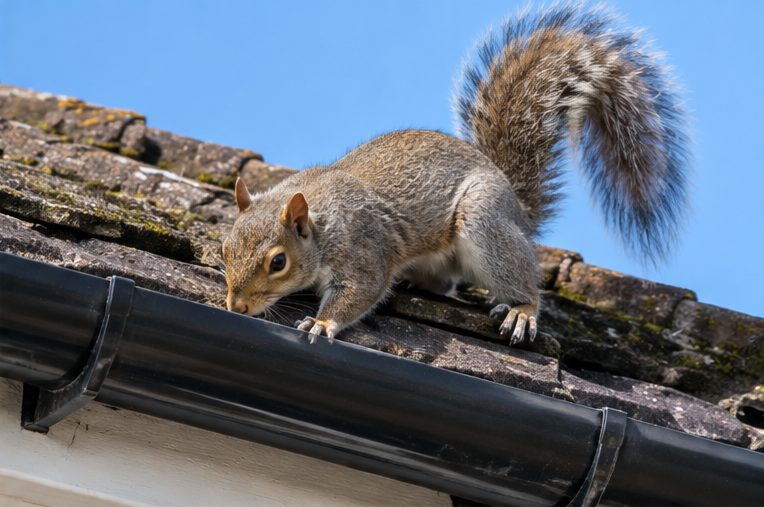
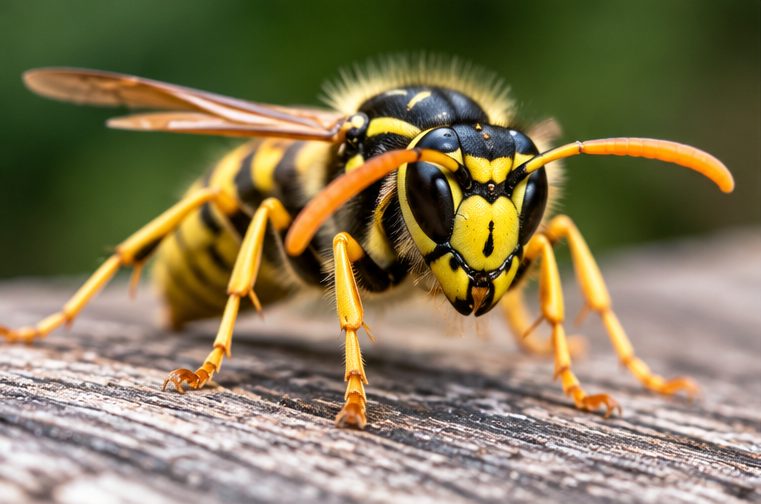
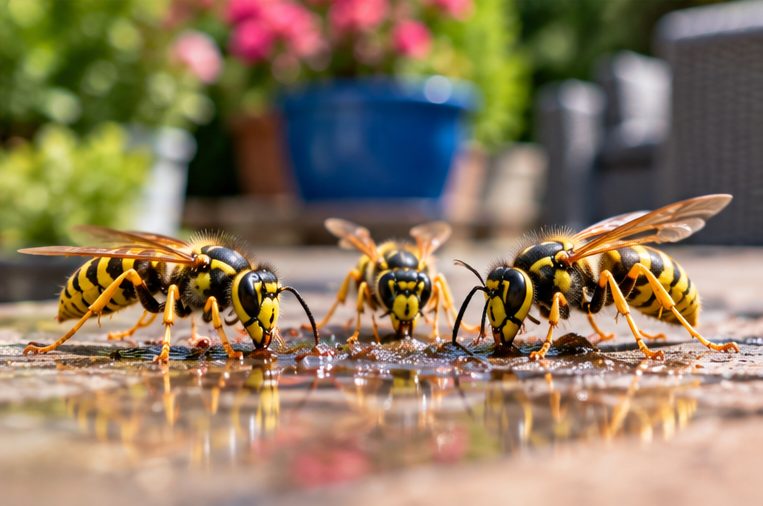
Stand well back on a warm afternoon and watch one spot for a full minute. Traffic both ways through a single hole means there is a nest behind it. Insects drifting around a bin, a fallen apple or a glass on the garden table are foraging, and may have flown a long way from a nest that is not on your property at all. Note the height and the part of the building — eaves, stack, garage roof or lawn — because that is what decides how it is reached. Rounder, furrier insects with a heavier, bumbling flight are more likely bees: telling a wasp nest from a bee nest settles it. Scratching and thumping above a bedroom ceiling at dawn is a squirrel instead, and winged insects pouring out of a path joint on one humid afternoon in July are flying ants.
What to leave alone until the visit
- Leave the opening exactly as you found it — a sealed soffit or flue makes the colony chew its way somewhere else, sometimes into the room behind
- Keep the windows on that side of the house shut, particularly the one directly below the entrance
- Do not lean a ladder against the eaves or climb onto a garage roof for a closer look
- Do not empty the shed, cut the hedge or pull the garden furniture apart while a nest is in it
- Keep the mower and the strimmer off that part of the lawn, and keep children and pets off the flight line
Booking a Wasp Visit in Dollis Hill
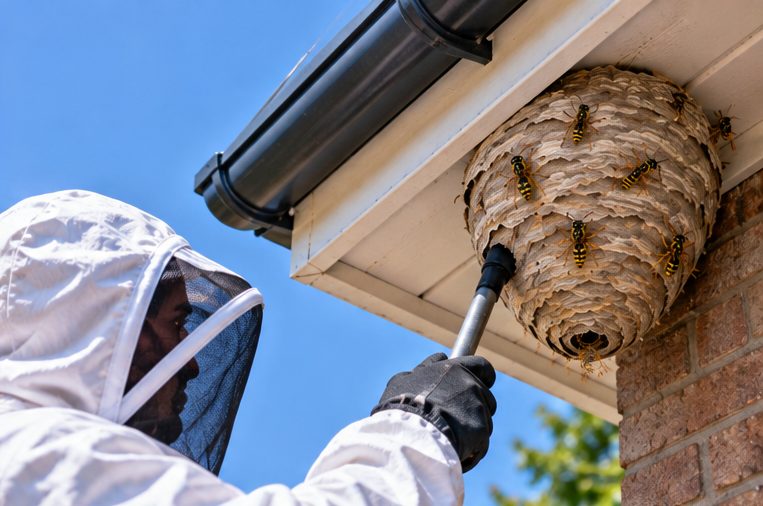
Tell us where the insects are going in, roughly how high it is, and how the back of the house is reached — through the house, down a side passage, or through the garage. If the house has been divided into flats, say which flat is yours and which windows face the nest, and let the freeholder or managing agent know when it sits on the roof or a shared stack rather than beside your own window. Anyone in the household who has reacted badly to a sting before should stay well away from that side of the building, and signs of a severe allergic reaction after a sting mean calling 999. Whether it is safe to deal with a nest yourself is worth reading before anybody decides to have a go at one on a ladder.
The days after the visit
Insects still moving about the opening afterwards are expected rather than a sign that nothing has changed. Keep the nearest windows closed, leave the gap open for now, and stay out of the shed or the garage for a few days. An old nest is not taken over the following year, so one inside a flue or above a boxed eaves cupboard can generally be left where it is. If it is still active within 30 days we come back at no extra cost, and how long treatment takes to work together with whether wasps return afterwards set out what is normal in between.
Shortening the List of Openings Next Spring
No period roof is ever wasp-proof, but winter is when the obvious gaps can be closed. Our Brent wasp advice takes the wider view, Wasp Nest Removal Brent covers the borough, and neighbouring Neasden has much the same eaves and garden layout.
- Once a nest has died off, have a roofer re-fix dropped soffit and fascia boards and repoint the gable verge
- Ask for the flashing over the bay roof and the stack pointing to be looked at in the same visit
- Fit a cowl or a guard to a flue that is no longer used, rather than capping it solid
- In April and May look under the eaves, along the hedge and inside the shed and garage for a papery ball the size of a walnut, and ring rather than knock it down
- Shake out folded chairs, parasols and covers before the summer, and keep bin lids properly down so late-season workers have less to come for