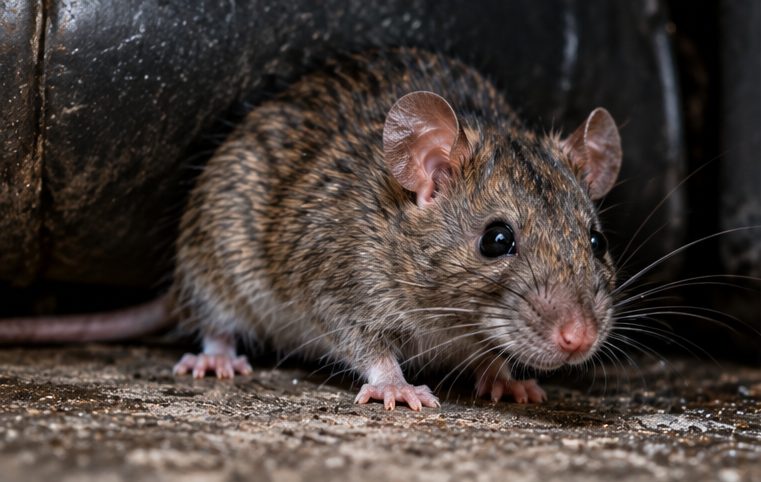
Why the Roof Is the First Place to Think About
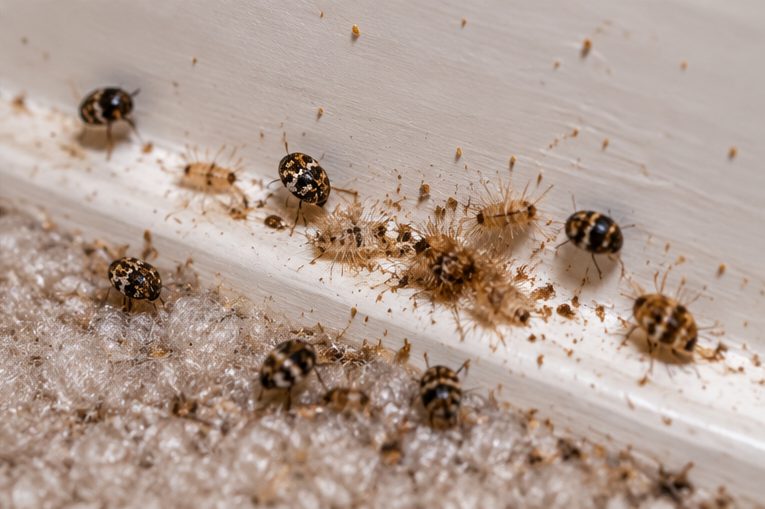
A carpet beetle larva eats keratin and debris rather than anything fresh, and an old nest is a dry heap of feathers, droppings and dead insects - the richest single food source a building contains. The roofs on these streets offer plenty of places to build one: deep eaves and soffits, the gap where a tile has slipped above a bay, the junction where a rear extension roof meets the main wall. A loft used for storage adds its own supply in the form of wool blankets, old coats and boxes that are opened once a decade.
An active nest is left where it is
Damaging or destroying the nest of a wild bird while it is being built or in use is an offence, so an active nest stays put until the birds have finished with it. Once it is genuinely empty the material and the debris beneath it can be taken out and the gap closed, which is work at height for a roofer rather than something for us. Treating the rooms that have larvae in them does not have to wait for any of that.
The voids behind a loft conversion
Converting a loft rarely uses the whole roof. What is left is a triangular void behind each knee wall, running the length of the room, reached through a small access panel that most households open twice in ten years. Those voids keep the old insulation, the old dust and anything that came down from the tiles above, and they sit directly against the wall of a bedroom. If the beetles in your house are concentrated in the top-floor room, open the panel before you blame the carpet.
How They Get Down Into the Bedrooms
The routes are the ones the building already provides: the loft hatch and its frame, the airing cupboard where pipes rise through the ceiling, the holes cut for downlighters and an extractor, the open top of a stud partition, and the boxing beside a chimney breast. That is why a single bedroom can produce beetles year after year while the rest of a large house sees almost none. Where they keep appearing in one room, look at what is above it. The guide to hiding places covers where they settle once they are down, which is anywhere undisturbed material gathers - the base of a fitted wardrobe, the strip of carpet under a bed, the joint between a deep skirting and the floorboards, and the dead flies collecting in a window channel.
Shed Skins Are the Real Giveaway
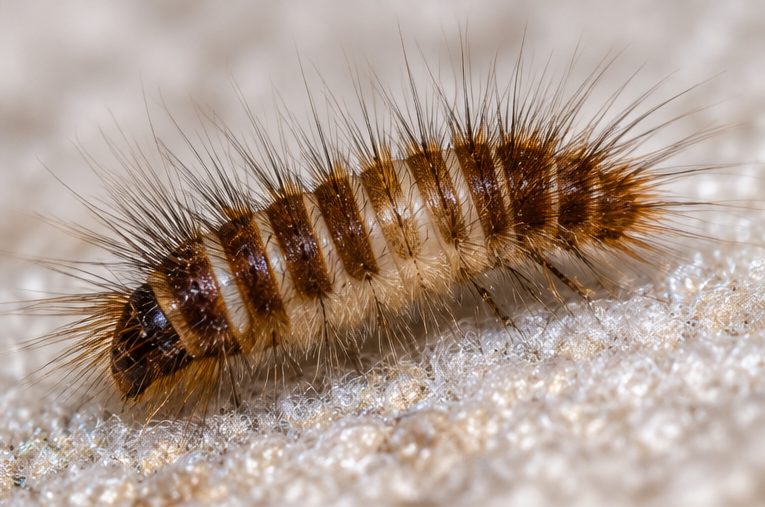
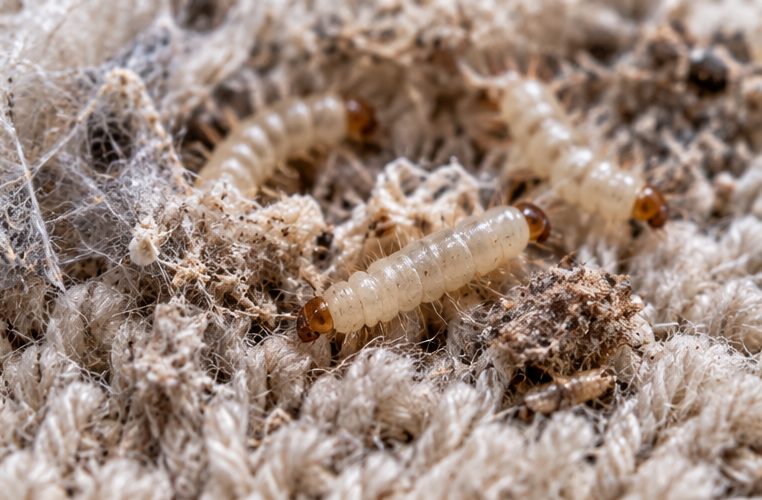
A larva grows by moulting and leaves the old bristly skin behind each time, so a room that has been breeding them for a season holds far more empty skins than live larvae. The skins are pale, brittle and hold the shape of the animal, and they collect where nothing blows them away: in the corners of a wardrobe floor, in the folds of stored blankets, in drawer runners and along the carpet edge behind a headboard. Finding them is better evidence than a single beetle on a sill, and it tells you which room to book.
- Pale, hollow, bristly skins in wardrobe corners and drawer runners
- Short brown larvae, a few millimetres long, moving slowly along a carpet edge
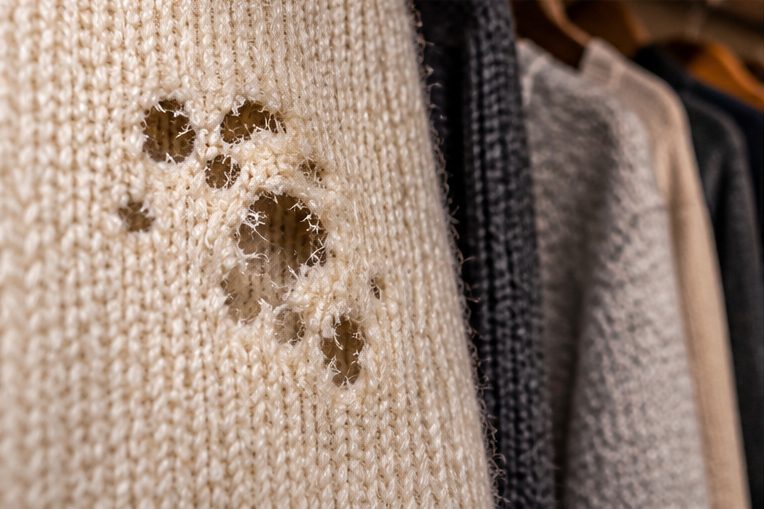
- Small ragged holes scattered through a jumper, a blanket or the back of a rug
- Round mottled beetles two to four millimetres across against a windowpane in spring
The larvae guide and the identification guide settle most cases between them. Smooth pale larvae in silky webbing instead point to carpet moths in Dollis Hill, and the comparison puts the two side by side.
Beetles on the Window in Spring
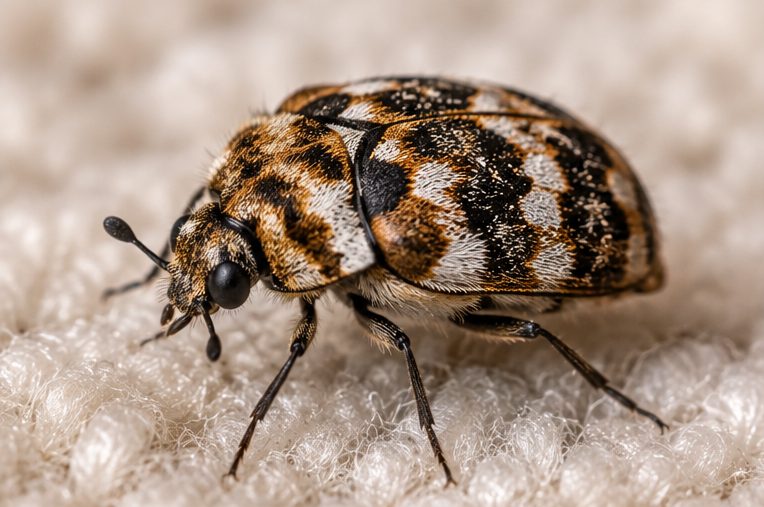
The adults eat pollen out of doors and want to get outside, so within days of emerging they are at the brightest glass in the house - the top of a bay window, a landing sash, the roof light in a converted loft. They are on their way out rather than in, which means several at one window in April or May is evidence that something has been breeding indoors over the winter rather than that anything has just arrived. The windowsill guide explains the timing, and the damage guide shows what the larvae leave behind in wool.
Bristles and Itchy Skin
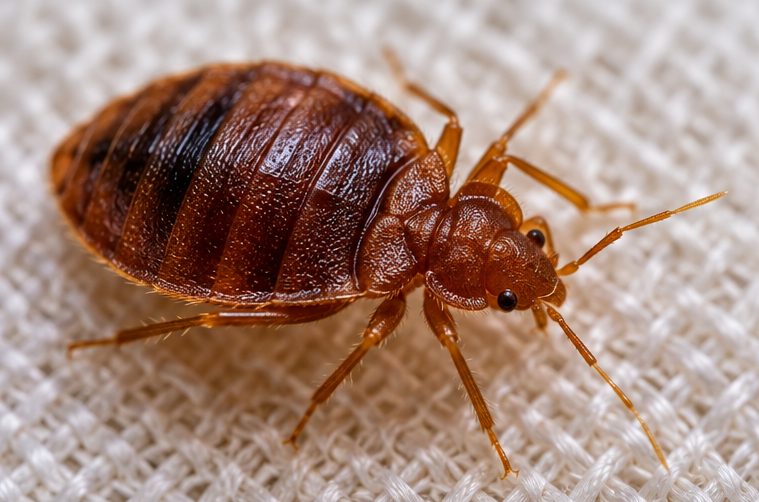
The hairs the larvae carry irritate some people's skin on contact, which is how a rash appears in a house with nothing biting in it at all. They do not bite and they do not live on people. Take a rash or any other symptom to a pharmacist or GP, and call 999 where there are signs of a severe allergic reaction; we are pest controllers and not medical advisers. Where the marks come overnight in rows on skin that was outside the covers, check the mattress seams for bed bugs as well.
Booking and Preparing the Rooms
When you ring, list the rooms with larvae, skins or damage, say whether birds have been using the eaves or a slipped tile above you, and tell us whether the loft is used for storage and whether there are voids behind knee walls. Before the visit, vacuum the carpet edges, the wardrobe bases and under the beds with a narrow tool, clear the dead insects out of window channels and light fittings, and empty the machine outside into a sealed bag. Adults can keep appearing at the glass for some weeks; how long things take to settle depends on the house and on whether the source above the ceiling has been dealt with, and fresh larvae after that period are worth a call.
Keeping the Numbers Down in a Period House
- Have the eaves, soffits and any slipped tile looked at once nesting is over, and the gaps closed while the ladder is up
- Open the loft-conversion access panels once a year and take a torch in with you
- Store wool, fur and feather items clean and sealed rather than folded loose in a loft box
- Vacuum adults off the sill rather than brushing them back into the room
- Turn a second-hand rug, coat or armchair over and look at the underside out in the garden first
The prevention guide fills in the rest, Carpet Beetle Control Brent covers the borough, and the Brent carpet beetle advice is a useful overview. Big tiled roofs in neighbouring Neasden behave the same way, and everything else these houses get is on Pest Control Dollis Hill.