
Wasp Nests at the Front of a Kensal Green Terrace
Front gardens here are shallow — a tiled path, a low wall, room for the bins and not much else — and everything on that side of the house sits within reach of a first-floor sill. That turns out to be useful. An entrance you can stand on the pavement and watch for a minute is one you can describe properly over the phone, and describing it properly is most of what decides how a visit is arranged. What you are looking for is a single point that wasps keep returning to, not insects drifting about the garden.
Porches, bins and the tiled path
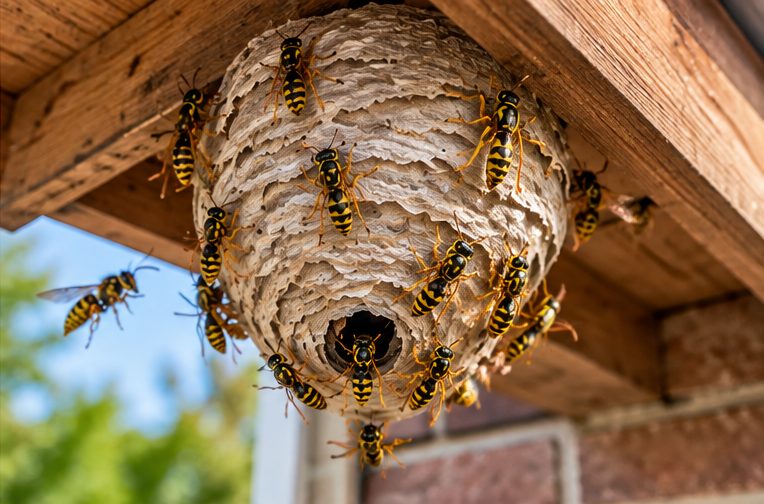
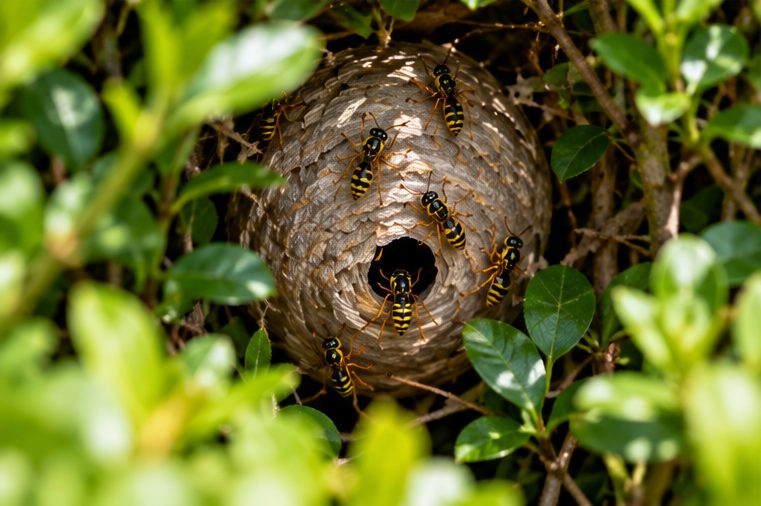
The gap where a porch roof meets the wall, the boxed-in space above a porch ceiling and the sheltered corner behind a wheelie bin all come up again and again. A nest begun in one of them in May is about the size of a walnut and holds one queen; by the time anyone notices the traffic it is a good deal bigger and has workers to defend it. Leave the bins where they are, keep the front door closed while you watch, and do not start prodding at the porch lining. Where wasps build nests around houses goes through the rest of the list.
Stacks, Parapets and the Roofline You Share With Next Door
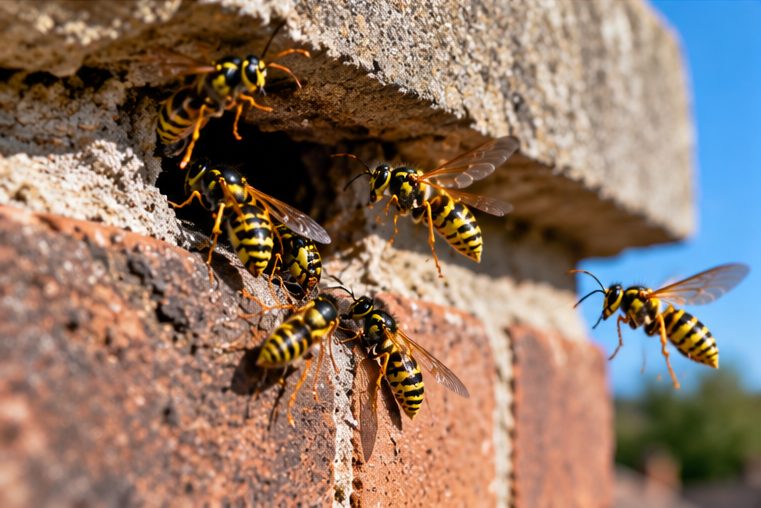
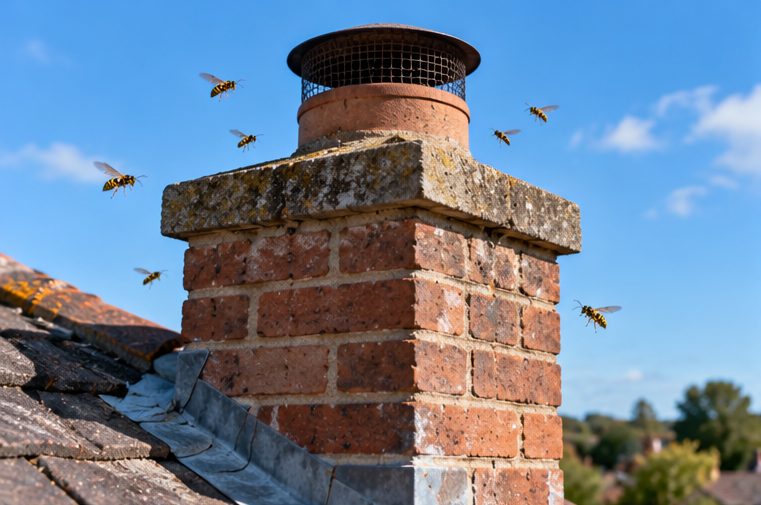
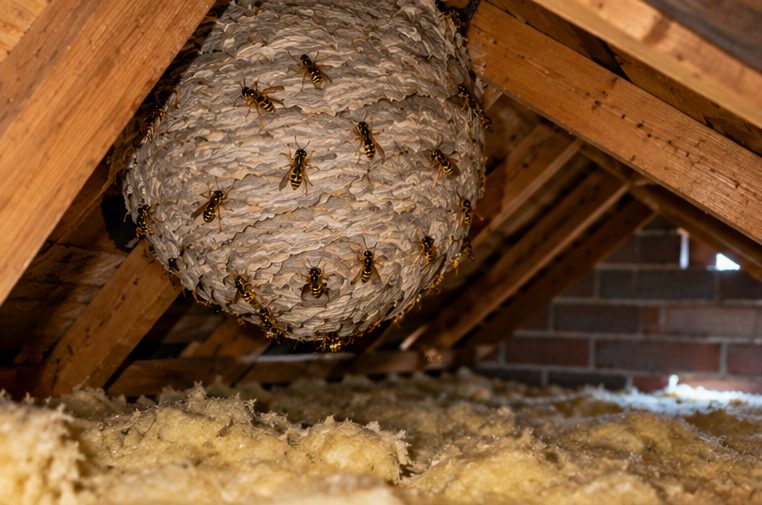
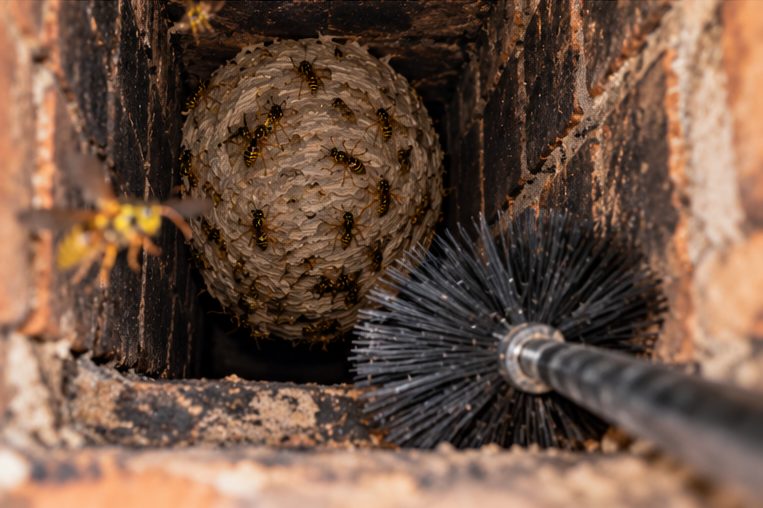
Higher up, the two places wasps get into are the stack and the front parapet. Chimney stacks on these terraces are shared between houses and have had a century of weather at the pointing; a queen only needs a gap in a mortar joint or a loose flaunching to get behind the brick. The parapet hides the edge of the roof behind the top of the front wall, and any lead work, coping or gutter detail behind it has joints. A nest in either place is usually heard before it is seen — a dry rustle behind a chimney breast, or wasps appearing in a top-floor room with no open window. Can wasps nest inside walls? explains what is going on where there is no paper to look at.
Because the stack straddles the party wall and the parapet runs the length of the terrace, the opening may not be above your own house at all. In a house divided into flats the roof and the front elevation normally belong to the freeholder rather than to any one flat, so tell whoever manages the building where the wasps go in as well as telling us. Neighbouring Queen’s Park has the same arrangement along its terraces.
Hedges and the Rough Edge by the Cemetery and the Canal
On the boundary with the cemetery and along the canal there is mature planting, ivy, bramble and hedging of a kind you do not get in a small back yard, and nests are built in all of it. A hedge nest is the awkward one, because there is nothing to see from outside until the clippers are already in it: the tell-tale is a steady stream of wasps entering the same patch of foliage at about waist height. Treatment is £90 fixed price for a standard nest in a hedge exactly as it is for one on a building. If you are cutting a boundary hedge in July or August, stand back and watch it for a minute before you start.
Ground Nests in the Back Gardens and Yards
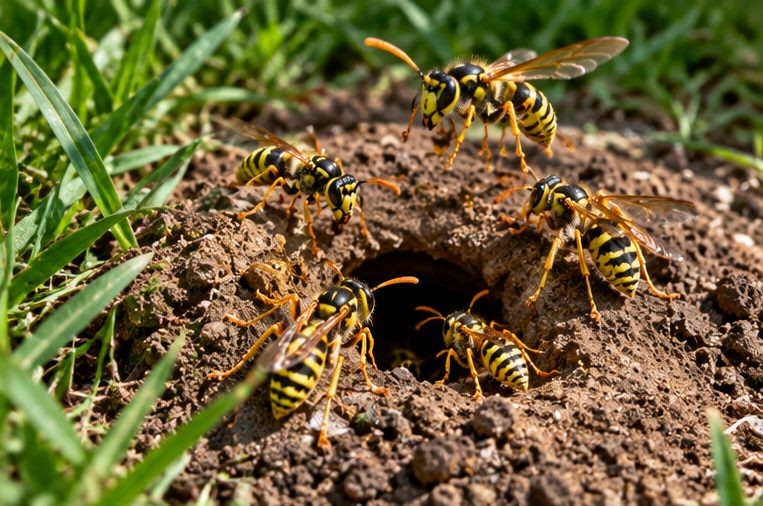
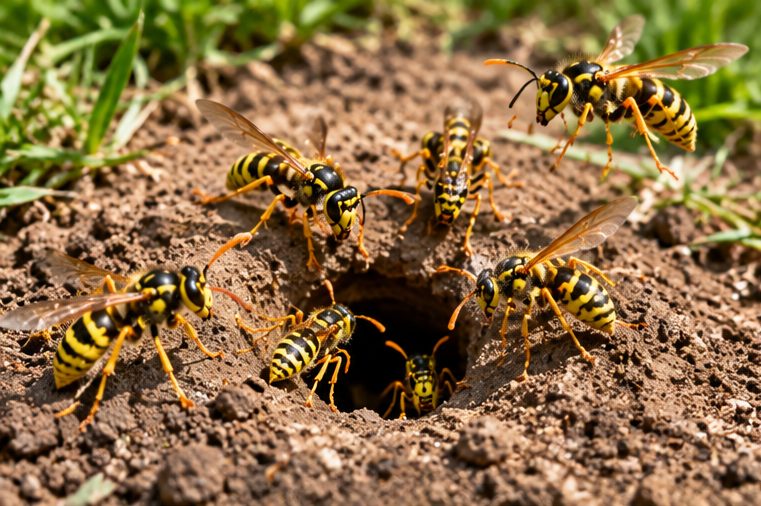
Some colonies never build in a cavity at all. They take over an old burrow or a hollow under a slab and enlarge it, so the whole nest is underground and the only sign is a hole about the width of a finger with insects going in and out at ankle height. Dry banks, the soil under decking and the loose ground at the edge of a path all suit it. What to do about a nest in the ground covers the first steps, and the price is the same £90 fixed price. Mowing, strimming and a dog nosing at the entrance are what usually provoke one, so mark the spot in your mind and keep everybody off that corner until it has been dealt with.
Is It a Nest, or Are the Wasps Just About?
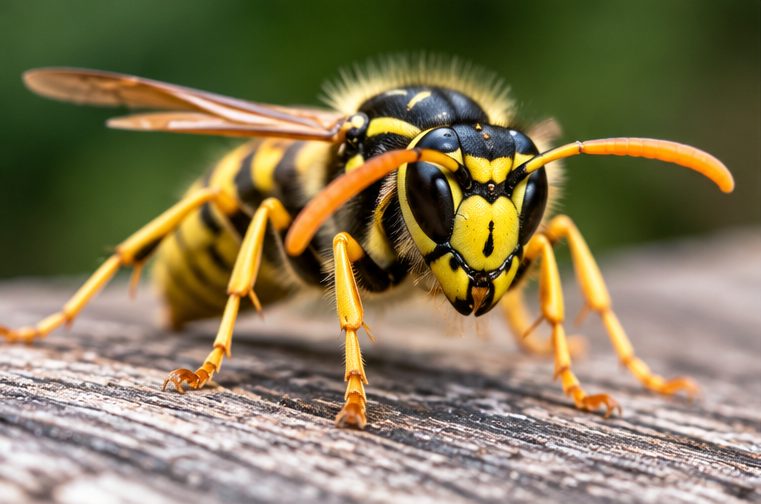
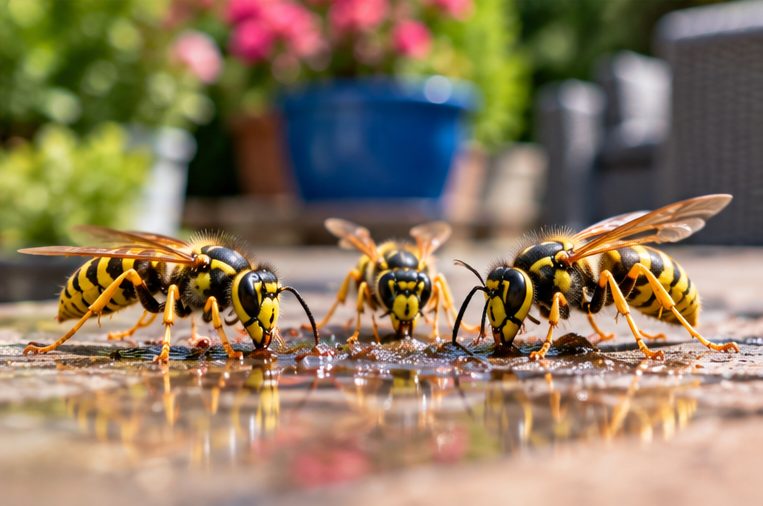
By September the colony has stopped rearing young and the workers go looking for sugar wherever they can find it, which is why bins, windfalls and a glass left on a garden table pull in so many. That is foraging and it says nothing about where they live. A nest reads quite differently: an unbroken two-way line into one opening, in both directions, for minutes at a time on a warm afternoon. The signs of an active nest set out the difference, why wasps turn short-tempered late in the season explains the change, and if the insects look furry and dull rather than sharply banded see wasp nest or bee nest. Winged insects pouring out of a joint in the front path for a single humid hour are flying ants, and heavy dragging over a bedroom ceiling before it gets light is more likely a squirrel.
What not to do in the meantime
- Do not seal the entrance: wasps shut out of their doorway work inwards instead, and behind a parapet or a chimney breast that can mean into the room
- Do not spray into a mortar joint, a porch void or a hole in the ground from arm's length
- Do not put a ladder against a parapet, a bay roof or a boundary wall to get a better look
- Keep the windows nearest the opening shut, and keep children and dogs off the line the wasps are flying
- Do not light a fire in a fireplace if the rustling is coming from that chimney breast
Booking a Visit and What Happens Afterwards
- Where the entrance is: porch, bin recess, bay roof, stack, parapet, hedge, shed or a hole in the ground
- Roughly how high it is, and which of your own windows you can see it from
- Whether we reach the back through the house, a side alley or a shared rear passage, and whether a gate is kept locked
- Whether the house is one home or divided into flats, and who manages the building if the nest is on the roof
- Whether anyone in the household has had a bad reaction to a sting before
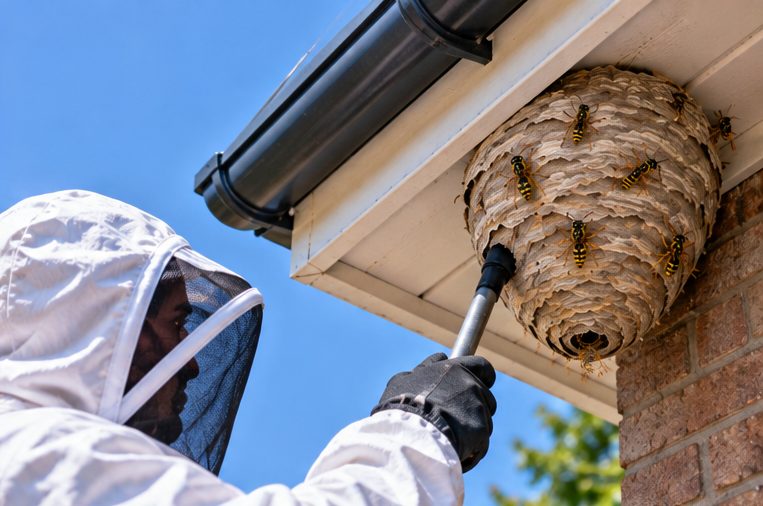
Wasps that were away foraging keep arriving at the entrance for a while after a visit, so activity round it is normal rather than a sign that nothing happened; leave the opening clear and give it a few days. A dead nest does not have to be cut out, because next spring's queens begin somewhere new rather than moving into last year's paper. Will wasps return after treatment? describes the days in between. Taking a nest on yourself in a porch, on a parapet or in a hedge is a poor idea for reasons is it safe to remove a wasp nest yourself? sets out, and signs of a severe allergic reaction after a sting mean calling 999.
Closing the Easy Openings Before Next Spring
Nothing makes a hundred-year-old terrace wasp-proof, but a handful of winter jobs shorten the list of ways in. Wasp Nest Removal Brent covers the rest of the borough, our Brent wasp advice stands further back from the problem, and the Pest Control Kensal Green page covers our other services here.
- Once the nest is dead, have a roofer look at the stack pointing, the flaunching round the pots and the lead work behind the parapet
- Get the joint above the bay roof and any lifted tile at the roof edge seen to at the same time
- In April and May, look into the porch, behind the bins and inside the shed for a small grey ball no bigger than a golf ball, and ring rather than knock it down
- Keep bin lids down and rinse cans and bottles before they go out, which makes the front garden far less interesting in August
- Walk a boundary hedge and the edge of the lawn before anyone cuts or strims, watching for traffic at ground level