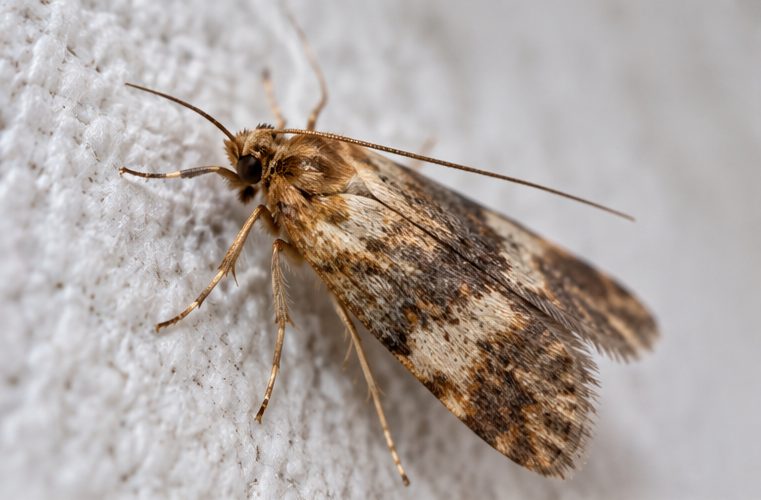

A Stair Runner on Original Treads
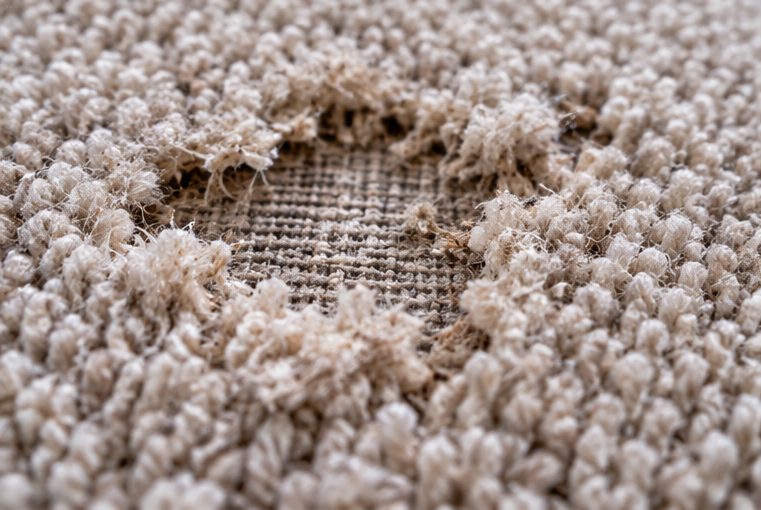
A runner laid down the centre of a Victorian staircase leaves a band of bare board either side of it, held by rods or by gripper tucked into the angle. The middle of each tread is walked on all day and suits larvae very badly. The back corner of the tread, the angle where riser meets string, the strip beneath the spindles and the underside of the nosing are touched by neither a foot nor a vacuum head, and that is where a runner goes thin first. Wear takes the blame, because a staircase is expected to wear.
If the stairs are inside your own flat or house they are yours to deal with. If the runner carries on past your front door to somebody else's, the staircase belongs to the freeholder or the management company, and it is a letter rather than a booking. Stairs and landings are never counted as rooms in either case. Holes appearing in a carpet helps you tell moth damage from ordinary wear, a pull or a burn.
Wool Under the Things That Never Move
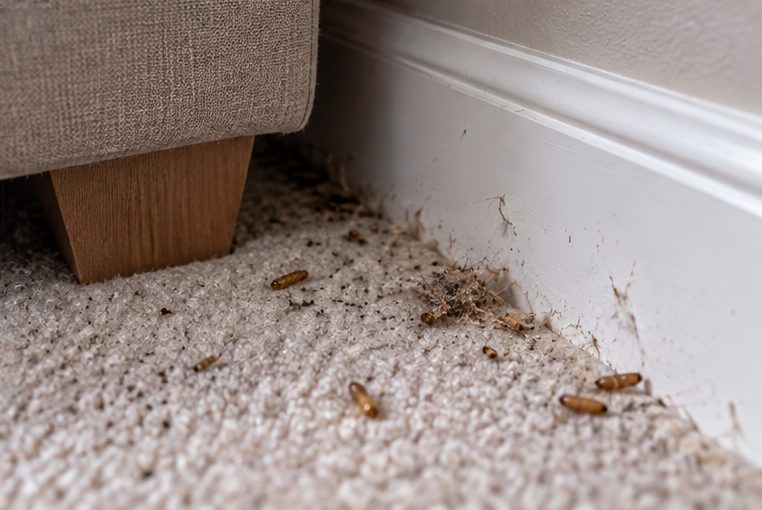
Larvae eat keratin, the protein in wool, silk, fur and feathers, so a wool or wool-blend carpet feeds them and a synthetic one gives them nothing. Work out which you have first: a dense pile that felts slightly when rubbed hard is usually wool. Then go to the places nothing has shifted in years — the band of carpet under a sofa delivered into the front room and never moved since, the strip beneath a chest of drawers, the floor inside the bay behind a long curtain, the rug edge tucked under a bookcase. A fitted carpet can be eaten to its backing underneath while the middle of the room looks sound. Why the damage collects under furniture explains the pattern.
Wardrobes, Coats and the Back of a Cupboard
Most bedrooms here have a cupboard built into the alcove beside the chimney breast, and it fills with whatever a small home has nowhere else for: winter coats, suit bags, a folded blanket, a box of jumpers. Shut in the dark for months on a dusty original floor, that is richer feeding than any carpet. Empty one onto a hard floor in daylight before you decide the bedroom carpet is at fault, and look for small ragged holes, silky tubes and cream larvae in the corners. Moth damage to clothes and furniture covers stored textiles, and this guide untangles the two names people use.
Wool Put Away in a Cellar or Under the Stairs
Where a house has a cellar or a deep cupboard beneath the staircase, that is where blankets, curtains, carpet offcuts and bags of clothes finish up. Dark and opened perhaps twice a year, it breeds moths that fly out into rooms which are perfectly clean. Open it first if adults keep appearing and no carpet in the house looks damaged.
Making Sure It Is Moths
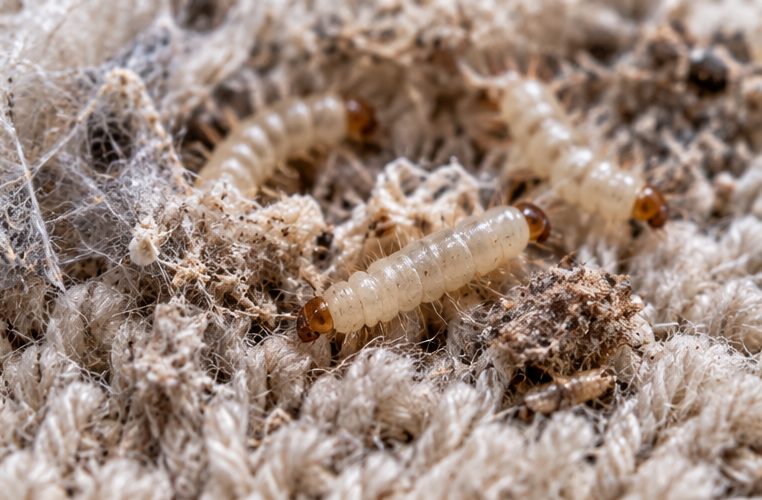
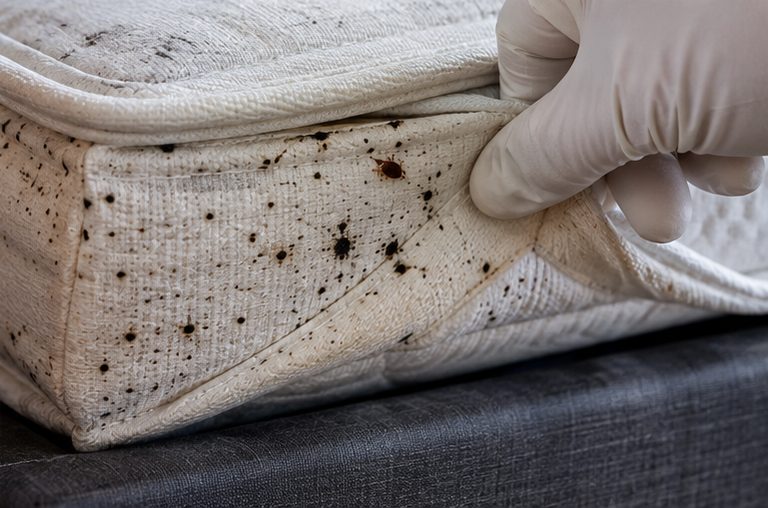
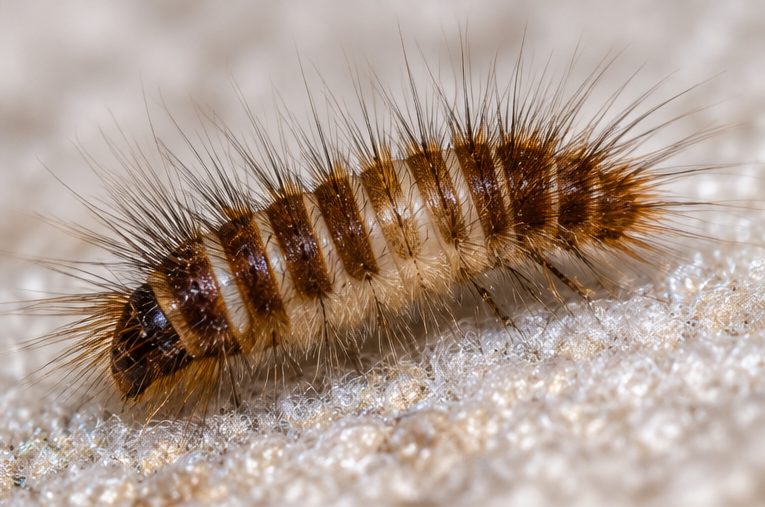
The adults are small, dull and reluctant fliers, likelier to run across a wall low down than to circle a light. What you want to find sits at floor level: thinning or bald patches, loose tufts, gritty debris and silky webbing in the pile with pale larvae inside it. The signs guide and the guide to the larvae settle nearly every case between them. Short bristly brown larvae and empty shed skins instead of webbing mean carpet beetles in Kensal Green, and none of this bites anybody — if something is biting, check the mattress seams for bed bugs.
What to Do Before the Visit
- Pull the sofa, the bed and the drawers off the walls, vacuum into the edges with a narrow tool and empty the machine into an outside bin
- Roll the rugs back and vacuum the underside and the floor beneath, board gaps included
- Vacuum the back corners of the stair treads and along the edges of a runner, not merely the middle
- Empty the wardrobes and the under-stairs cupboard, wash or dry-clean what is worth keeping and bag it before it goes back
- With an old, inherited or hand-knotted rug, ask a specialist rug cleaner what can be done before writing it off
The preparation guide gives a fair idea of the clearing and vacuuming that comes first.
Rooms, Booking and Afterwards
List the rooms where you have found damage, larvae or webbing, and say for each whether it is a fitted carpet, a rug, a wardrobe or a store of textiles; a room is counted once however many of those it holds. Afterwards, carry on vacuuming the edges and expect the occasional adult for a while: how long that goes on depends on how much was affected, which how long carpet moth treatment takes explains. Fresh larvae or new bald patches once the period we gave you has passed are a reason to ring.
Protecting Wool in a Kensal Green Terrace
- Shift rugs and furniture a little every few months so no strip of wool spends a whole year in the dark
- Vacuum the angle between carpet and deep skirting, and into the gaps between original boards
- Store wool, silk and feather items clean and sealed rather than folded loose in an alcove cupboard
- Look at the underside and fringe of a second-hand or inherited rug before it is laid
How to stop carpet moths coming back goes further, Carpet Moth Control Brent covers the borough, and the Brent advice on protecting carpets and clothes is a wider read. Homes in neighbouring Willesden and Stonebridge are priced the same way.