Parapets, Eaves and Stacks Above a Terrace
Long runs of terrace were built with a parapet wall across the front and a gutter hidden behind it, with shallow eaves and a valley over the back addition. Birds use the sheltered corners that arrangement creates, and they use the same corner year after year, so material piles up. None of that is a problem while it stays on the roof. It turns into one because larvae bred in the debris go looking for somewhere dark and fibrous, and the nearest such place is the top floor beneath them.
An Active Nest Has to Be Left Where It Is
Damaging or destroying the nest of a wild bird while it is being built or in use is an offence. Once it is genuinely finished with, the material can be taken out and the gap closed, and that is work at height for a roofer rather than something to attempt from a sash window. Treating the rooms with larvae in them need not wait for any of it.
Whose Roof Is It When the House Is Flats
Where a terrace has been divided into flats, the parapet, the gutter behind it, the stack and the eaves belong to the freeholder and not to the top-floor flat that meets the beetles. Report roosting and nesting in writing, with a photograph if one can be taken from the ground, and ask for the debris to be cleared and the gap closed once the nest is empty.
The Way Down Into the Rooms
Beetles bred above a ceiling travel by whatever the building already offers them: the loft hatch, the gap round a ceiling rose or an extractor, the open top of a stud partition put in when the house was split, the boxed corner beside a stack. That is why the flat under the roof tends to meet them before anybody else, and why a single bedroom can produce them year after year while the rest of the house sees none. If they keep appearing in one room, look above it before you blame the carpet in it.
Where the Larvae Feed Indoors
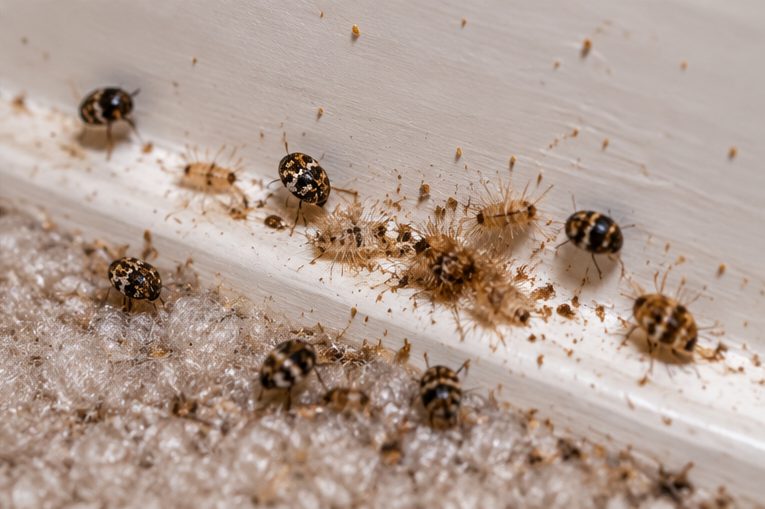
Indoors they live wherever debris settles and nothing disturbs it: behind a kitchen kickboard, in the base of a fitted wardrobe, at the joint between a deep skirting and the ends of the floorboards, under the strip of carpet beneath a bed, and in the cellar or under-stairs cupboard where suitcases and coats are kept. What gathers there is a complete diet: hair, skin flakes, crumbs, last summer's dead flies and the wool dust dropped by clothes hanging above. Where carpet beetles hide around the home covers the rest of a house, and what the larvae actually damage is worth knowing before anything gets thrown away.
Beetles on the Bay Window in Spring
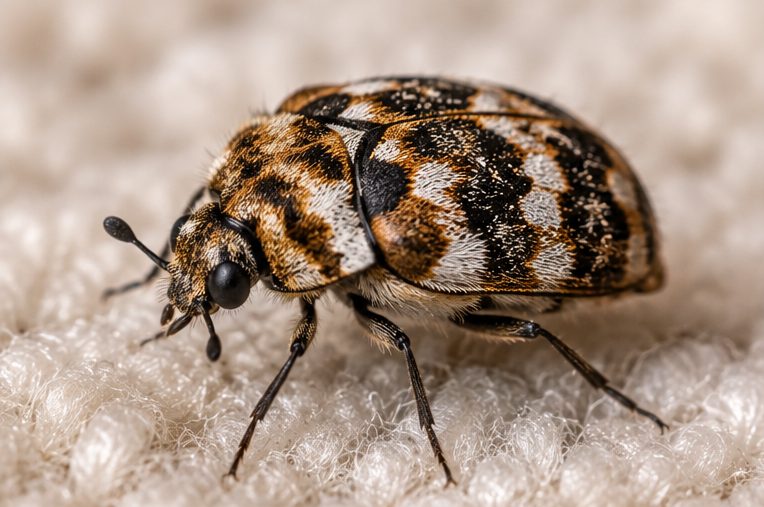
Adults are two to four millimetres long, rounded, and mottled brown, cream and white, and they feed on pollen out of doors. The moment they emerge they head for daylight, which in these houses means the top of a sash and the wide sill of a front bay. Several at one window generally means they came out of that room or the space above it rather than in off the street: why carpet beetles appear on windowsills explains the timing.
- Round, mottled beetles a few millimetres across on a sill or against the glass, most obvious in spring
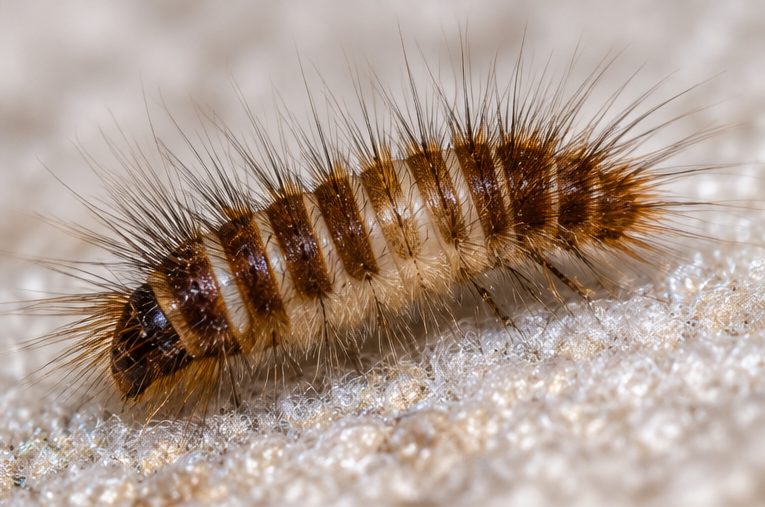
- Short brown larvae covered in bristles, along a carpet edge, under a bed or in a wardrobe base
- Pale empty skins in drawers, on cupboard floors and down between floorboards
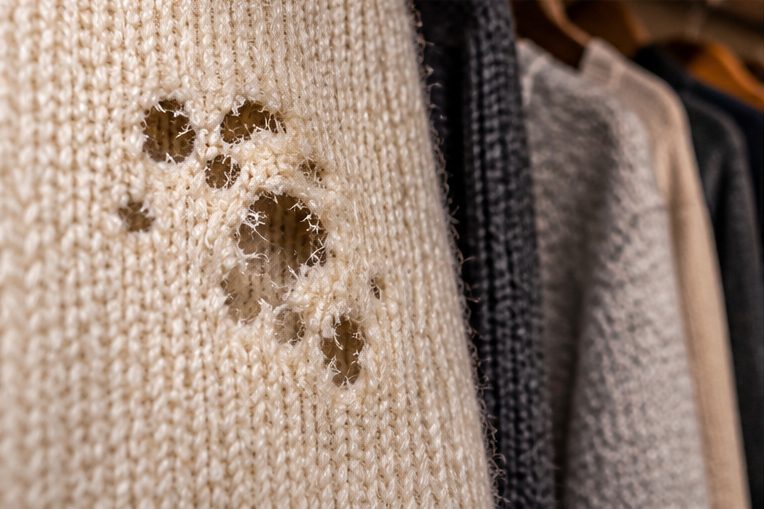
- Small ragged holes in a wool jumper, a blanket, a felt underlay or the back of a rug
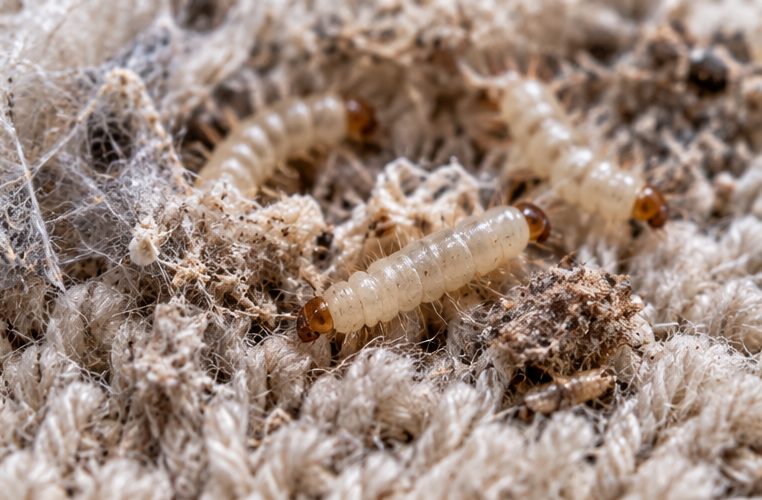
The guide to the larvae confirms it. Smooth pale larvae in silky webbing point to carpet moths in Kensal Green instead, and the comparison guide puts the two side by side. How to tell whether you have them runs through the evidence if you are still unsure.
Bristles and Itchy Skin
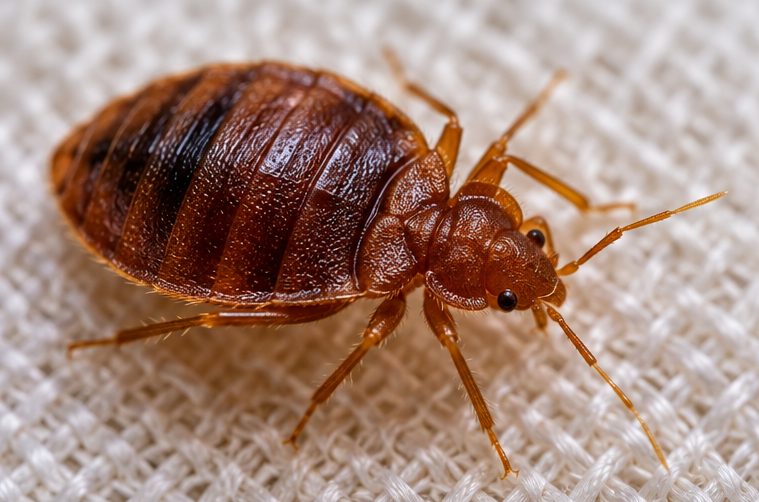
The bristles the larvae carry irritate some people's skin on contact, and can leave a rash that is easily read as insect bites. Speak to a pharmacist or GP about a rash or any other symptom, and call 999 where there are signs of a severe allergic reaction. If the marks appear overnight and only on skin that was outside the covers, look at the mattress seams for bed bugs as well. More on skin irritation covers the rest.
Booking and Preparing the Rooms
Tell us which rooms have larvae, beetles or damage, whether birds have been using the parapet, the eaves or a chimney stack above you, and what is kept under the beds and in the cupboards. Before the visit, vacuum the carpet edges, the insides of wardrobes and under the beds with a narrow tool, unclip a kitchen kickboard if it comes away easily, and empty the machine into an outside bin. Adults can keep turning up at the windows for weeks, and how long it takes to settle depends on the house and on whether the source outside has been dealt with. New larvae once that period has passed are worth a call.
Keeping the Numbers Down in a Terrace With a Parapet
- Once no birds are using them, have the parapet gutter and eaves cleared and the gaps closed, and an unused chimney pot capped or cowled
- Vacuum the skirting joints, the wardrobe bases and under the beds a few times a year, not only the open floor
- Keep wool, fur and feather items clean and sealed, and the bottom of a wardrobe clear
- Vacuum adults up off the sill instead of brushing them back into the room
- Turn a second-hand rug or armchair over and look at the underside before it comes indoors
How to prevent carpet beetles returning goes further, Carpet Beetle Control Brent covers the borough, the Brent carpet beetle advice is a useful overview, and the other pests these buildings get are on Pest Control Kensal Green.