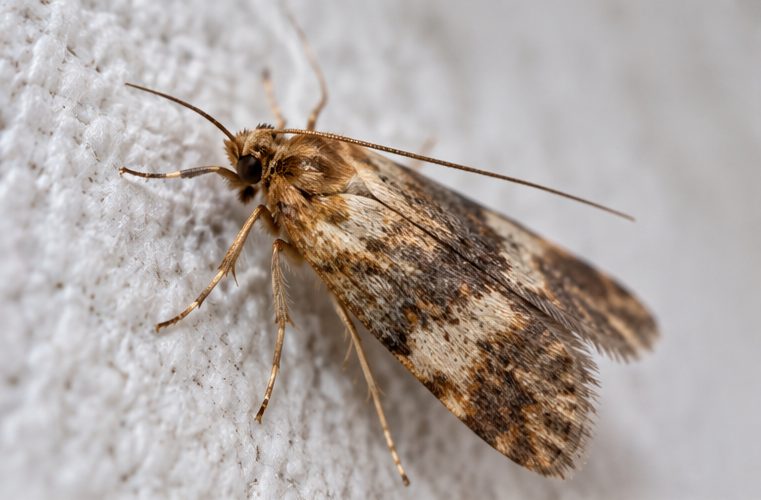

The Furniture That Has Not Moved Since the House Was Altered
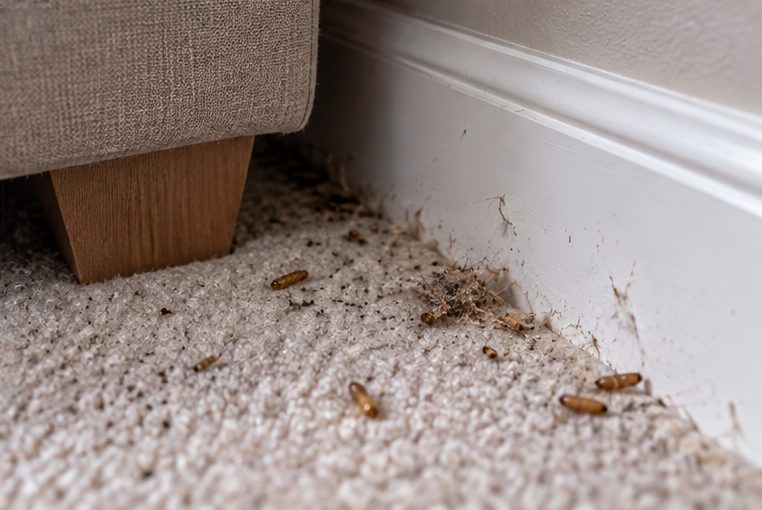
Nearly every house on this side of Queensbury has been changed at some point: a kitchen extended across the back, a wall taken out between two reception rooms, a chimney breast removed. Each of those jobs ends with the furniture being put somewhere, and a good deal of it has stood in exactly that spot ever since. The sideboard against the party wall, the sofa backed into the new opening, the bed with drawers under it, the bookcase in the alcove: the wool beneath each one has been dark and undisturbed for years, while the middle of the room gets walked across daily and suits larvae very badly indeed. Why the damage collects under furniture explains the pattern, and it is why a bald patch is nearly always discovered on the day something is finally shifted.
Wool, or Something That Only Looks Like It
Work out what you actually have on the floor before you worry. A dense pile that felts slightly when you rub it hard is usually wool or a wool blend and can be eaten; a synthetic carpet offers larvae nothing, though a wool rug laid on top of one is fair game and so is a felt underlay. Damage travels underneath a fitted carpet before it shows on the surface, so lift a corner near the gripper where the sofa stands and look at the backing.
Wardrobes and the Bedding Kept for Visitors
The second store of food in these houses is textile rather than carpet. Spare duvets, wool blankets, sleeping bags and a stack of pillows live in the airing cupboard, in the drawers of a divan base, in the ottoman at the end of the bed or in the eaves cupboard of a loft conversion, and they are opened perhaps twice a year when somebody comes to stay. A wardrobe of winter coats and jumpers on a rail does the same job. Empty one onto a hard floor in good light before you blame the carpet in that bedroom, and look for small ragged holes, silky tubes and cream-coloured larvae in the corners and the folds. Moth damage to clothes and furniture covers stored textiles, and this guide untangles the two names people use for much the same insect.
Telling Moth Damage From Ordinary Wear
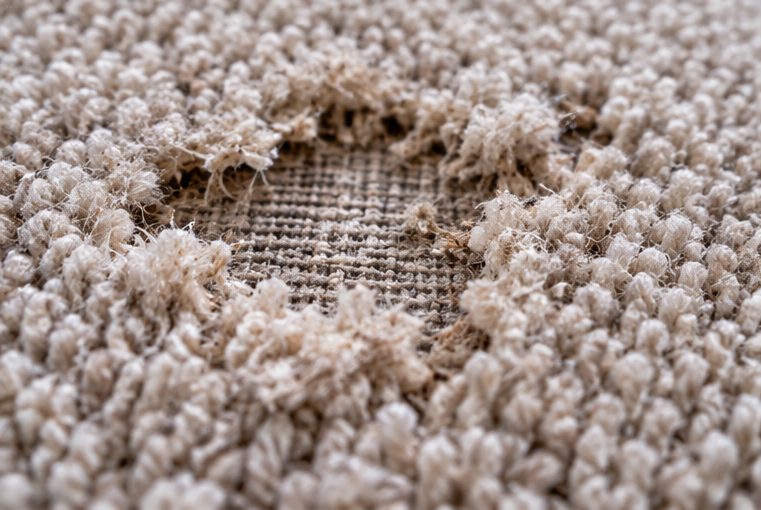
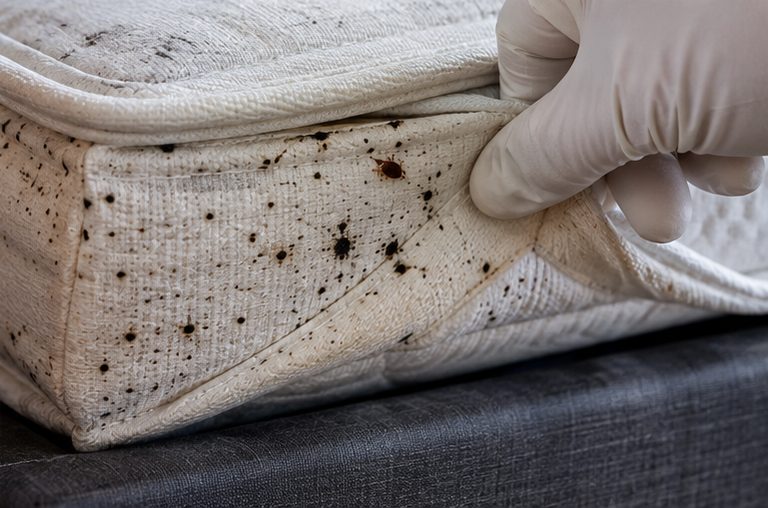
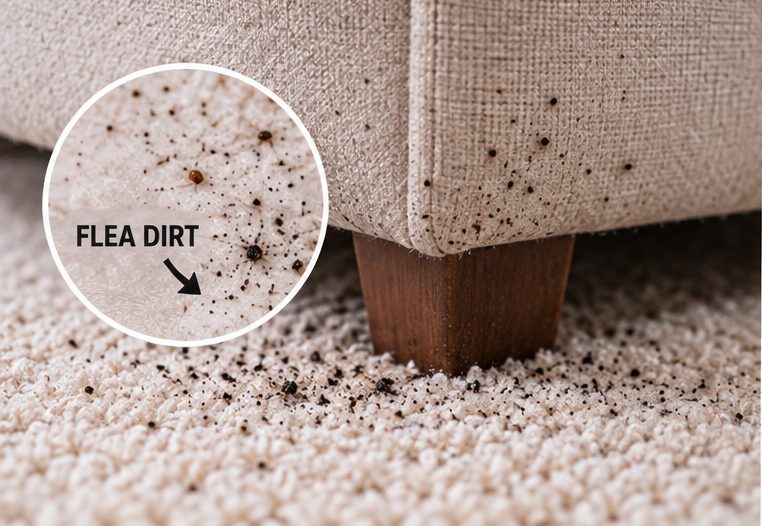
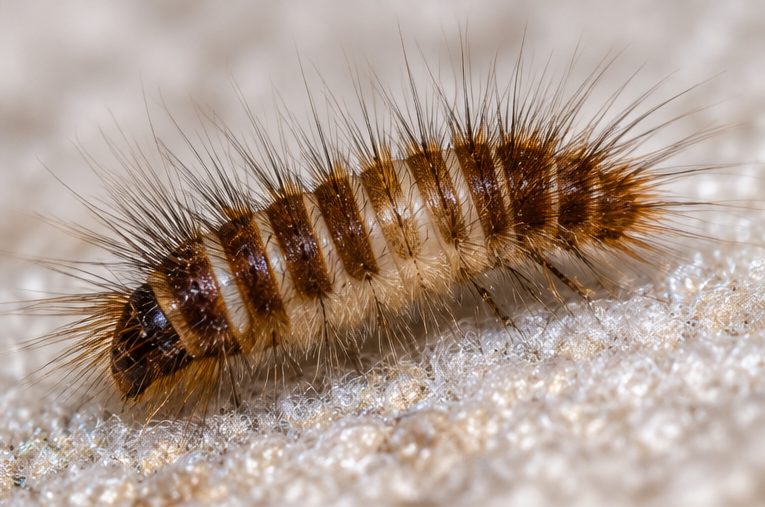
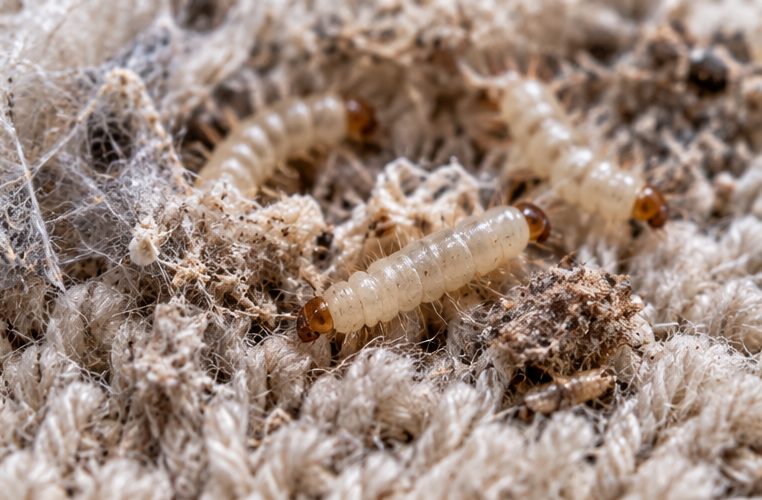
Wear shows where feet fall, which means the middle of a doorway, the line from the door to the sofa and the front of the stairs. Moth damage shows where a foot never lands: the strip behind a chest of drawers, the band under a bed, the carpet inside the bay behind a long curtain, the corner of a room a piano or a cabinet stands in. Look for thinning and bald patches with loose tufts around them, gritty debris, silky webbing down in the pile and small pale larvae inside it. The signs guide and the guide to the larvae settle most cases between them. Short brown larvae covered in bristles, with empty skins instead of webbing, mean carpet beetles in Queensbury instead, and if something is biting people then neither insect is responsible, so check for fleas or look at the mattress seams.
What Helps Before You Ring
- Move what you can move and vacuum into the edges with a narrow tool, then empty the machine into an outside bin
- Roll the rugs back and vacuum the underside and the floor beneath them
- Empty the airing cupboard and the divan drawers, wash or dry-clean what is worth keeping, and bag it before it goes back
- Leave a valuable, inherited or hand-knotted rug alone and ask a specialist rug cleaner what can be done for it
- Do not shampoo a carpet first, since a damp pile helps nobody and hides what we need to see
Rooms, Booking and the Weeks After
List the rooms where you have found damage, larvae or webbing, and say for each whether it is a fitted carpet, a rug, a wardrobe or a store of bedding; a room counts once, however many of those it contains. Mention a loft conversion and its eaves cupboards, and we will explain how those are counted when you call. Halls, landings and stairs are left out of the price altogether. The preparation guide gives a fair idea of the clearing and vacuuming that comes first. Afterwards, keep vacuuming the edges and expect the odd adult for a while, since how long that goes on depends on how much wool was affected; fresh larvae or a new bald patch once the period we gave you has passed is a reason to ring.
Protecting Wool in a Queensbury House
- Shift the heavy pieces a few inches two or three times a year so no strip of wool spends a whole year in the dark
- Turn and air a rug that has sat in one position since it was laid
- Store wool, silk and feather items clean and sealed rather than folded loose in a cupboard
- Vacuum inside the wardrobes and the bottom of the airing cupboard, not only the open floor
- Look at the underside and the fringe of a second-hand or inherited rug before it comes into the house
How to stop carpet moths coming back goes further, the Brent advice on protecting carpets and clothes is a wider read, and Carpet Moth Control Brent covers the borough. Homes in neighbouring Sudbury are priced the same way.