
The Flats Over the Parade by the Station
A parade built with shops below and flats above is one structure, not two, and the home upstairs sits on the ceiling of a business that is warm from opening until well after closing. Waste pipes, a soil stack and boxed service runs pass up through the floors, and the openings cut for them were rarely sealed afterwards. That is enough for the small, light brown German cockroach, which lives indoors permanently, climbs almost any surface and never needs to go outside at all. A flat can end up with them while its own kitchen is immaculate, which is why how cockroaches move between flats matters more here than anything about housekeeping.
The Back Stairs and the Bin Area Behind
Behind a parade there is usually a service yard with bins, stacked crates and flattened cardboard, and a back staircase used for deliveries and for getting furniture up to the flats. Cardboard is both shelter and food, and a box carried upstairs can carry passengers. Keep your own waste in a lidded bin rather than in a bag left on a landing, break boxes down and take them straight out, and ask the landlord or freeholder about the state of the yard, which belongs to the building rather than to you.
How a House With a Garden Ends Up With One
In a semi or a terrace with its own kitchen and no shared services, a cockroach nearly always arrives as cargo. A second-hand fridge or cooker collected in a van and left in the garage for a fortnight, a run of boxes from a house move, a crate of stock stored at home, a holdall back from a stay somewhere else: any of those can bring one in. How cockroaches get into properties runs through the rest. One insect seen once may genuinely be a one-off, and it is droppings, egg cases or a second sighting that turn it into a job.
German Cockroaches in a Warm Extension Kitchen
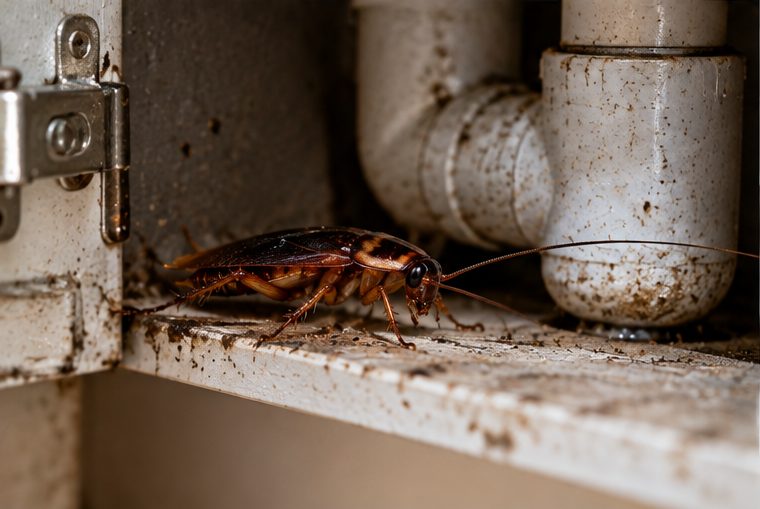
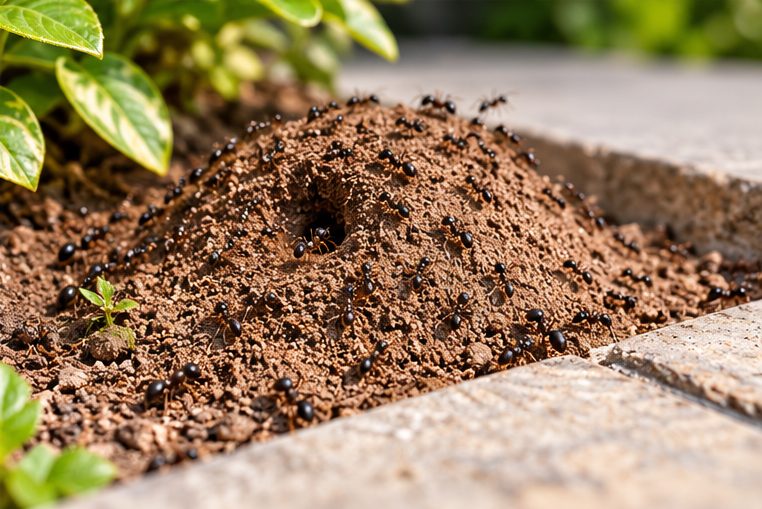
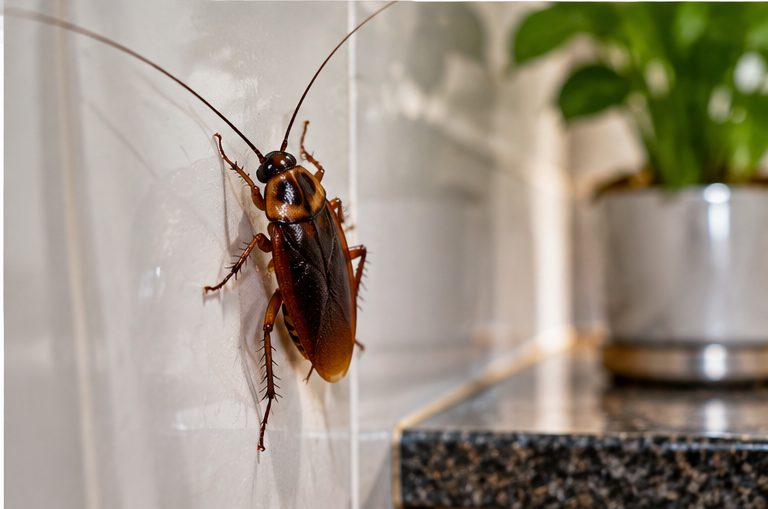
A rear kitchen extension is where the heat now lives in these houses: the oven and its surround, the fridge motor, the boiler or the cylinder cupboard, the washing machine and the run of sealed units either side of them. A German cockroach spends daylight wedged into a warm crack behind or inside one of those and comes out after midnight. Look with a torch after the light has been off an hour. Where cockroaches hide in kitchens takes the units in order, and insects walking steadily in a line across the worktop instead of scattering are ants in Queensbury.
Oriental Cockroaches Low Down and Damp
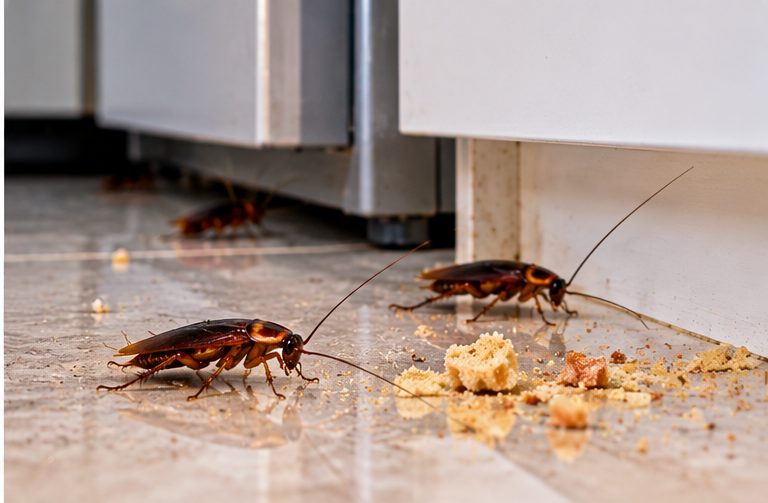
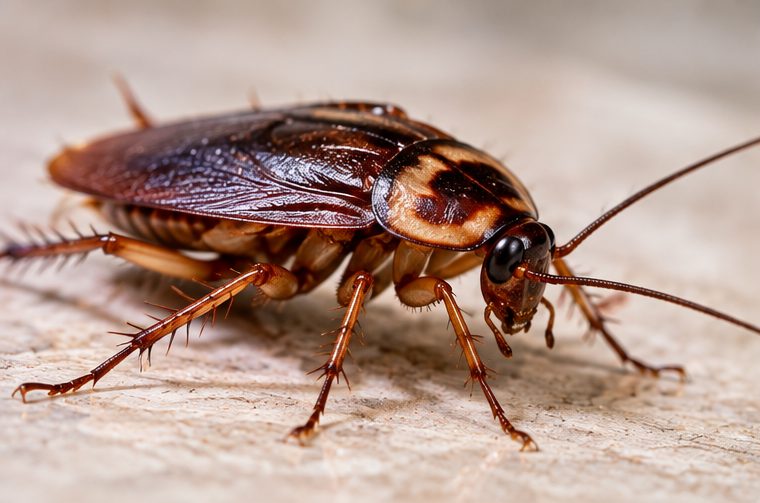
The other species is a different animal in a different part of the property. An Oriental cockroach reaches two and a half centimetres, is very dark and glossy, moves slowly and cannot climb a smooth vertical surface, and it wants cool damp rather than heat. The gully outside the back door, the drain in the side passage between the house and the garage, the floor of an unheated garage and the ground under a step are all the sort of place it uses, and it works inward at ground level rather than down from above. The comparison of the two species settles which one you are dealing with, and that decides whether the work follows the warm services or the damp.
What to Do This Week
- Go into the kitchen an hour after dark, switch the light on and note exactly where they run to, because that is where they live
- Empty the cupboard under the sink and the one next to the cooker so the backs of both can be reached
- Move cereal, rice, flour and pet food into sealed boxes, and leave nothing on the worktop overnight
- Mend a dripping tap, dry the sink before bed and clear the gully by the back door, since damp draws the larger species as strongly as food draws the smaller
- Stop storing flattened cardboard in the garage or the cupboard under the stairs
- Leave shop sprays and foggers on the shelf; they scatter cockroaches into voids and, in a flat, towards the neighbours
If you are unsure what you have found, the signs guide covers droppings like coarse pepper and the dark, capsule-shaped egg cases left in corners.
Booking: What to Tell Us
Say whether it is a whole house, a flat over the parade or a flat in a converted house, which floor you are on, where and when you have seen them and what size they were, and whether a neighbour or the business below has mentioned the same thing. Clearing the cupboards beside and beneath the units before the visit helps, and we will say what else to do and what to avoid afterwards. Sightings for a while after a visit, as eggs already laid hatch out, are not in themselves a sign that anything has failed, which this guide explains; if they continue past the period we give you, come back to us.
Shops and Takeaways on the Parade
Food and commercial premises are quoted per site rather than at the flat or house price, because the kitchen, the storage, the waste arrangements and the trading hours are different in every unit. Anyone running a food business has a legal duty to keep pests away from where food is prepared and stored, so a single sighting needs acting on at once. Ring and describe the premises, and say whether there are flats above.
Closing the Way Back In
Once they have been dealt with, fill the gaps around the waste and heating pipes under the sink and behind the boiler, and in a flat ask the freeholder about the holes where services cross a floor or a party wall. Check a second-hand appliance on the drive before it is plugged in, and keep the garage tidy enough that you would notice something living in it. How to prevent cockroaches returning goes further. Scratching behind the units at night is a different tenant altogether and belongs with mouse control in Queensbury. The borough page is Cockroach Control Brent, the Brent cockroach advice covers the first few days, and nobody should feel awkward about ringing.