
Nests in the Eaves and Soffits of a Sudbury Semi
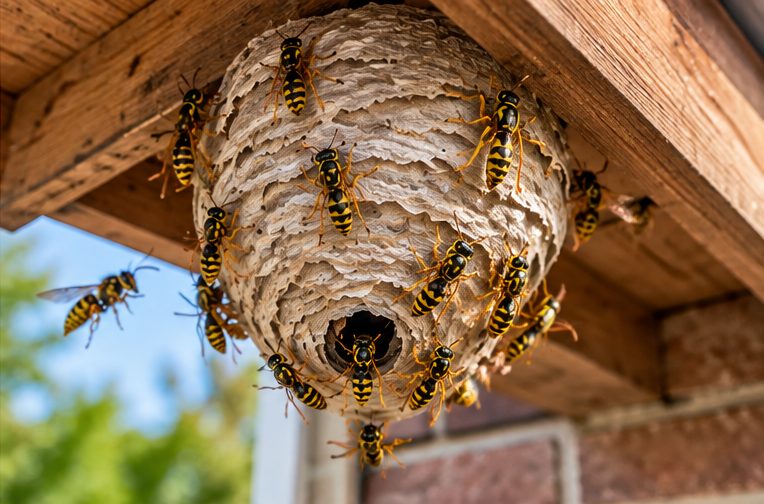
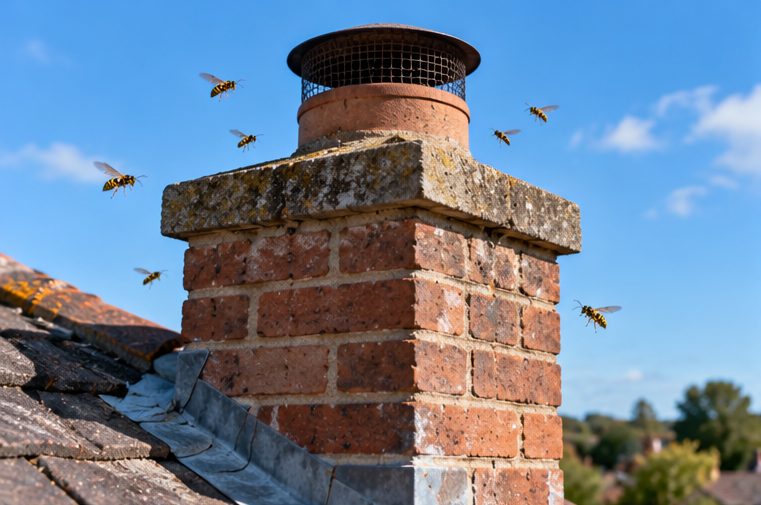
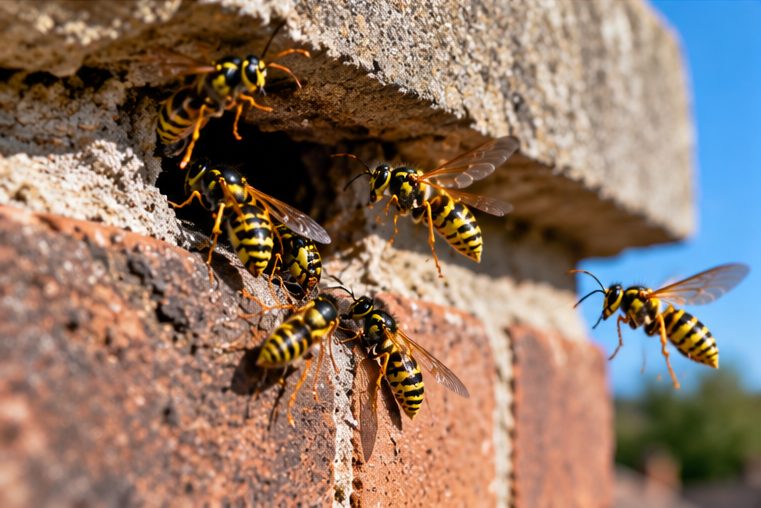
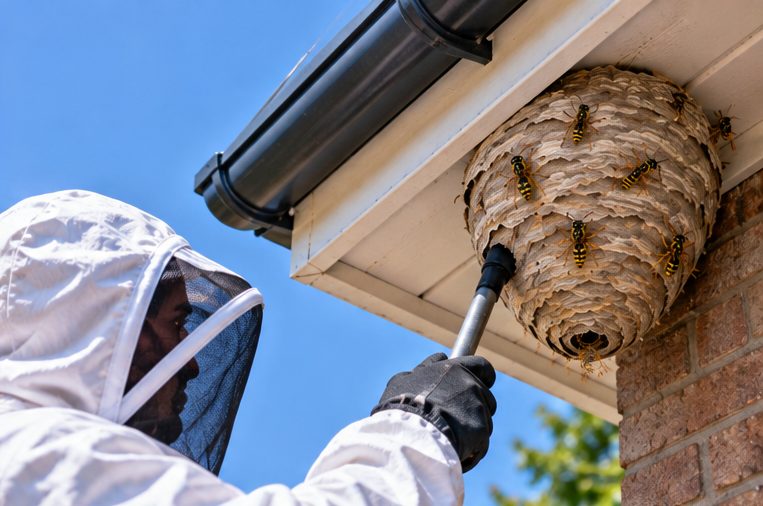
Houses of this age carry a generous timber overhang, boxed in underneath with a soffit board and finished with a fascia, and the same detail is repeated in miniature over the bay at the front. Eighty-odd years of sun and rain shrink those boards away from the brickwork, lift the odd tile at the verge and open the joint where a porch roof is tucked in. None of it shows from the pavement. What shows is a thin, businesslike line of insects arriving at one point on the roofline on a warm afternoon and setting off again from the same spot. Where wasps build nests around houses runs through the openings worth looking at.
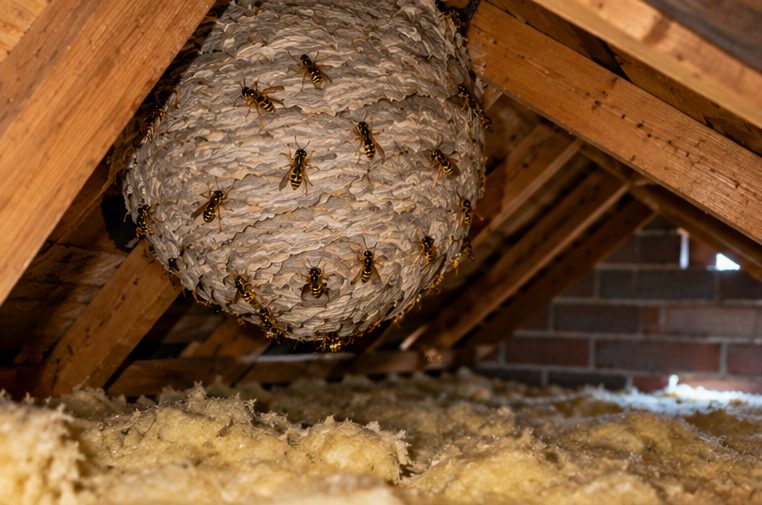
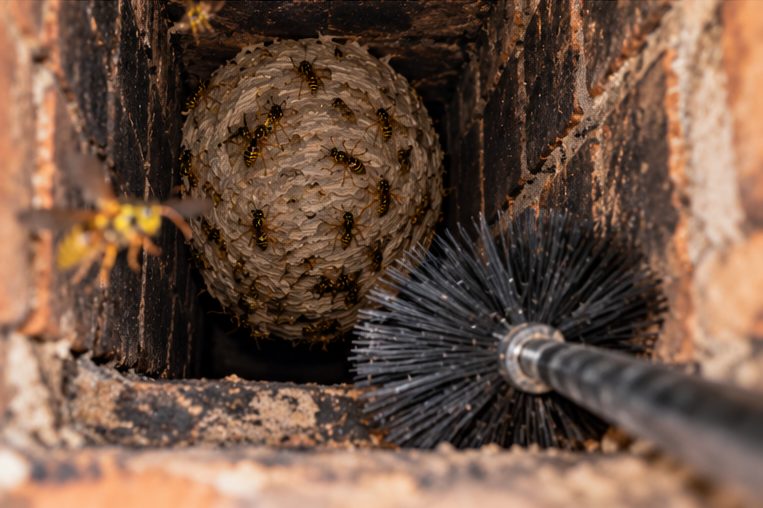
Past the boards the colony is often in the roof space itself, which on a pair of semis can run over the party wall. Wasps appearing on a landing with every window shut mean it is inside the plasterboard rather than outside it, and a nest in the loft covers what to do meanwhile. Tell your neighbour either way, since the entrance may be on their half of the roofline.
Garages, sheds and what is kept in them
The garage beside the house and the shed at the end of the garden are drier and quieter than anything indoors, and a nest in either is normally found by whoever goes in for the mower in June. Look at the ridge line inside, the underside of felt, the space behind a stack of tins and the inside of anything that has sat folded since last summer — a parasol, a set of chairs, an empty planter, a bird box on the fence. In April a new nest is a papery ball the size of a walnut with a single queen in it; by August the same site holds a colony, so it is worth a look early.
Hedges, Boundary Trees and the Front Drive
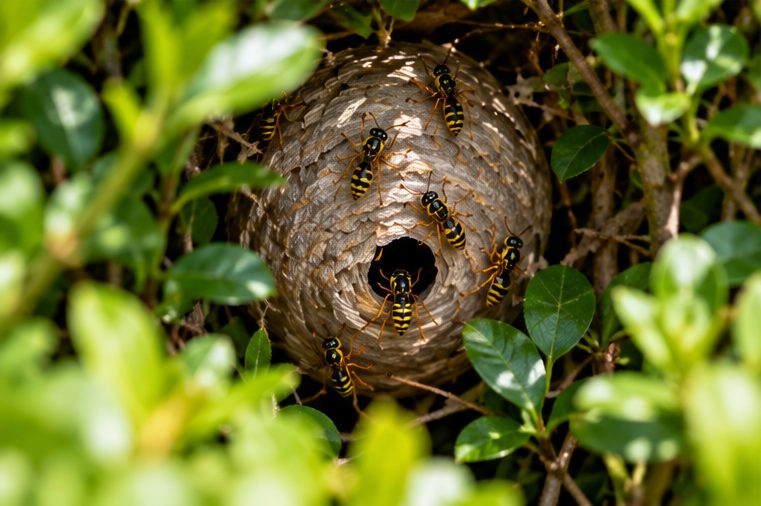
Thick boundary hedges and the shrubs along a front drive hide nests completely until someone reaches in with shears. A nest in a hedge is treated at the same £90 fixed price as one on the building, and the useful thing you can do first is stop cutting that stretch and work out which face the insects are using. Ivy on a garage wall and a dense conifer do the same job. Where a hedge sits on the boundary line, mention it when you call so we know whose side we are working from.
Ground Nests in Lawns and the Rough Grass by Vale Farm
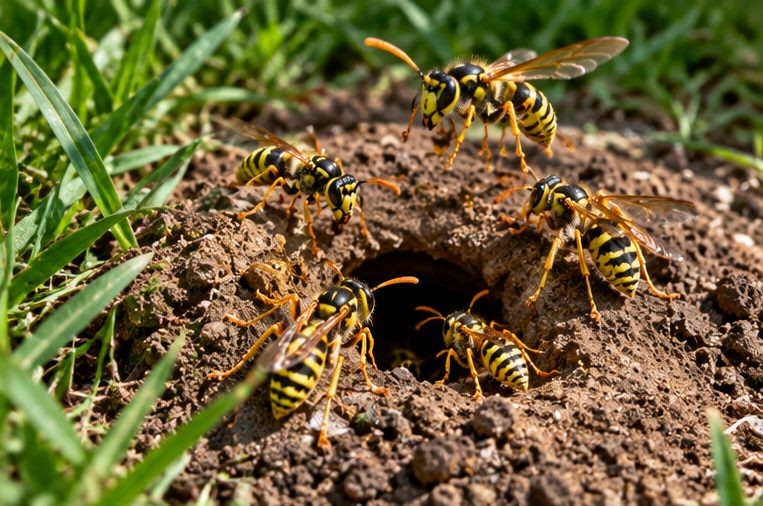
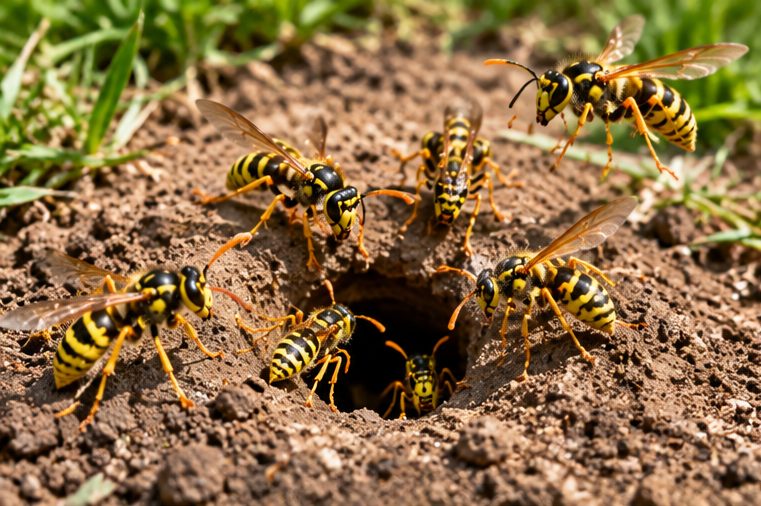
Not every colony hangs its paper in a cavity. Some enlarge an old burrow or a hollow under turf, and a lawn that drains well, a bank at the edge of a border or the rougher ground along the playing fields all hold their shape well enough to suit that. There is nothing to see above ground: just two-way traffic at ankle height through a hole about the width of a coin. What to do about a nest in the ground sets out the first steps, and the price is the same as for a nest on the house.
Mowers, strimmers and a dog with its nose down are what turn a quiet ground nest into a problem, so mark the spot, keep children and animals off it, and leave that patch of grass alone until the visit. If the hole lies on open ground beyond your fence, say so when you ring and report it to whoever looks after the land.
Is It a Nest, or Just Wasps in the Garden?
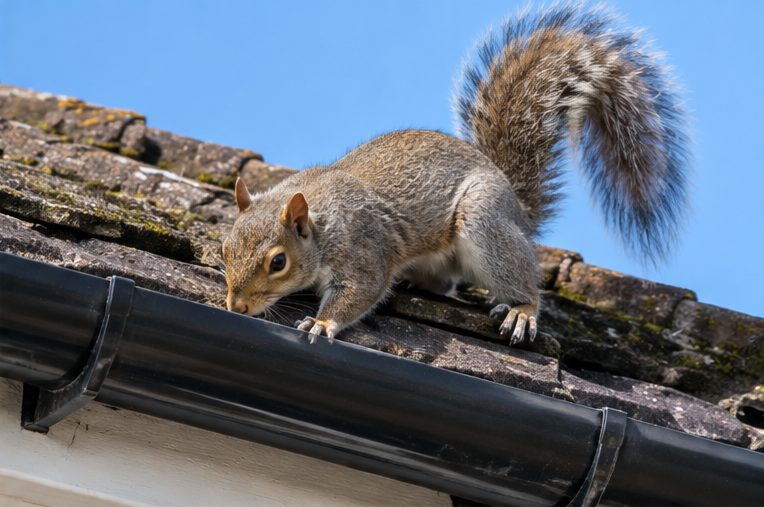
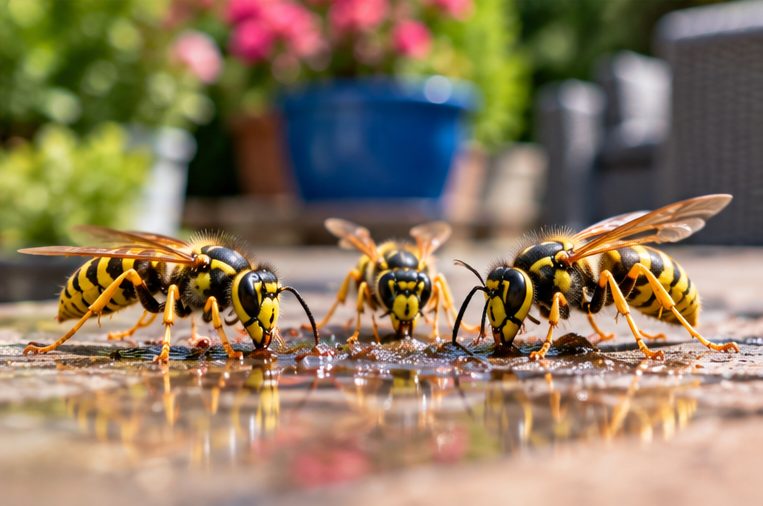
Stand at the far end of the lawn on a warm afternoon and watch one place for a minute. A nest gives you an unbroken two-way stream through a single opening; insects drifting around a bin, a fallen apple or a glass on the table have flown in from somewhere else and tell you nothing about where they live. That difference matters more as the season goes on — why wasps turn short-tempered in late summer explains the change. Furry, rounded insects that bumble rather than dart are more likely bees, and wasp nest or bee nest helps you decide. Winged insects pouring out of a joint in the drive on one humid July afternoon are flying ants; heavy scrabbling over a bedroom ceiling at dawn is more likely a squirrel.
What not to do before the visit
- Leave the opening exactly as you found it — shut a live nest in and the colony chews its way out somewhere else, sometimes into the bedroom behind the soffit
- No shop-bought aerosol into the eaves, a hedge or a hole in the turf from arm's length
- No ladder against the gutter or the bay roof, and nothing lifted or shifted inside the garage or shed
- Keep the windows nearest the entrance closed, especially the one directly beneath it
- Keep the flight line clear of children, the paddling pool and the dog until it has been dealt with
Booking a Wasp Visit in Sudbury
- Whereabouts the insects are going in: eaves, bay roof, air brick, garage, shed, hedge or lawn
- Roughly how high it is, and how the back garden is reached — side passage, garage or through the house
- For a nest in the ground, how close it is to a path, a gate or where children play
- If you are in a flat above one of the parades, which floor you are on and who manages the building
Anyone in the house who has reacted badly to a sting before should stay well away from the spot until it is over, and signs of a severe allergic reaction after a sting mean calling 999. Dealing with a nest yourself is a poor bargain at any height, and is it safe to remove a wasp nest yourself? explains why. The signs of an active nest is worth a read before you ring, so you can describe what you have been watching.
The Days After the Nest Is Treated
Insects still moving about the entrance afterwards are expected rather than a sign that nothing happened: foragers that were away at the time keep arriving for a while. Leave the gap open, keep that window shut and stay out of the shed or off that part of the lawn for a few days. There is no need to cut an old nest out, because next spring's queens start from scratch somewhere else rather than moving into it. Should the nest still be active within 30 days of the visit, we come back at no extra cost. How long treatment takes to work covers the first day or two.
Fewer Nests Around the House Next Year
No roof of this age can be made proof against a queen looking for a cavity, but winter is when the list of openings can be shortened. Our Brent wasp advice takes the wider view, Wasp Nest Removal Brent covers the rest of the borough, and neighbouring Preston has much the same rooflines.
- Once the nest is dead, have a roofer re-fix loose soffit and fascia boards and bed down any slipped verge tiles
- Ask for the small roof over the bay and the porch junction at the same time, since both are easy to skip
- Walk the garage and shed in April and May, turning out folded furniture and empty pots before anything grows in them
- Watch the lawn edges before anyone strims in early summer, looking for traffic at ground level
- Keep wheelie bin lids down and rinse cans and bottles in hot weather, so late-season workers have less to come for