
Soffits, Verges and Brick Stacks on the Terraced Streets
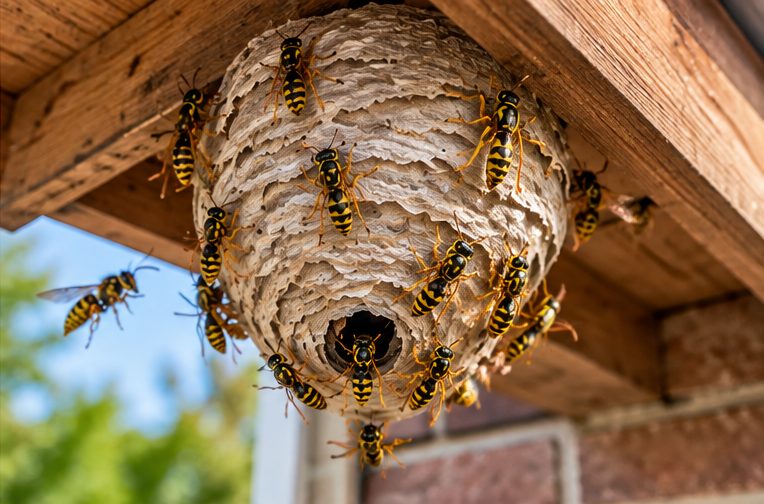
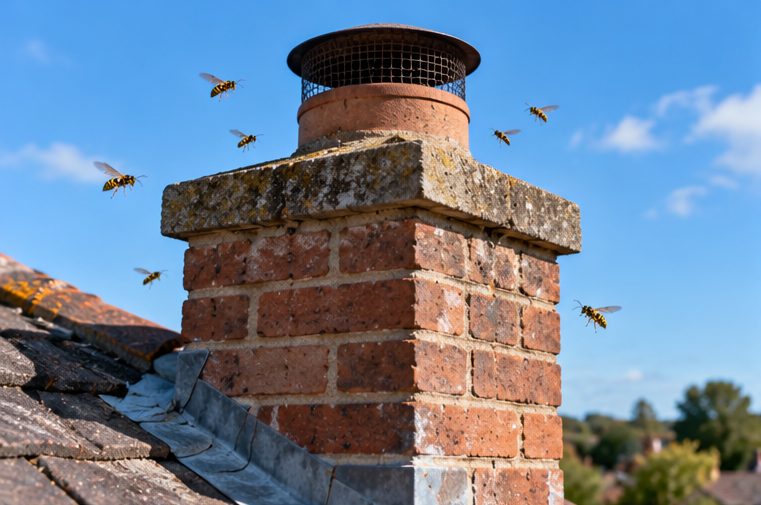
Away from the Broadway the housing is mostly Victorian and Edwardian terrace, with timber soffits along the eaves, bargeboards at a gable end and shared brick stacks above the roof. Weather works on all of it. A soffit board that has shrunk back from the brickwork, a lost mortar fillet at the verge, or a pot with a cracked cowl opens a route into a space nobody uses. From the pavement there is nothing to see; the giveaway is a thin, unhurried line of insects arriving at one fixed point on the roofline and leaving again. Where wasps build nests around houses runs through the openings worth a look.
The larger houses towards Gladstone Park
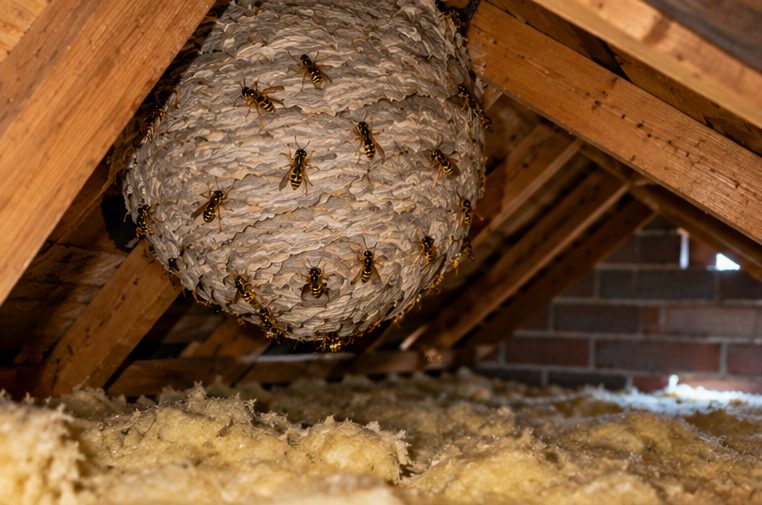
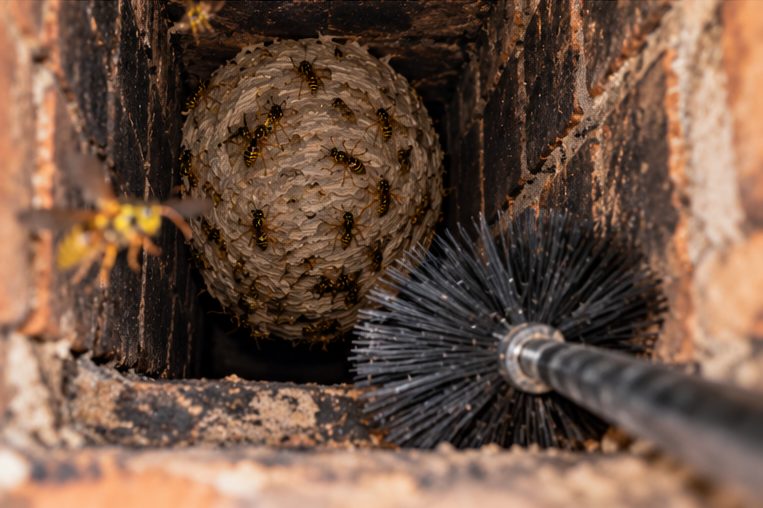
The bigger houses on this side carry deeper overhangs, dormer cheeks and porch roofs, and often a loft that has been boarded out and half filled with stored things. A colony in a roof space that size can build for weeks before anybody lifts the hatch, and what is found then has a papery grey skin and a surprising amount of weight to it. What to do about a wasp nest in the loft covers the next step. Mature garden trees and thick boundary hedges give the spring queens another set of options entirely.
Flat Roofs Behind the Broadway and Over the Back Additions
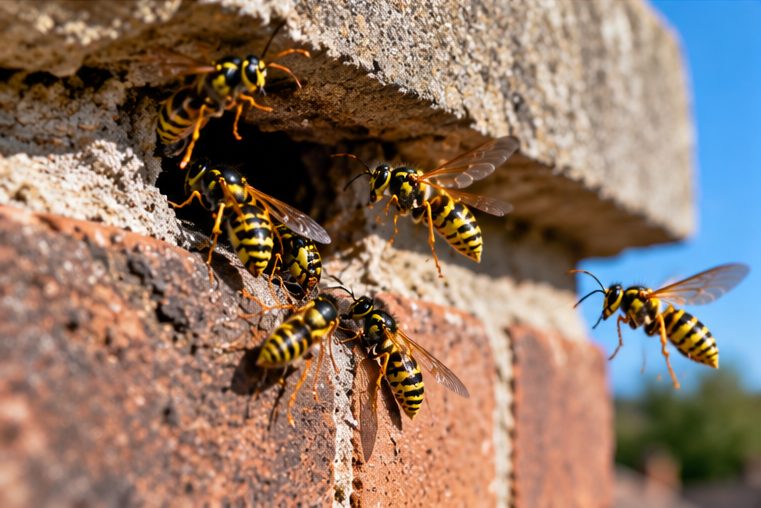
Nearly every property here has a low roof somewhere: the single-storey back addition of a terrace, a kitchen extension added later, and behind the Broadway the trading extensions and stores that fill the yards. Those roofs are felt or membrane, with an upstand where the deck meets the main wall, a flashing tucked into a mortar joint, and a lip or low parapet round the edge. As the timber moves, gaps open along exactly those junctions, and the void under the deck is the kind of cavity a colony will happily fill. If a kitchen window looks out onto that roof, the sound usually arrives before the sighting.
Sheds, Hedges and the Rear Alleys
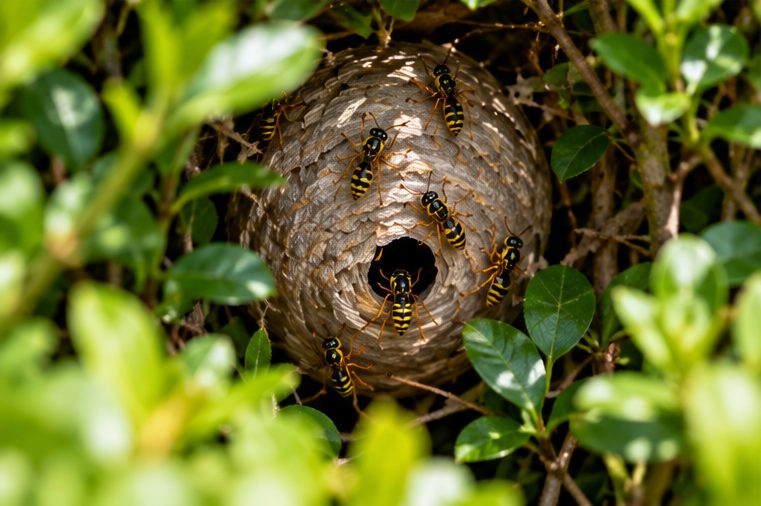
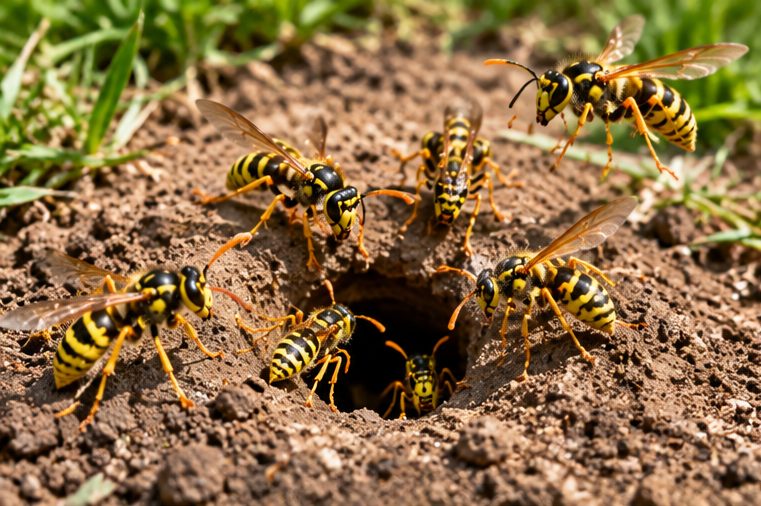
The alleys serving these gardens are lined with fences, ivy, bins and lean-to stores, and the gardens themselves hold felt-roofed sheds and stacked furniture under covers. A nest beneath shed felt, inside a folded parasol or deep in a hedge along an alley wall is discovered all at once, normally by whoever is trimming or shifting something. Ground nests appear too, in a bank at the edge of a lawn or under a rocking slab by the gate, and what to do about a ground nest explains how those differ.
Making Sure It Is a Nest
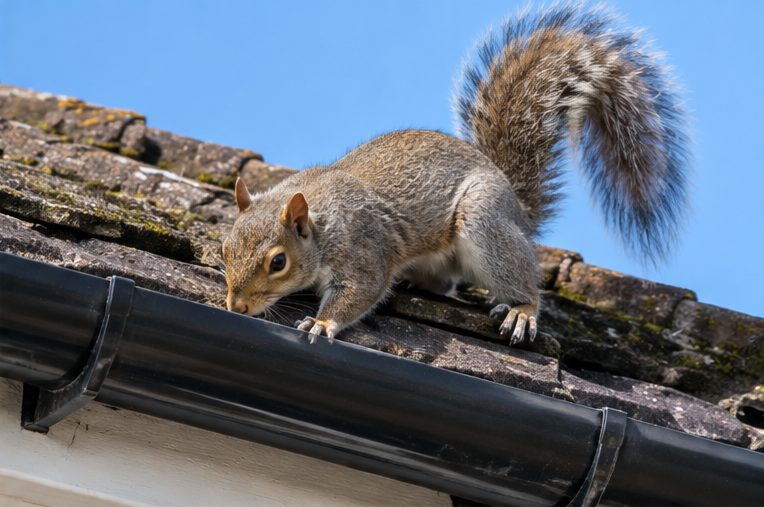
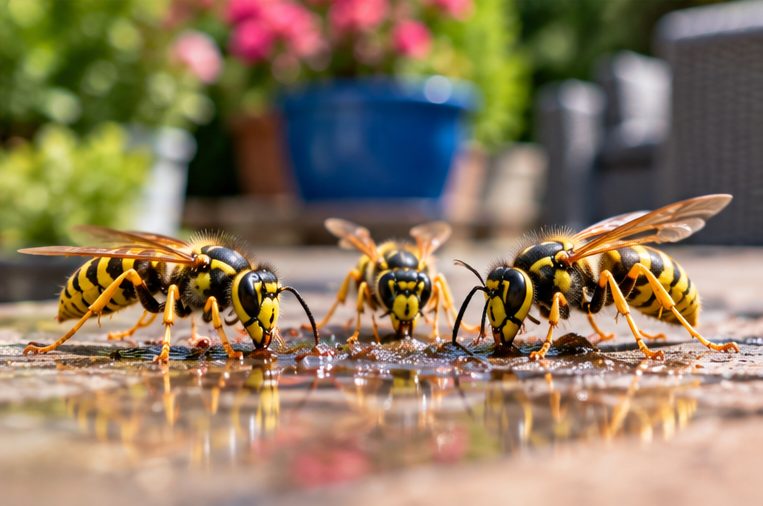
Stand at the far end of the garden, or across the street, and watch one spot for a full minute on a warm afternoon. Two-way traffic through a single hole means a nest behind it; insects drifting round a bin, a fallen plum or a glass on the table are foraging and may have flown a long way to get there. Note the height and which part of the building it is — stack, eaves, flat roof or shed — because that decides how it is reached. Rounder, furrier insects that bumble rather than dart are more likely bees, and telling a wasp nest from a bee nest helps. Scrabbling above a bedroom ceiling at first light is a squirrel instead, and winged insects boiling out of a path joint on one humid July afternoon are flying ants.
What not to do in the meantime
- Leave the opening exactly as it is — sealing a soffit gap or a flashing joint while the nest is live makes them chew a new way out, sometimes into the room behind
- Do not climb onto a flat roof or lean a ladder against a parapet for a closer look
- Keep the windows on that side shut, particularly any window directly below the entrance
- Do not empty a shed or pull stacked garden furniture apart while a nest is in it
- Keep children and pets off the flight line across the yard, the path or the garden
Booking a Wasp Visit in Cricklewood
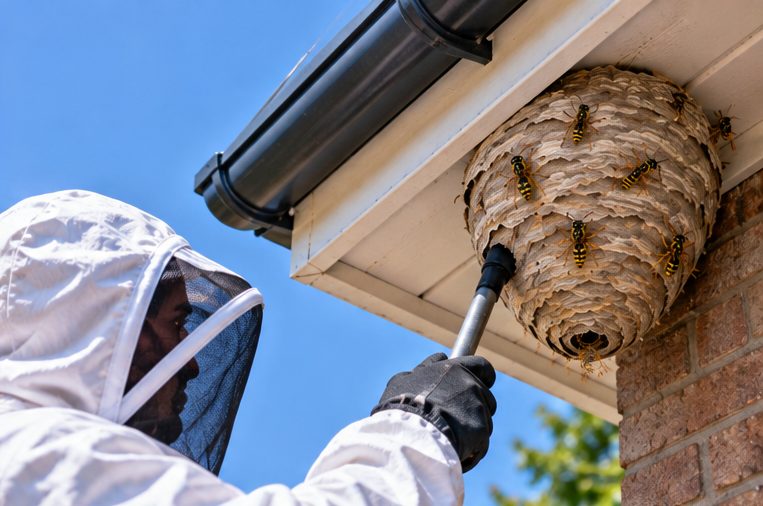
Tell us where the entrance appears to be and roughly how high, and how the back of the property is reached — through the house, along a side passage or from the rear alley, and whether the alley gate is kept locked. In a converted flat, say which flat is yours and which windows face the nest, and let the freeholder or managing agent know where it sits on the roof, the stack or a shared flat roof rather than beside your own window. Anyone in the household who has reacted badly to a sting before should stay well clear, and signs of a severe allergic reaction after a sting mean calling 999.
The days after the visit
Insects still moving around the opening afterwards are expected and are not a sign that nothing has happened. Keep the nearest windows closed, leave the gap unblocked for the moment, and stay out of the shed or off that flat roof for a few days. An old nest is not taken over the following year, so one inside a stack or beneath a flat roof deck can usually be left where it is. Should it still be active within 30 days, the return visit costs you nothing, and will wasps return after treatment? sets out what is normal in between.
Fewer Openings on the Roofline Next Spring
No Victorian roof is ever wasp-proof, but the cold months are when the list of openings can be shortened. Our Brent wasp advice goes wider, Wasp Nest Removal Brent covers the whole borough, and neighbouring Dollis Hill has much the same rooflines.
- Once a nest is dead, have a roofer re-fix loose soffit and fascia boards and repoint around the stack
- Ask for the flashing and upstand where a flat roof meets the wall to be checked at the same time
- In April and May look under the back addition roof, along the alley wall and inside the shed for a papery ball the size of a walnut, and ring rather than knock it off
- Keep sheds and garden stores shut, and shake out folded chairs and parasols before the summer
- Bins with the lids properly down, and cans rinsed before they go out, give late-season workers less to come for