Why an Interwar Front Drive Suits Garden Ants

Whatever the surface on top, a drive is built on a bed of sand or fine grit, and that is close to ideal for a colony: loose enough to tunnel, firm enough to hold a chamber, and warmed through by every hour of sun that falls on it. The same is true of the path to the front door and the narrow strip between a drive and the house wall. Colonies stay put for years where the ground suits them, which is why the trail comes back to the same doorway each summer instead of moving elsewhere. Where ants nest around houses lists the other places worth checking.
Block paving, slabs and the fine soil between them
The evidence is small heaps of very fine, dry grains pushed up between blocks or at the edge of a slab, often against the warm face of a wall or beside the garage. If those heaps reappear a day after rain has flattened them, the tunnels underneath are still being worked. Lifting the paving is rarely worth it, because the workings usually run wider than the piece you have taken up. How to find an ant nest shows how to trace one back without pulling the drive apart, and can ants nest inside walls? covers trails that seem to begin out of nowhere.
The Back Door Threshold and the Kitchen Behind It
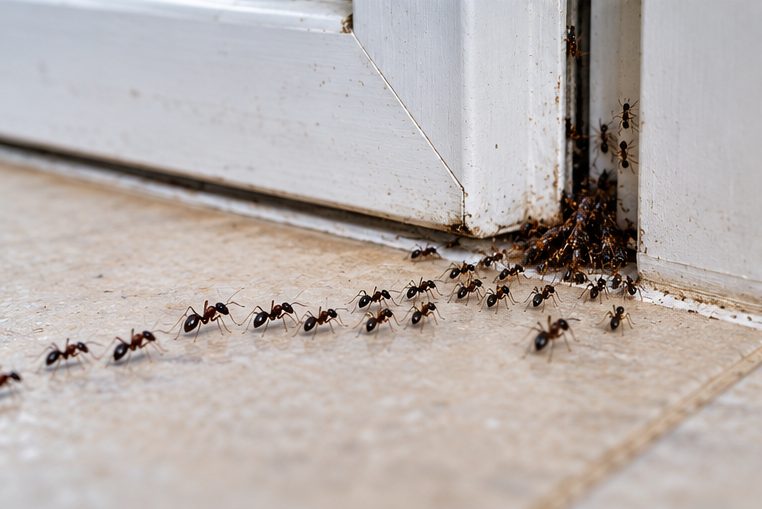
Wherever the nest sits, the way in is always low down. A worn threshold under the back door, the joint where a patio butts up against brickwork, an air brick at ground level, and the holes drilled for a waste pipe, a condensate pipe or a boiler flue all arrive in the same place — the void behind the kitchen units. Follow a line indoors until it slides under a kickboard, then go outside and study that exact point from the other side. What they have found is usually obvious once you look: a sticky ring under a bottle, crumbs behind an appliance, a bowl of dog food left down overnight. Why ants keep coming into the kitchen goes through what they are after.
Trails that end on a plant instead
Not every column is heading indoors. Ants farm the aphids on roses, shrubs and a young tree for the honeydew they produce, and will run up a downpipe, a trellis or a hedge to reach them. A line that finishes among the greenery is a gardening question. A line that finishes at your threshold is the one worth acting on.
Flying Ant Days over Lawns and Open Ground
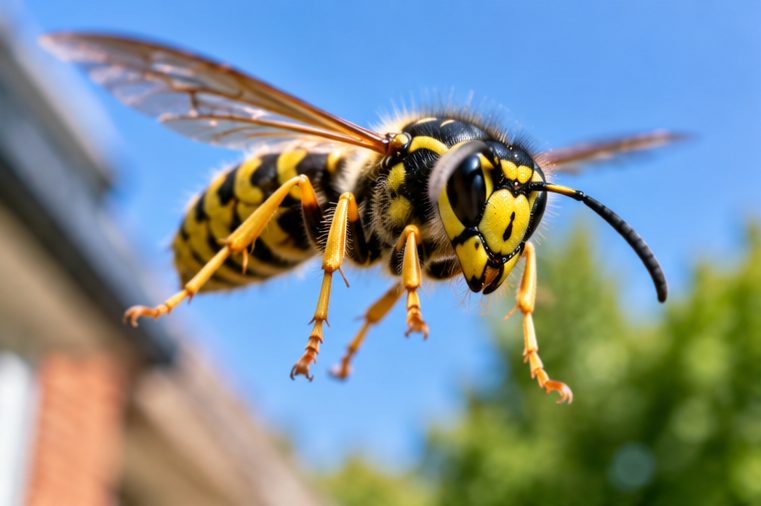
For a handful of close, humid days each summer, colonies send their winged queens and males up together, and a stretch of mown grass and open playing field brings several out within an hour of each other. Watching them stream up from a joint in the drive tells you precisely where a nest is, and outdoors the whole thing is over in a day or two. Winged ants coming up inside the house, through a floorboard gap, from behind a skirting or around an old hearth, are a different matter, because the nest may be under the floor rather than out in the garden — say so when you book. Why flying ants suddenly appear indoors is the place to read up on what sets a swarm off. Insects using one fixed opening in the roofline steadily for weeks are not ants but a wasp nest.
Very Small Pale Ants Above a Parade
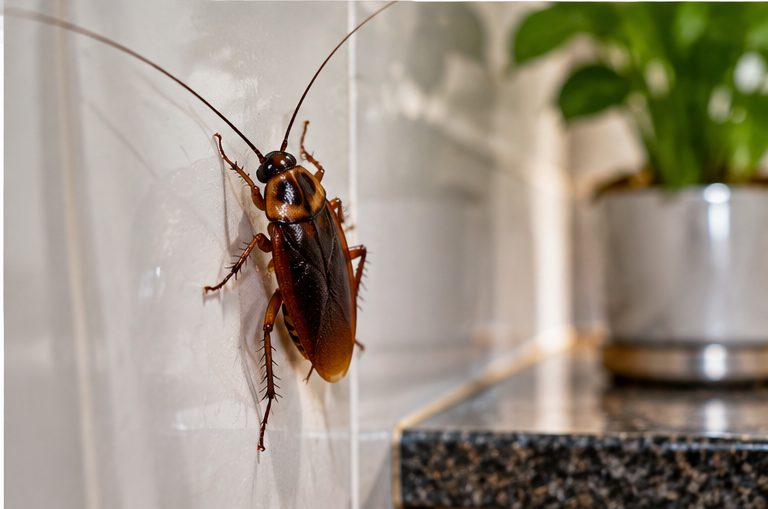
In the flats over the Harrow Road and Watford Road parades there is a second possibility. Minute, pale yellowish ants trailing along a worktop in the middle of winter, several floors from any soil, are not garden ants that have climbed; they are a species that nests inside heated buildings, in warm pipe boxing and behind fitted units. Shop-bought sprays are actively unhelpful with them, so put the aerosol down, leave the trail where it is and read Pharaoh ants vs garden ants first. Small brown insects that scatter from under a kickboard when the light goes on are cockroaches rather than ants of any kind.
Booking Ant Control in Sudbury
- Whether it is a house or a flat, and which floor the kitchen is on
- Where the trail crosses into the room: threshold, air brick, drilled pipe hole, behind the units
- Where it goes once it is outdoors — across the drive, up the front path, along the patio edge
- Whether there are heaps of fine soil between blocks, slabs or paving, and roughly where
- Stop spraying first: warm soapy water on the worktop is enough, and the line needs to stay followable
Ants can still be about for a while afterwards, and how long depends on the size of the colony and how far it runs under the paving; how long ant treatment takes sets out what affects it. If the numbers have not eased, ring back and describe exactly what you are seeing and where. When an ant problem needs treatment is useful if you are still weighing up whether to book at all.
Keeping Ants Out of a Sudbury Kitchen
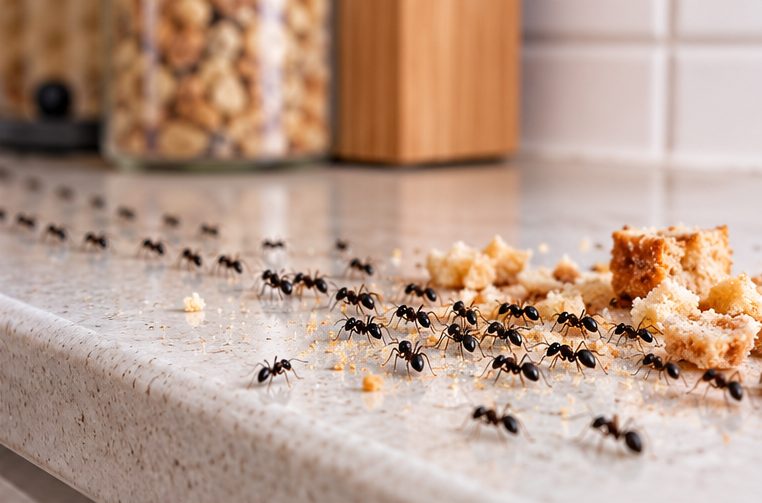
With the colony dealt with, the jobs that matter are all at ground level, at the front of the house as much as the back. How to stop ants entering your home has more of them, why ants come back after DIY treatment explains the usual disappointment, Ant Control Brent covers the borough, and neighbouring Kenton has the same drives and front paths.
- Brush kiln-dried sand into block paving joints each spring and re-bed any block or slab that rocks underfoot
- Re-point where the path or patio meets the brickwork, and pack out daylight under the back door
- Seal properly around waste and condensate pipes, inside and out, rather than leaving a drilled hole open
- Stand pots, compost bags and stacked chairs clear of the wall so the ground beneath them dries out
- Keep sugar, cereal and pet food in sealed tubs, lift bowls off the floor overnight and wipe the fronts of the units at night, since a trail is held together by the scent left on what has already been found