Nests on Ledges, Balconies and Eaves
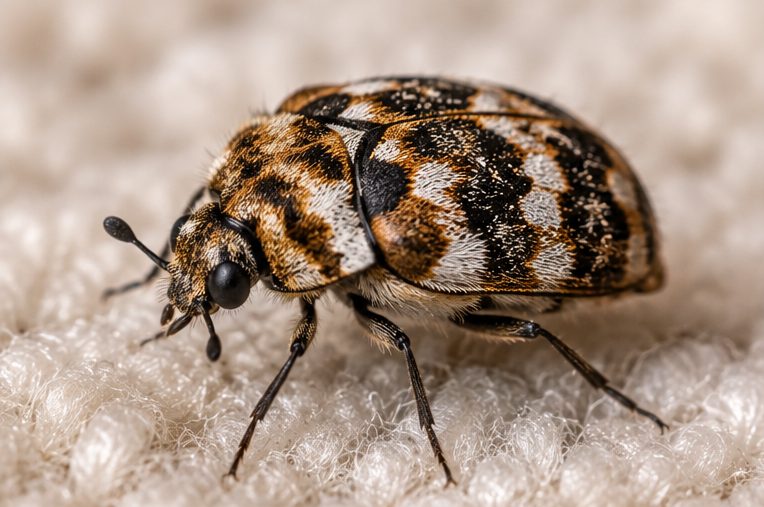
Birds nest wherever a building gives them a sheltered flat surface. On the newer Alperton blocks that means the recess of a balcony, the top of a boxed-in downpipe, a ledge beside a window or the gap behind a vent cowl; on the older houses off Ealing Road it is the eaves and soffits. Once the birds have gone, what stays is feathers, dropped food, dust and dead insects - a food store for carpet beetle larvae. Beetles raised in it work inwards through window reveals, vents and gaps at the tops of walls, and the room nearest the nest is usually the one with the problem.
An Active Nest Has to Be Left Alone
It is an offence to damage or destroy the nest of a wild bird while it is being built or in use, so an active nest stays where it is until the birds have finished with it. After that, clearing the old material and closing the opening is work for a roofer or a contractor with proper access - not something to attempt from a balcony rail or a window. In a block it is the freeholder or managing agent who arranges it, and the rooms inside can be treated meanwhile.
Dead Flies at the Window and Fluff Under the Units
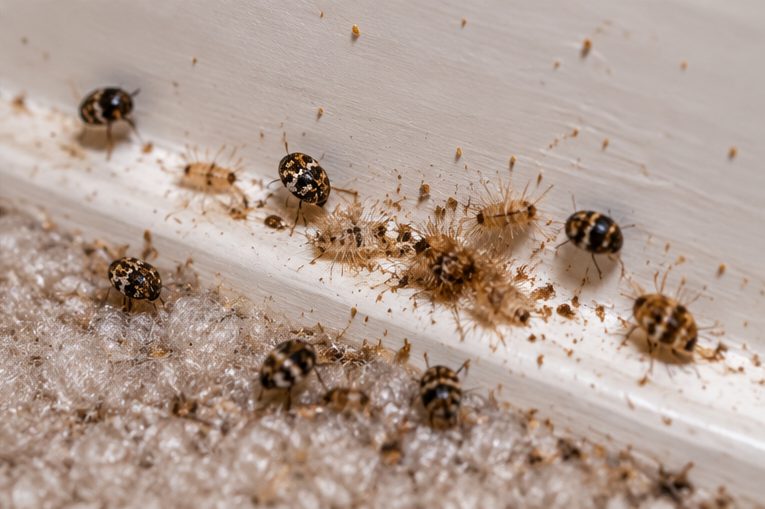
Water and planting along the canal mean a great many flying insects on summer nights, and the ones drawn to lit windows end up dead in window channels, in light fittings, on balcony sills and behind blinds. Larvae will feed on them quite happily. Indoors, the same is true of the fluff that collects under a kitchen plinth, behind a washer-dryer, under a wardrobe base and along the join between carpet and skirting - hair, fibre and crumbs, all of it edible to them. Where carpet beetles hide around the home lists the rest of the places worth opening up.
Why You Notice Them in Spring
Adult beetles feed on pollen, so when they emerge they head for daylight and gather on windowsills trying to get out to the courtyard planting and the towpath banks. That is why a home can seem fine all winter and then produce a dozen beetles on a sill in April. The guide to beetles on windowsills explains the timing, and a few adults arriving through an open window is different from larvae living indoors - how to tell whether you have them sets out what to look for.
- Small oval beetles mottled brown, cream and yellow on sills and at windows in spring and early summer
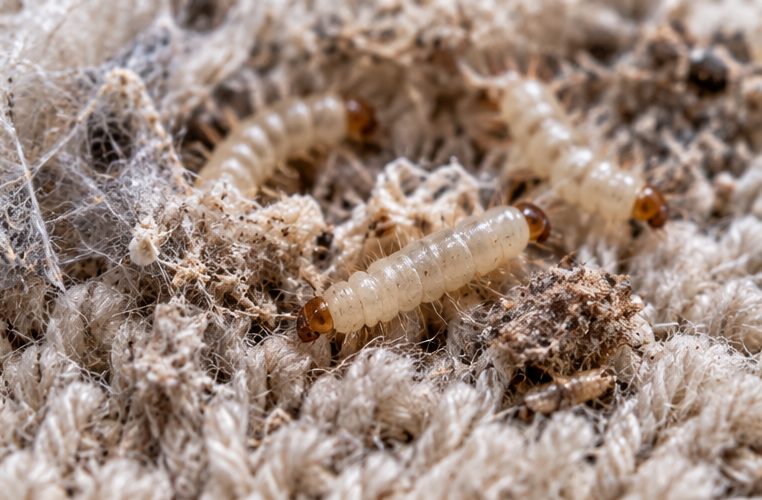
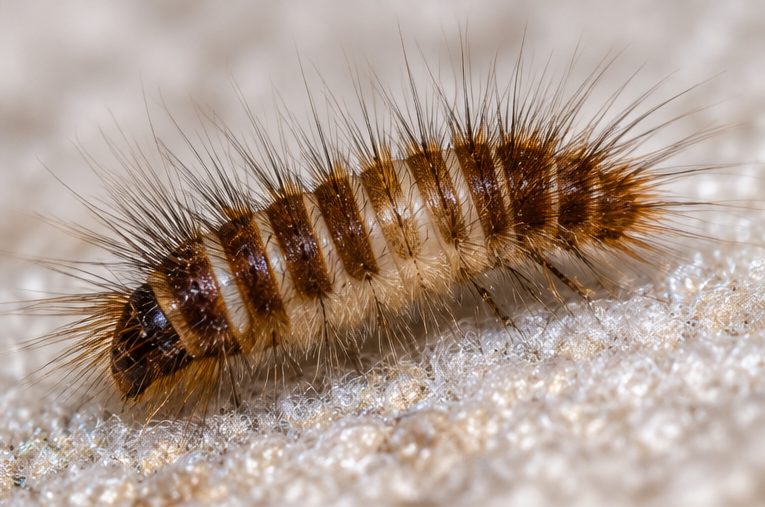
- Short brown bristly larvae along a carpet edge, under a bed or in the base of a wardrobe
- Cast larval skins in drawers, under boxes and in the corners of a cupboard
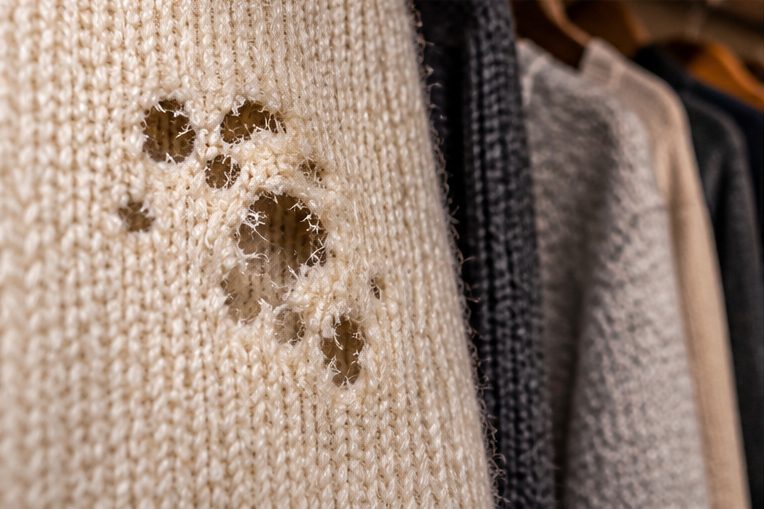
- Ragged holes in woollen clothes, blankets or a rug, without the silky webbing moths leave
Larvae and Itchy Skin
The bristles on the larvae can irritate some people's skin and cause a rash that gets mistaken for bites, which is worth knowing if you are itching but finding nothing at all in the bed. Checking mattress seams for bed bugs in Alperton helps rule that out. For a rash or other symptoms speak to a pharmacist or GP, call 999 for signs of a severe allergic reaction, and see the guide on skin irritation.
Booking and Preparing the Rooms
When you book, say which rooms have larvae or damage, whether birds have been nesting on a ledge, balcony or in the eaves above you, and what wool or textiles are stored in the home. Each affected room counts once and halls, landings and stairs do not count at all. Before the visit, vacuum the carpet edges, under beds and inside the base of wardrobes in those rooms, empty the cleaner outside, and bag stored woollens where they sit rather than carrying them through the flat.
Adults can keep appearing at windows for a while afterwards, particularly in spring, and how long things take to settle depends on the property and on whether the source outside has been dealt with. If you find new larvae once the period you are given has passed, call again.
Keeping the Numbers Down in an Alperton Home
- Once a nest is finished with, have the material cleared and the opening closed by someone with safe access
- Vacuum window channels, balcony sills and light fittings so dead insects do not build up
- Pull out the kickboard strip, the wardrobe base and the bed a few times a year and vacuum what is under them
- Store wool and feather items clean and sealed, whether that is in a loft, a hall cupboard or under the bed
- Vacuum up the beetles you find on sills in spring instead of leaving them there
How to prevent carpet beetles returning has more, and the Brent carpet beetle advice covers identification. Carpet Beetle Control Brent is the borough page, and if the larvae turn out to be pale and webbing-spinning, see carpet moth treatment in Alperton instead.