Communal Halls and Stairs Nobody Cleans
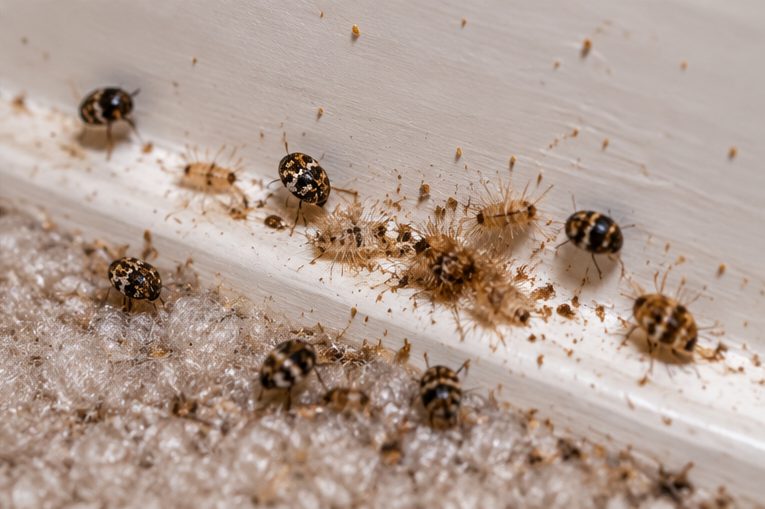
In a converted house the entrance hall and staircase get the heaviest traffic and the least attention. Fluff, hair and grit build up in the angle where a stair carpet meets the string, under the nosings and along the skirting of a long hallway, and nothing disturbs it from one year to the next. That is a working food supply, and it sits at the door of every flat in the building.
Raising it with the freeholder, the managing agent or the landlord is worth doing early, because a hallway that keeps producing beetles will keep restocking the flats. Where carpet beetles hide lists the other spots to check.
Under Beds and in Wardrobes in a Let Room
A let room usually comes with a divan or a frame with drawers and a wardrobe pushed against the wall, and neither gets shifted between tenancies. A mat of fluff and hair collects underneath and in the wardrobe base, mixed with fibres dropping off whatever wool is hanging above it, which gives larvae somewhere dark to feed for months. Pull the drawers right out and shine a torch under the frame.
Birds' Nests in Tall Kilburn Roofs
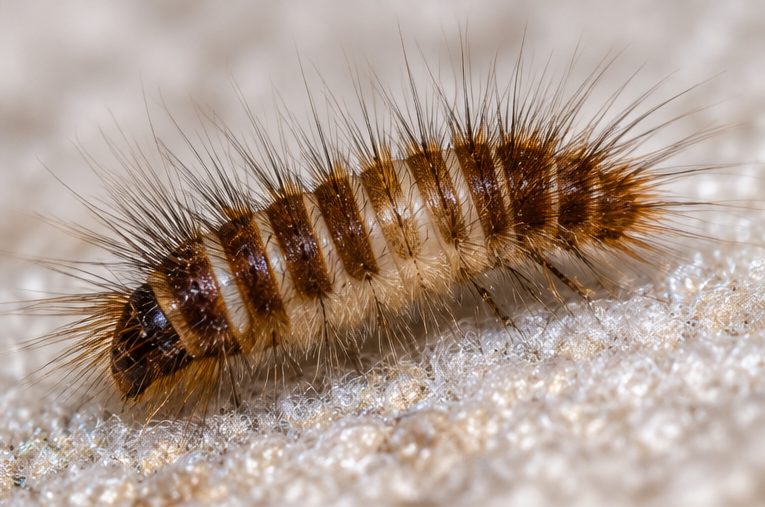
Kilburn's roofs are high, with deep eaves, chimney stacks and parapet gutters, and sparrows, starlings and pigeons use the gaps in them. An old nest is feathers, droppings and dead insects packed together, which is close to ideal for carpet beetle larvae, and beetles raised in one work their way down past the loft hatch and along ceiling voids into the top-floor rooms.
It is an offence to damage or destroy a wild bird's nest while it is in use, so an active nest is left alone. Once it is empty the debris should be cleared and the gap closed, and on a roof this height that is work for a roofer with proper access, arranged by whoever looks after the building. Do not go up a ladder or lean out of a top window to reach one.
Beetles on the Windowsill and the Other Signs
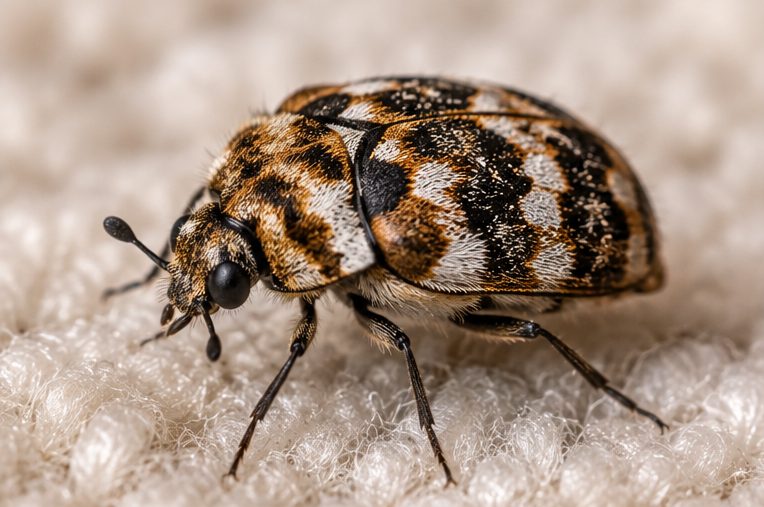
- Rounded beetles a few millimetres across, mottled brown, white and yellow, collecting at windows in spring and early summer
- Short brown larvae with bristles along a carpet edge, under a bed or in the base of a wardrobe
- Pale empty larval skins in drawers, on a wardrobe floor or against the skirting
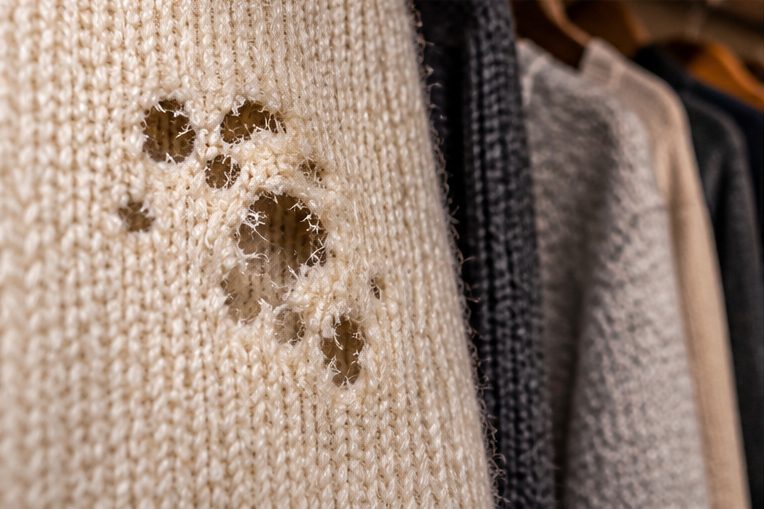
- Small ragged holes in jumpers, blankets or the underside of a rug
Why they gather at windows explains the spring rush indoors, and the larvae guide confirms what you have found. Smooth pale grubs with silky webbing point to carpet moths in Kilburn, and the comparison guide settles it.
Itchy Skin and the Larvae
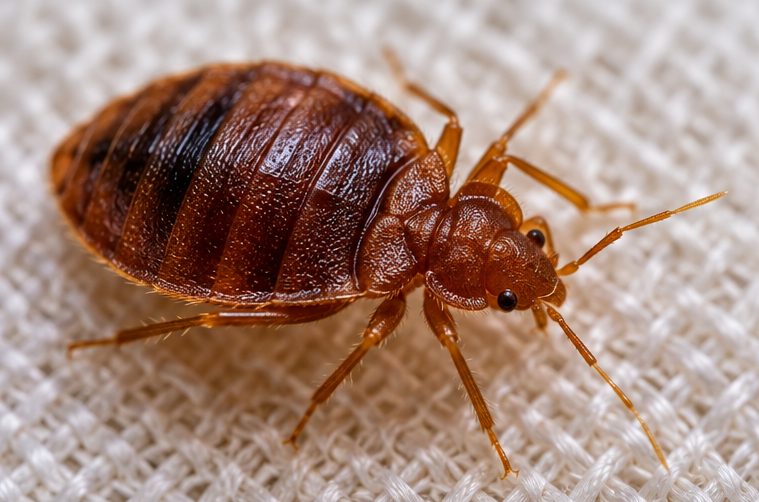
The bristles on the larvae irritate some people's skin and can leave a rash that is easily taken for bites. Speak to a pharmacist or GP about a rash or other symptoms, and call 999 for signs of a severe allergic reaction. Looking along the mattress seams for bed bugs is a sensible way to rule out the other possibility.
Booking and What Happens Around It
Tell us which rooms have larvae or beetles, whether birds go in and out of the eaves, and whether the communal hall and stairs are carpeted. Rooms are counted one by one and shared halls, landings and stairs are not rooms, though we will talk through what can be done about them. Beforehand, vacuum carpet edges, under the bed and inside the wardrobe base, and empty the cleaner outside. Adults can still show up at windows for a while, especially in spring; how long it takes to settle depends on the building and the source, and new larvae after the period we give you is a reason to ring.
Keeping the Numbers Down in a Shared House
- Vacuum under the bed and inside wardrobe bases every few weeks, not just the open floor
- Ask for the communal hall and stair carpet to be vacuumed into the edges regularly
- Keep wool and feather items clean and bagged rather than loose in a suitcase
- Have empty nests cleared and eaves gaps closed by a roofer once the birds have gone
- Vacuum up beetles found at a window instead of leaving them to wander back in
See how to prevent carpet beetles returning and the Brent carpet beetle advice; the borough page is Carpet Beetle Control Brent.