
How Mice Travel Up a Canalside Block
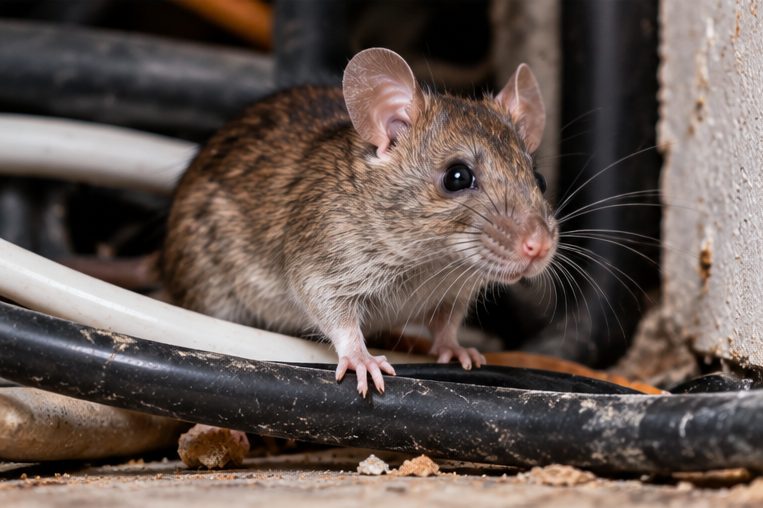
Think of a modern block as a set of homes threaded onto a few vertical services. Soil stacks, water pipes, heating flow and return, electrical containment and data cabling all have to run from the bottom of the building to the top, and they pass through every floor on the way.
The riser cupboard on your landing
That locked cupboard on the corridor is where those services pass from one level to the next. Each pipe goes through a hole in the floor slab, and where the sealing around it was never finished, or was cut through by a later trade fitting something else, the shaft becomes a staircase that no door on your landing controls. It also explains why two flats on different floors can start hearing the same thing within a week of each other — can mice travel between flats? covers that pattern.
Pipe boxing, plinths and the fitted kitchen
Where the services arrive inside your flat they are hidden again: a boxed corner in the bathroom, a duct behind the utility cupboard, the holes cut for the sink waste and the washing machine. A fitted kitchen then adds a continuous void behind and beneath the units, closed off by a clip-on plinth that hides everything at floor level. Mice behind kitchen units describes what tends to be found back there.
Bin stores and cycle stores at ground level
Those are the rooms where it usually starts. A cycle store holds cardboard, bags and things left for months; a bin store holds the food. A mouse settled in either is already inside the envelope of the building and only needs the first warm route upwards, which is generally the riser or a service duct beside it.
The older terraces off Ealing Road
Away from the new blocks the story flips. These houses have suspended timber floors, party walls that were never sealed where the joists bear into them, and a kitchen or bathroom that has been replaced at least once, each time leaving a redundant hole behind. Flats above shops sit on top of a food business with its own service runs. How mice get into a house runs through those openings in order of likelihood.
Signs Worth Checking in a Modern Flat
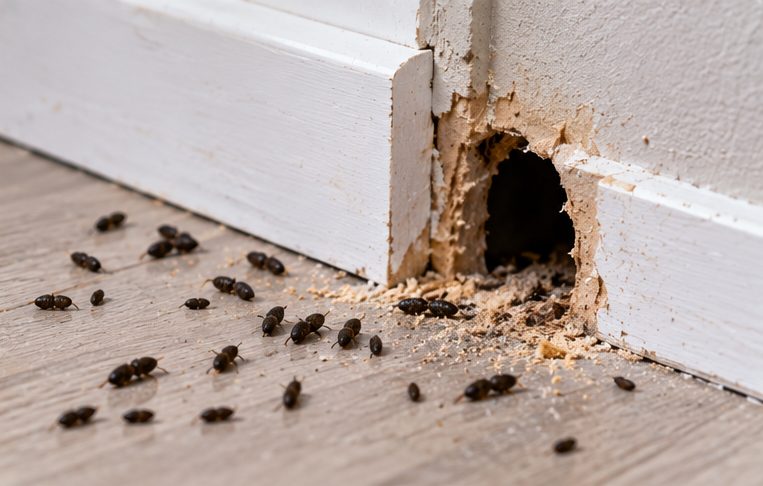
- Droppings along the very front edge of the kitchen floor, right at the line of the plinth
- Droppings or shredded packaging inside the cupboard that holds the sink waste and the stopcock
- Nibbled corners on cereal, rice, flour and dry pet food at the back of a cupboard
- Scurrying inside a boxed corner in the bathroom, or above the ceiling of a lower floor, after dark
- A faint musky smell in a cupboard or utility space that does not clear when you open it up
The signs of mice takes each of those further. Larger tapered droppings, or gnawing heavy enough to damage a door, mean rat control in Alperton instead, and where mice nest shows the places worth opening up first.
Worth Doing Before Anyone Arrives
- Move dry goods and pet food into tins or rigid tubs with a firm lid, rather than clips and bag ties
- Pull out the bin, clean under it and along the front of the units, and vacuum the gap beside the cooker
- Report droppings in the corridor, the riser cupboard, the bin store or the cycle store to the managing agent, and tell your landlord if you rent
- Leave holes open for now: sealing while mice are active shuts them inside the fabric of the flat
- Keep poison out of it, particularly anywhere a dead mouse could end up inside a duct or under a floor
Around a Mouse Visit in HA0
When you book
Say whether it is a flat in a block, a flat above a shop or a whole house, which floor you are on, which rooms the droppings are in, and whether anyone else in the building has reported the same thing. Mention any recent works in the block, because a stripped-out flat or a new service run tends to be what moved them along.
Before and after
Empty the cupboard under the sink and the food cupboards, and clear enough floor in front of the units for the plinth line to be reachable. Afterwards you will hear what was found and what to watch for; the time it takes depends on the building and on what is happening in the flats around you, as how long mouse treatment takes explains. Get in touch again if droppings reappear after a quiet spell.
Keeping Mice Out of an Alperton Flat
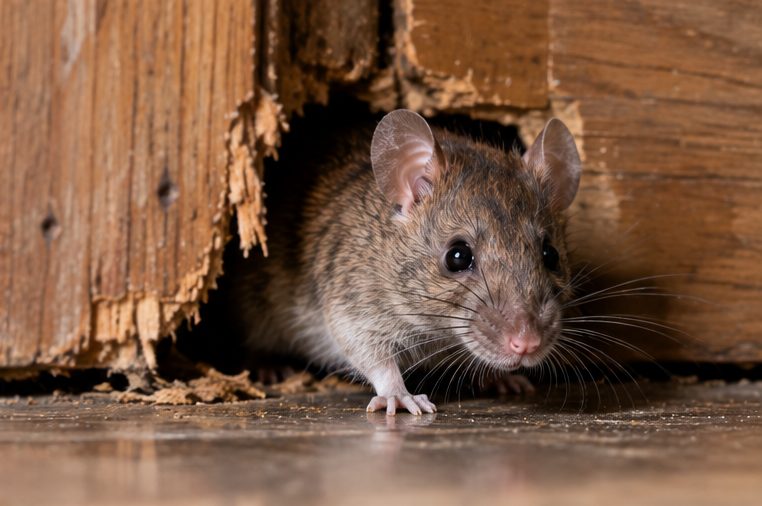
Inside your own front door the list is short and worth doing properly: the holes around the sink and washing machine waste, the top and bottom of any pipe boxing, the gap behind the plinth and the threshold of your entrance door onto the corridor. Small reachable openings like those are what rodent proofing in Alperton closes, and mouse-proofing a property covers the method. The riser, the corridor and the stores are the building's to deal with, and a block where only one flat is ever treated keeps the problem circulating — much of why mice keep coming back. For the borough-wide page see Mouse Control Brent; neighbouring Wembley deals with the same kind of new-build kitchen.