Carpet Beetles in Flats With Little Carpet
The larvae of the varied carpet beetle feed on hair, skin flakes, feathers, dead insects and natural fibres. Every home sheds that material, and in a flat with hard floors it gathers in the few places a vacuum never reaches. So rather than hunting for a carpet, look wherever dust and fluff are allowed to settle.
Under Beds and in Built-In Wardrobes
Divan and storage beds sit low and are rarely moved, and the floor underneath collects a mat of fluff and hair. Built-in wardrobes can have a closed base, or a gap at the back where the flooring stops, and that edge fills with the same debris plus fibres from the wool clothes hanging above. Both give larvae a dark, quiet place to feed for months. The guide to where carpet beetles hide lists other spots.
Fluff Behind Kitchen Plinths
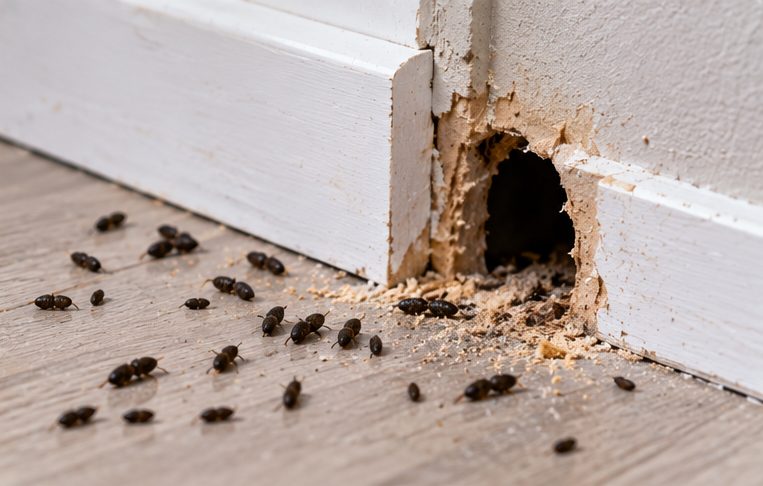
The plinth boards along the bottom of fitted kitchen units hide a narrow gap that is almost never cleaned. Crumbs, pet hair and dead insects drop into it, and in a flat without a single carpet it can still feed larvae. If you find shed skins on the kitchen floor or larvae near the units, unclip a plinth and shine a torch underneath.
Pigeon Nests on Balconies and Ledges
The balconies, roof terraces and ledges on the newer blocks around Wembley Park and Olympic Way give pigeons sheltered corners to nest in, often behind a planter or under balcony furniture left alone all winter. A nest is a heap of feathers, droppings and debris that carpet beetles breed in, and adults from it can fly in through an open balcony door. If beetles keep appearing in the room nearest the balcony, look outside first.
Dealing With a Nest
Wild birds' nests are protected by law while they are in use, so leave a nest with eggs or chicks alone. Once it is empty, clear it wearing gloves, bag the material and clean the spot. Nests on ledges, roof terraces or anywhere outside your own balcony, and anything you cannot reach safely, are for the building management to deal with.
Beetles on Big Windows and Other Signs
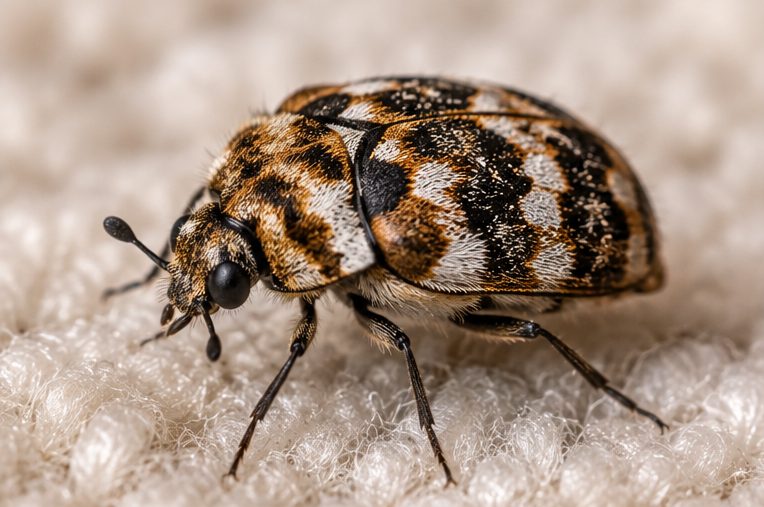
Adult carpet beetles are a few millimetres long, rounded and mottled brown, white and yellow. When they emerge in spring and early summer they head for daylight, so floor-to-ceiling windows and balcony doors collect them; why they gather at windows explains the pattern.
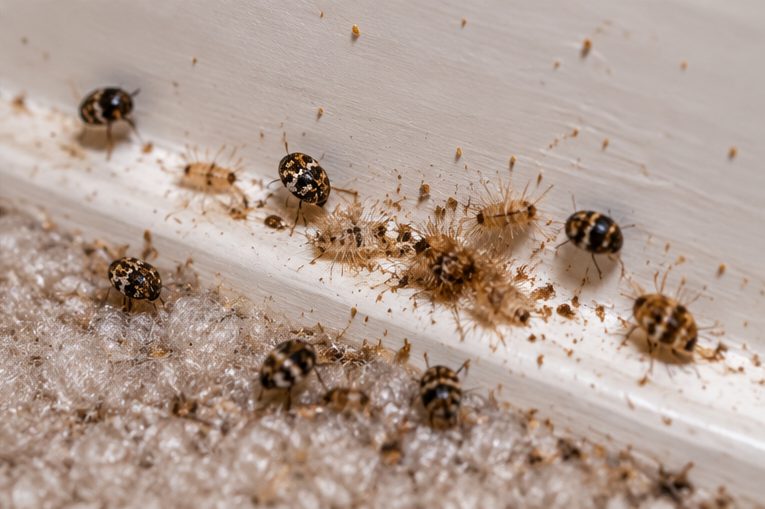
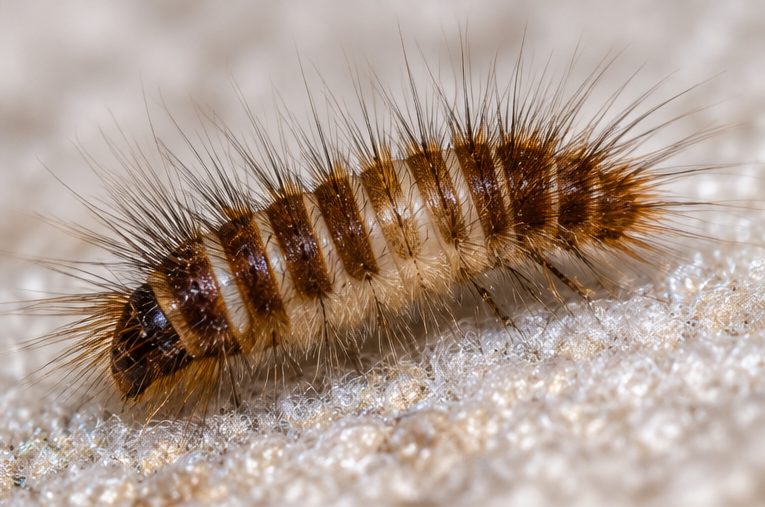
- Brown, bristly larvae a few millimetres long near skirting, under beds or by the kitchen units
- Light, empty larval skins in wardrobe corners and storage drawers
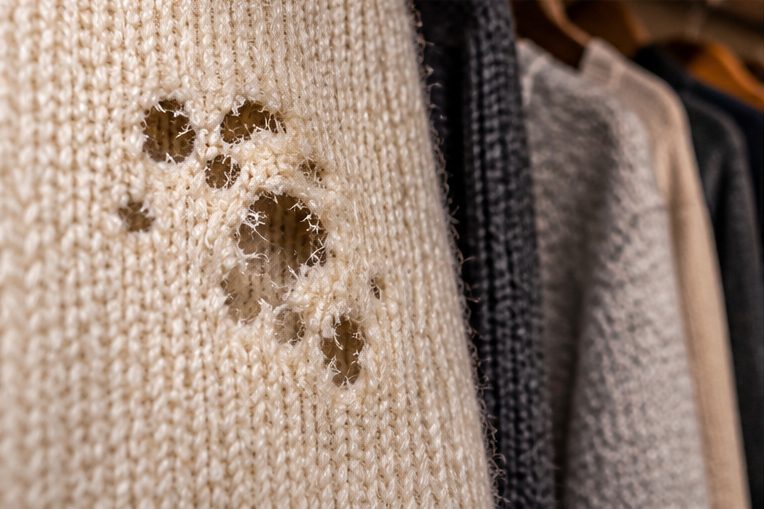
- Small irregular holes in wool clothes, felt or the underside of a rug
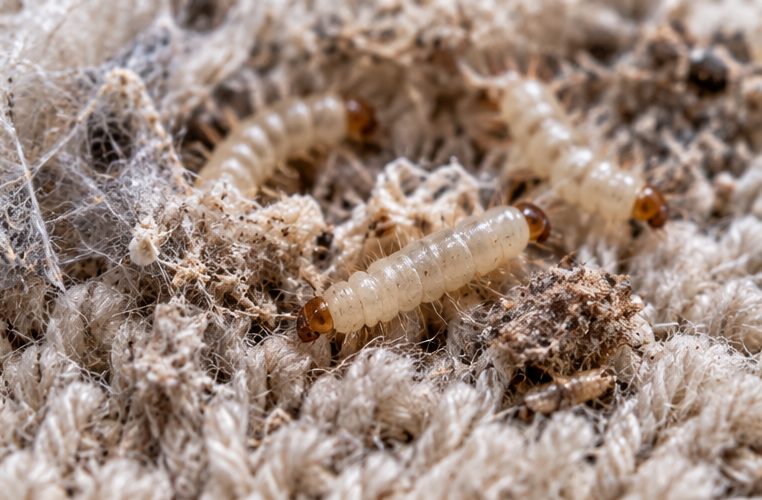
The guide to the larvae helps confirm it. Pale larvae with silky webbing suggest carpet moths in Wembley instead.
Itchy Skin and Carpet Beetles
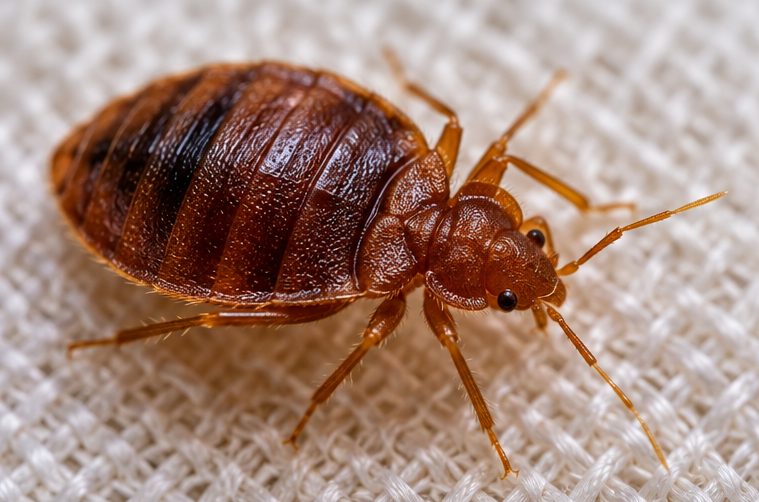
The bristles on the larvae can cause an itchy rash in some people, which is easy to mistake for bites. If you have a rash or other symptoms, speak to a pharmacist or GP, and call 999 for signs of a severe allergic reaction. Checking mattress seams for bed bugs helps rule them out, and this guide on skin irritation says more.
Booking and What Happens Around the Visit
Tell us which rooms have larvae or beetles, whether pigeons nest on or near your balcony, and what is stored under beds and in wardrobes. Each affected room counts once, and the hall is not counted. Beforehand, vacuum under beds, inside wardrobe bases and behind any plinths you can remove, and empty the cleaner outside; we will explain the rest. Adults can keep showing on windows for a while, especially in spring, and how long it takes to settle depends on the flat and the source. If new larvae appear after the time we give you, call us again.
Keeping Carpet Beetles Away in a Modern Flat
- Pull out bed storage drawers and vacuum underneath every few weeks
- Unclip the kitchen plinths once or twice a year and vacuum the gap
- Keep balcony corners clear so pigeons have nowhere sheltered to settle
- Store wool and feather items clean and sealed, and vacuum wardrobe floors
- Vacuum up adults on windows instead of letting them fly back into the room
See how to prevent carpet beetles returning, and for the whole borough, Carpet Beetle Control Brent. Other pests in the area are covered on Pest Control Wembley.