Where They Live Before They Reach Your Carpet
A bird's nest is a larder of feathers, dropped down and dead insects, which is as close to a perfect carpet beetle nursery as a building offers. Cricklewood gives them plenty of sites: the deep eaves and soffits of the terraces, the gutter behind a parapet on the Broadway, and the flat roof over a rear extension or a shop extension, where a nest can sit within a metre or two of a bedroom window. The identification guide covers what confirms it indoors.
When the Birds Have Gone
Trouble usually starts after the young have fledged. The nest cools, the larvae in it run out of food, and they walk - along the roof line, in under a tile or a soffit gap, down through a loft and out at the hatch, the airing cupboard or a cable hole into the rooms below. A top-floor flat or a back bedroom under an extension roof is often where the first ones are noticed.
An Active Nest Is Left Alone
The law protects the nest of a wild bird while it is being built or is in use, so an active nest stays where it is until the birds have finished with it. After that the old material and the debris underneath it can be cleared away and the gap closed, which is work for a roofer or a gutter contractor rather than for us; a clearance makes a real difference to how many larvae reach the rooms below the following year.
Fluff Under the Units and Along the Skirtings
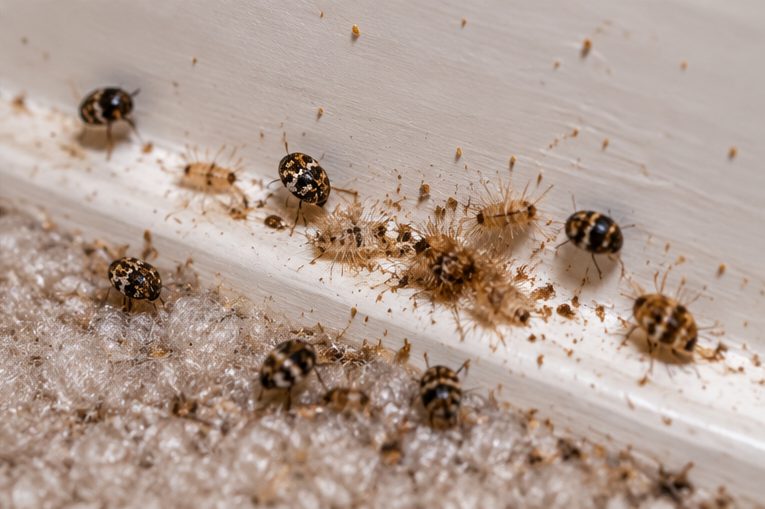
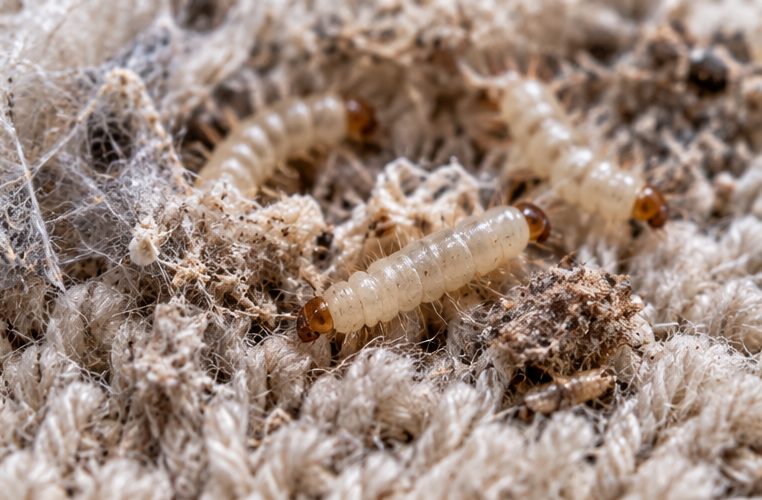
Indoors, the larvae want the same thing: quiet material nobody moves. The void behind a kitchen kickboard, the space under a fridge, the strip of carpet behind a wardrobe, the pile inside a fitted cupboard, and the dead flies collecting in a window channel or a light fitting all count as food. This guide walks through the places worth checking, and the larvae guide shows the bristly shape and the shed skins, which often outnumber the larvae themselves.
Why They Turn Up at the Window in Spring
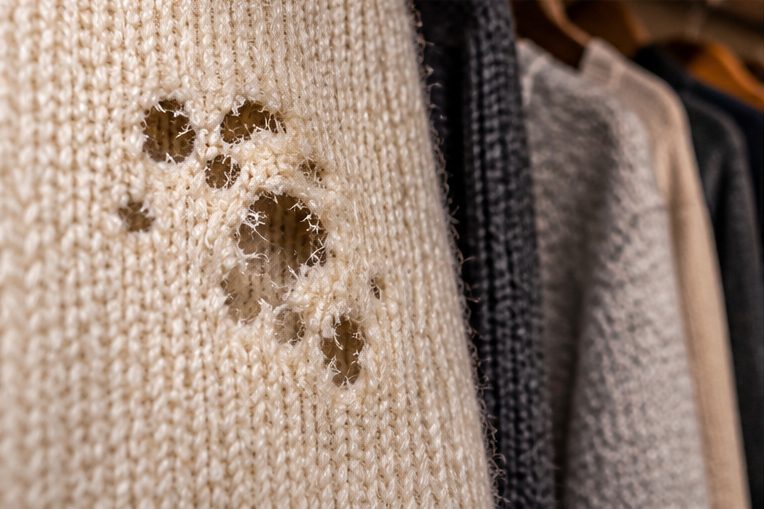
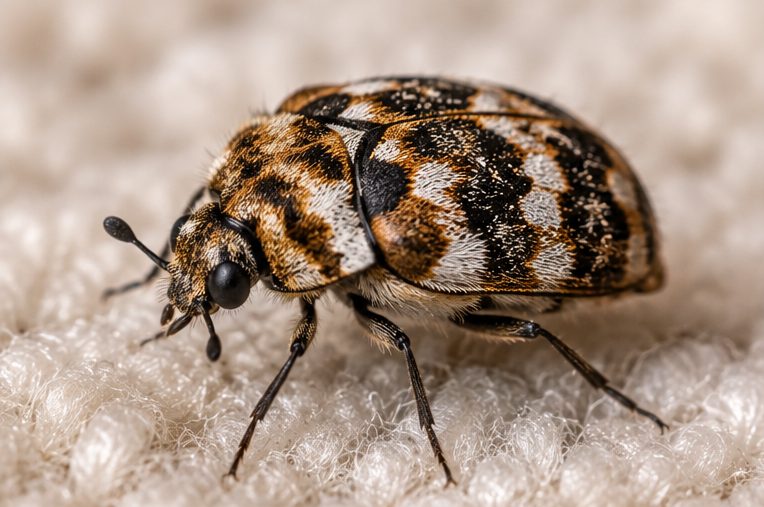
Adults hatch indoors and head for daylight, which is why the first sight of a problem is usually several small mottled beetles walking about on a sill in April or May. They are on their way out rather than in, so finding them means something has been breeding in the house over the winter. The windowsill guide explains the pattern, and the damage guide shows what the larvae leave in wool and carpet - scattered holes rather than the shaved patches carpet moths in Cricklewood produce.
The Bristles and Itchy Skin
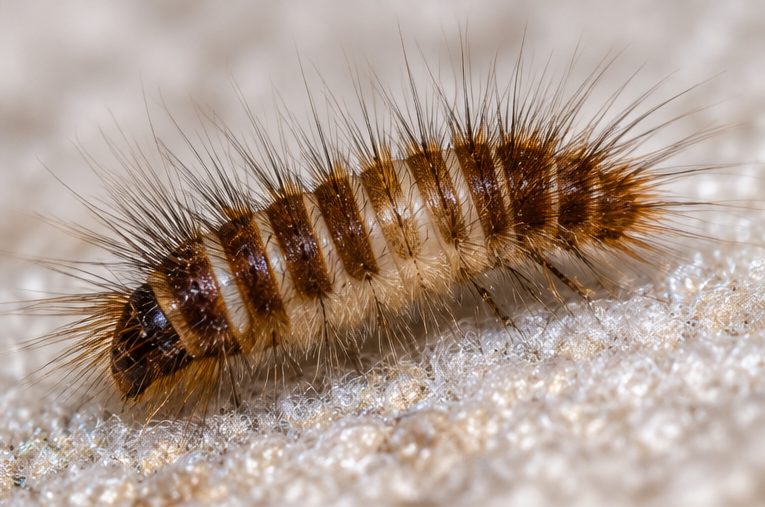
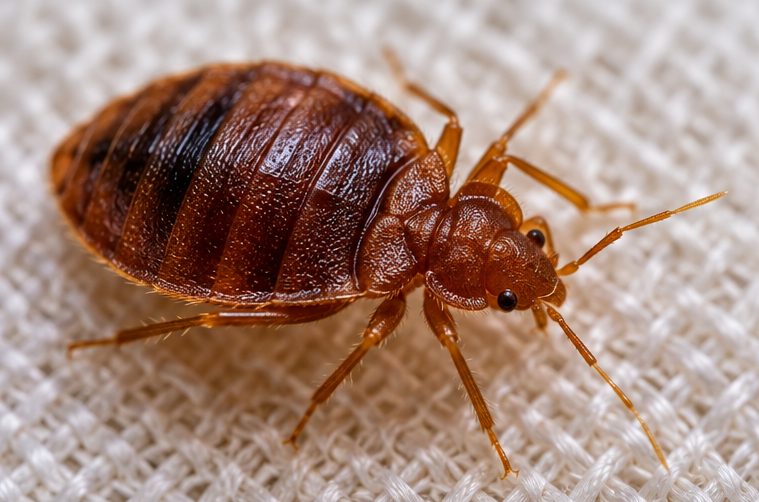
The hairs on the larvae irritate some people's skin, which is why a rash can appear in a house with no biting insect in it at all. They do not bite and they do not live on people. If you have a rash or other symptoms, speak to a pharmacist or GP, and call 999 for signs of a severe allergic reaction; we are pest controllers rather than medical advisers. This guide covers the difference between irritation and bites, and marks in rows on skin uncovered in bed are worth checking against bed bugs instead.
Booking and Getting the Rooms Ready
Tell us which rooms have larvae or damage, what the floors are, whether there is or has been a nest in the roof or on an extension, and whether the loft is used for storage. Before the visit, vacuum the room edges, under the beds and along the kickboard line, empty the cleaner outside into a sealed bag, and move what furniture you can so the perimeter is reachable. Wash or dry-clean affected wool and keep it sealed. This guide explains what the timescale depends on; if you are still finding live larvae past the point we describe, come back to us.
Keeping the Numbers Down in an NW2 Home
- Have gutters and eaves looked at once nesting is over, and the gaps closed while they are up there
- Vacuum the room edges, under beds and behind the kickboards on a regular round, not only the middle of the floor
- Clear dead insects out of window channels, light fittings and the sill of an unused room
- Store wool, blankets and dressing-up clothes clean and sealed rather than loose in a cupboard
- Shake out and look over a second-hand rug, coat or fur outdoors before it comes in
The prevention guide fills in the rest, the borough page is Carpet Beetle Control Brent, and the Brent carpet beetle advice goes through identification and treatment. Older roofs in neighbouring Willesden behave the same way.