
Why Mice Turn Up in Wembley's Newer Flats
Finding mice in a building only a few years old catches people off guard. The walls may be new, but the building is threaded with shared services. Water, waste, heating and electrics pass through floors and walls to reach every flat, and each opening needs to be closed tightly around whatever goes through it. Where that is incomplete, or has been disturbed by later work, a mouse can travel from one home to the next without going outside.
The kitchen plinth

The plinth, or kickboard, along the foot of the units hides a void running the length of the kitchen. It is dark, almost never cleaned and collects the crumbs that drop under the cabinets. The pipes that feed the sink and appliances often rise through the floor or leave the wall inside that void, so it is frequently where a mouse arrives first. Mice behind kitchen units explains how to check it.
Boxed-in pipework and built-in appliances
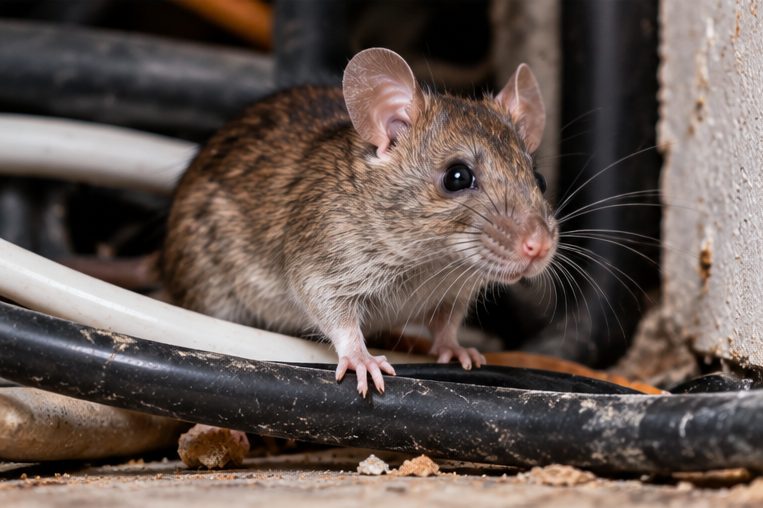
Boxing that hides pipes is often just screwed in place, with an open slot at the top or bottom. Integrated fridges, freezers and dishwashers sit in housings with space behind them for air and pipework, and they give off warmth. A mouse behind a built-in fridge is sheltered, warm and close to food, which makes it a likely place for droppings to appear.
Mice moving between flats
The flats above, below and beside yours share some of those routes. A mouse disturbed in one kitchen can appear in the next, and a flat that has been cleared can be visited again from a neighbour's. It is worth finding out whether anyone nearby has noticed the same thing. Can mice travel between flats? explains how it happens.
The older terraces near Wembley Central
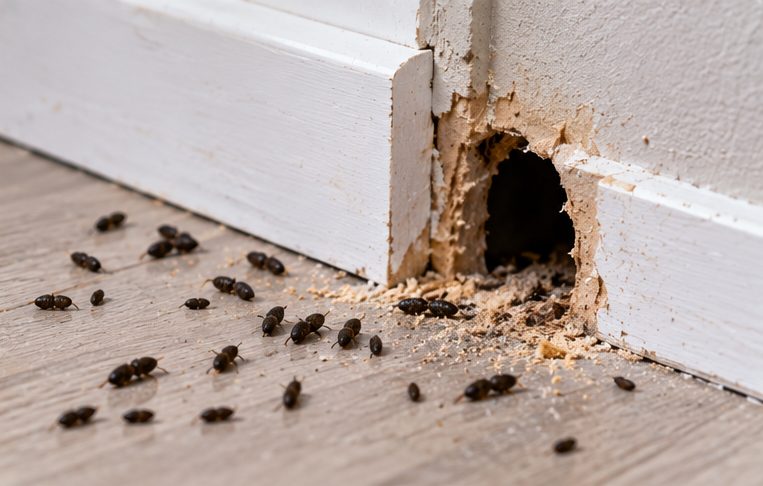
The Edwardian and interwar houses off the High Road are a different story. Mice there usually come in at ground level, around old pipes, under back doors and through the void below a timber floor, and they tend to arrive as the weather cools. If you live in one of these houses, how mice get into a house is the more useful read.
Signs to Check in a Modern Flat
- Droppings on the floor behind the plinth when you ease it away
- Droppings or chewed packets under the sink, close to where the pipes come in
- Scratching inside the pipe boxing or behind the fridge housing at night
- Nibbled food in the cupboards next to an integrated appliance
- Droppings on the floor of the boiler or utility cupboard
The signs of mice covers droppings and smells in more depth. Larger droppings, or activity near a bin store or shop yard, may mean rat control in Wembley is the booking you need.
What to Do First
- Move food off open shelves and into sealed containers
- Wipe up crumbs on worktops and floors each evening, including along the plinth
- Ask the neighbours either side and above or below whether they have seen droppings, and tell your landlord if you rent
- Put the plinth and boxing back once you have looked, and do not seal gaps while mice are active
- Avoid poison in a flat, where a mouse can die inside boxing or under the floor and leave a smell
Booking a Mouse Visit
What to mention
When you book mouse control, say whether it is a flat or a house, roughly how new the building is, which floor you are on and where the droppings are. Mention whether a neighbour has mice too.
Before the visit
Clear the cupboard under the sink and the floor in front of the plinths, and make sure the boiler and meter cupboards can be opened. If a plinth is fixed and will not come away, say so.
Afterwards
You will hear what was found and what to do next. How long it takes depends on the home and on whether mice are active next door as well, as how long mouse treatment takes explains. Get in touch again if fresh droppings turn up after things have been quiet.
Keeping Mice Out of a Wembley Flat
Once the mice have gone, the openings behind the kitchen matter most: where pipes come through the floor behind the plinth, the ends of the pipe boxing and the space behind integrated appliances. Small accessible gaps can be sealed with rodent proofing in Wembley, and how to mouse-proof a property has more. Keep the floor under the units clean, because crumbs there keep a passing mouse interested.
For mice in converted flats and older houses elsewhere, see Mouse Control Brent, or Pest Control Wembley for the other pests in the area.