
How a Converted Terrace Works Against You
Dividing a terraced house into flats puts new doors and partitions inside a structure never designed for them. The chimney breasts still run from ground to roof, the joists still span wall to wall, and the staircase is now a hall everybody uses. Boxed-in pipework and rewiring added during the conversion gave a mouse vertical routes between floors, none of it visible from inside a flat.
The communal hall, the meters and the space under the stairs
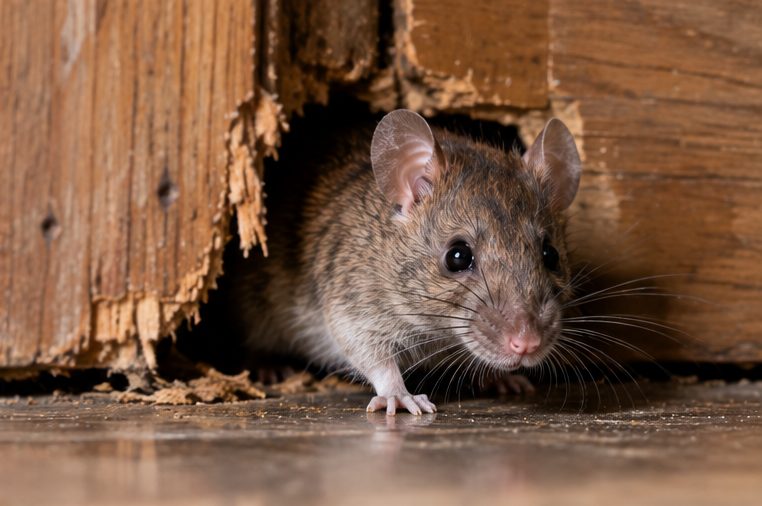
The shared hall is the part of the building nobody treats as theirs. Gas and electricity supplies arrive from the street into a cupboard that is often unlined, with the hole around each incoming pipe left rough. The cupboard under the stairs holds bikes, post and forgotten boxes. A mouse there has warmth and cover, and needs only the gap under one flat door to reach a kitchen.
Floor voids that do not stop at the wall
On the ground floor the boards usually sit over a ventilated void, and that void does not always end tidily at the party wall: where joists bear into the brickwork, or an old pipe run was pushed through, there can be a way from one house into the next. Upstairs the ceiling void between two flats does much the same job, which is why two neighbours often start hearing the same night-time scratching within weeks of each other. Can mice travel between flats? explains it.
When the trigger is next door
Mice tend to appear when something changes nearby: a flat left empty between tenancies, a kitchen stripped out, a blocked-up fireplace opened again, a wall chased for new cables. Work like that disturbs a settled nest and pushes the mice into the nearest occupied home. How mice get in sets out the openings such work leaves behind.
Where to Check in a Harlesden Flat
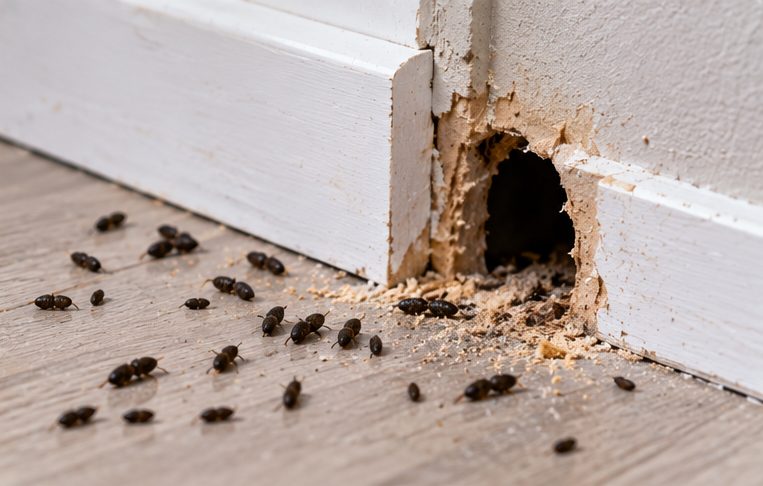
- Droppings along the edge of the kitchen floor and inside the cupboard nearest the party wall
- Nibbled packets at the back of a food cupboard, especially rice, cereal and dry pet food
- Droppings in the meter cupboard or on the floor of a hall cupboard shared with other flats
- Scratching in the chimney breast, the ceiling void or behind a boxed-in pipe after dark
- A musty smell in an enclosed cupboard that does not clear when you air it
The signs of mice describes each of these properly. If the droppings are noticeably larger and tapered, or you are finding burrows in the yard, rat control in Harlesden is the booking you want instead.
Worth Doing Straight Away
- Move dry food, and pet food especially, into tins or hard plastic tubs with a firm lid
- Clean along the front edge of the units and underneath the cooker, where crumbs collect out of sight
- Ask the other flats and your neighbours whether they are finding droppings as well, and tell your landlord if you rent
- Leave the holes alone for now: sealing while mice are active can shut them inside a wall or ceiling
- Keep poison out of floor voids and chimney breasts, where a dead mouse cannot be reached and the smell lingers
Around the Visit
When you book
When you book mouse control, say whether it is a flat in a converted house, a flat in a block or a whole house, which floor you are on, and which rooms the signs are in. Mention recent building work nearby, and whether another flat has mice too.
Before and after
Clear the cupboard under the sink, the food cupboards and the floor in front of the units, and make sure the meter cupboard can be opened. Afterwards you will hear what was found and what to do next; the time it takes depends on the building and on whether mice are active around you, as how long mouse treatment takes explains. Contact us again if droppings reappear after a quiet spell.
Stopping Them Coming Back
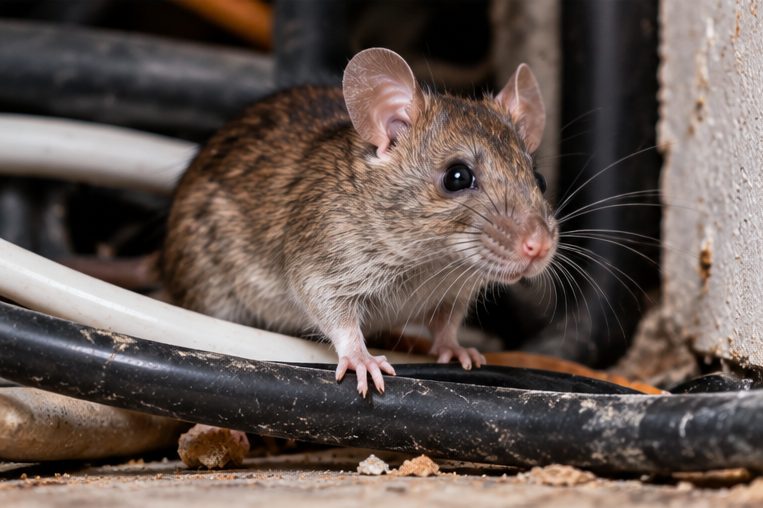
In a converted house the openings that matter are the vertical ones: where pipes and cables pass through a floor, the top and bottom of boxed-in pipework, the gap under your own front door onto the hall, and an old fireplace opening that was boarded rather than sealed. Small accessible holes can be closed with rodent proofing in Harlesden, and how to mouse-proof a property covers the rest. A building where only one flat is ever treated tends to keep the problem circulating, which is much of the answer to why mice keep coming back.
For mice across the borough, see Mouse Control Brent; neighbouring Willesden looks at the timber floors these houses were built with.