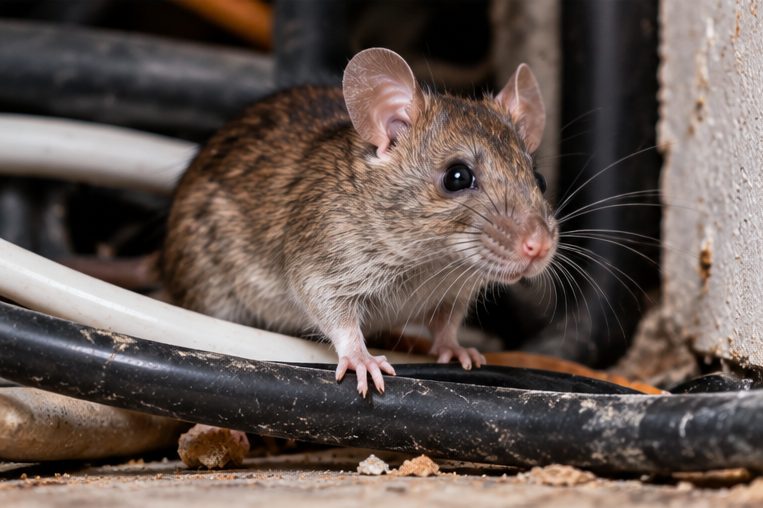
Mice in a House Let Room by Room
A converted Kilburn house holds several households' worth of food behind one front door. Cereal, bread and last night's leftovers kept in a bedroom feed mice for months, because nobody else opens that cupboard, and the shared kitchen adds crumbs under the units at every hour.
Food kept in bedrooms
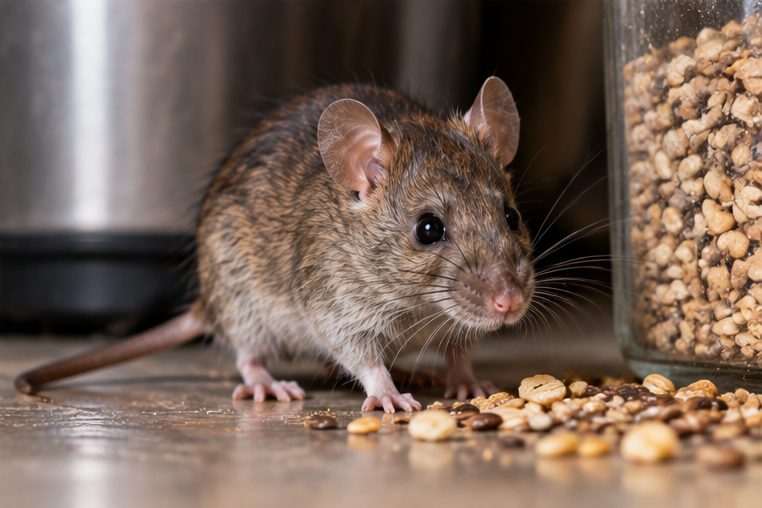
This is the part a tenant can change without anyone's permission. Open packets in a wardrobe, snacks in a bedside drawer and a food bin in the corner all keep mice interested in the part of the house where people sleep. Tins and hard tubs are worth more in a let room than any gadget. Where mice nest indoors shows the spaces they pick.
The shared kitchen

One kitchen serving five or six people is crowded and awkward to clean behind. Look under the kickboards, behind the fridge and cooker, and in the gap beside a washing machine where the pipes come through the wall. Mice behind kitchen units explains how to check that void.
Hallways, stairs and the cupboard underneath
The communal parts are where one room's problem becomes the whole house's. Mice run along hallway skirtings, pass under doors that no longer sit tight on a worn threshold, and settle in the cupboard under the stairs with the meters and everybody's unopened post. The holes cut for pipes and cables when the house was divided run from the lower ground floor to the top, so the building is one space even though the tenancies are not, and the landlord or agent needs telling as well as us.
The South Kilburn blocks
A newer block behaves differently. There is no void under a concrete floor and no timber to gnaw, so mice come along the services: openings where pipes pass between flats, boxing in a bathroom, the space behind a built-in appliance. Whether mice travel between flats explains how they get about a block.
Signs to Look For in Your Own Room
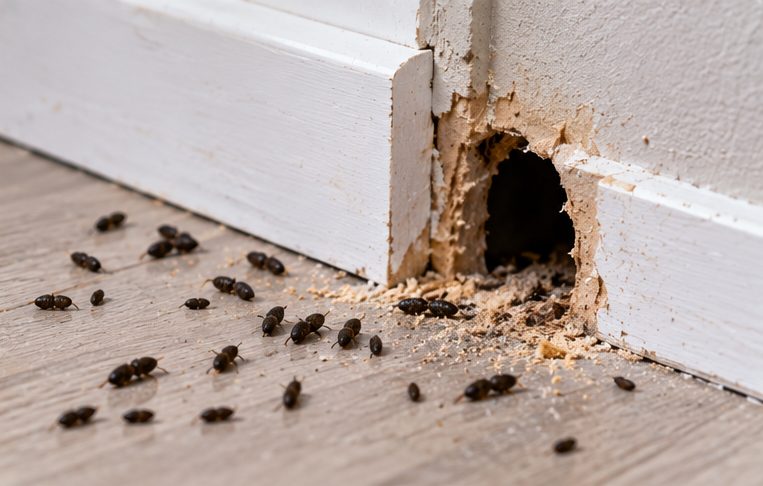
- Droppings the size of a grain of rice in a drawer, a wardrobe or the bottom of a rucksack
- Nibbled corners on cereal boxes, bread bags and pet food kept in the room
- A musky smell in a fitted cupboard or behind a chest of drawers
- Scratching inside the wall or above the ceiling once the house goes quiet
- Shredded tissue or clothing gathered into a nest at the back of a low cupboard
The signs of mice goes through them in more detail. Larger droppings, or activity starting in a shared garden or basement, may mean rat control in Kilburn instead.
What to Do Before Anyone Visits
- Move everything edible in your room into sealed containers, pet food included
- Tell the landlord or agent in writing and ask whether other rooms have reported the same
- Agree with housemates that the kitchen floor and worktops get cleared each night for a week
- Hold off blocking gaps while mice are active, or one can die inside a wall or pipe boxing
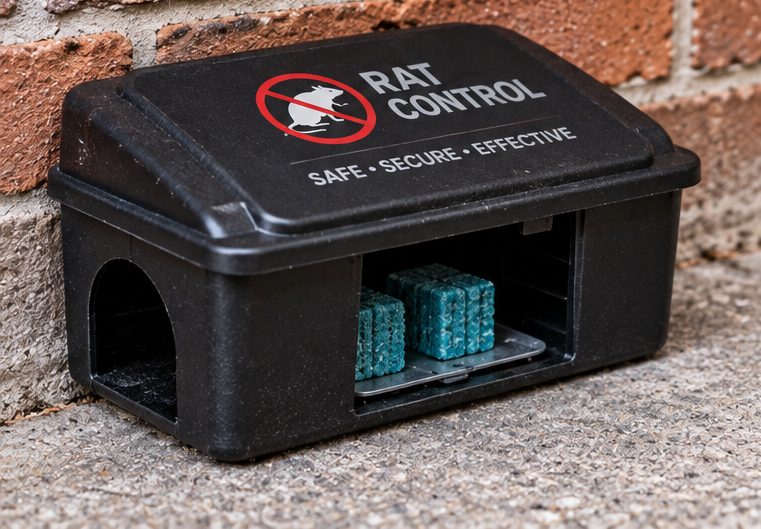
- Leave poison out of a shared kitchen or hallway, where it is not yours to place
Booking a Mouse Visit in a Shared House
What to say when you book
When you book mouse control, say whether it is for one flat, one room or the whole house, how the building is divided and which rooms have signs. Mention whether the landlord or agent knows, and whether the kitchen, a riser cupboard or the basement can be opened on the day.
Getting ready
Clear the floor of the room, pull bags and boxes out from under the bed and empty the cupboard under the kitchen sink. Someone has to be able to open the front door, the shared kitchen and any hallway cupboard the booking takes in.
Afterwards
You will hear what was found and what to do next. The time it takes depends on the size of the house, how many rooms are involved and whether food is still within reach, as how long mouse treatment takes sets out. Get back in touch if droppings turn up somewhere new.
Stopping Them Coming Back to Your Room
Treatment deals with the mice in the building; the food and the gaps decide whether the next ones stay. In your own room that means sealed containers, a clear floor and asking for the gaps around pipes, under the door and along the skirting to be closed. In the shared parts it means the landlord, agent or freeholder arranging the same for the kitchen, the hallway and the riser cupboards. Small accessible holes can be sealed with rodent proofing in Kilburn; mouse-proofing a property and why mice keep coming back explain the rest.
For mice elsewhere in the borough, see Mouse Control Brent; the conversions and timber floors carry on into neighbouring Willesden.