
Living Over a Trading Unit
Most advice about mice in flats concerns the flat next door or the one below. Above a parade the boundary that matters runs horizontally, and on the other side of it is a business rather than a household. That changes where the mice come from and who has to be told.
The floor between you and the unit below
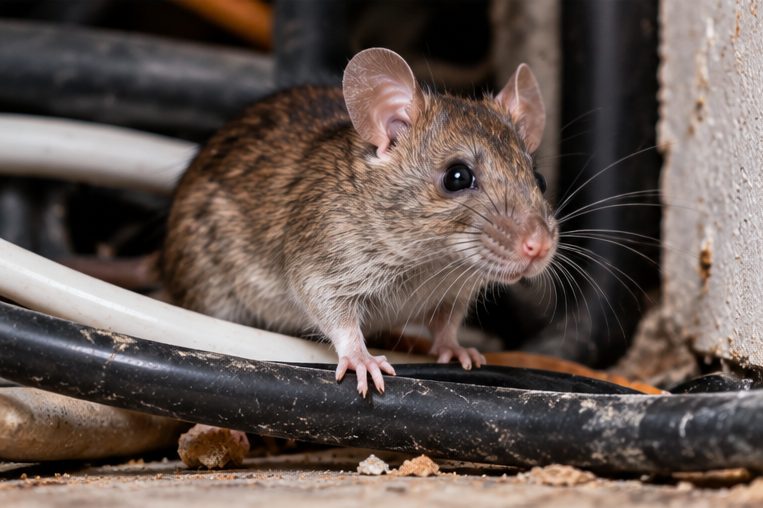
A shop fit-out drops a suspended ceiling under your floor, and the space between the two is warm, dark and out of anyone's sight. Wherever a light fitting, an extract duct or a cable tray was put through that ceiling there is an opening into the void; wherever your own floor was cut for a sink waste, a heating pipe or a rewire there is one on your side too. Where mice nest lists the other places worth a torch.
The street door, the stair and the bins
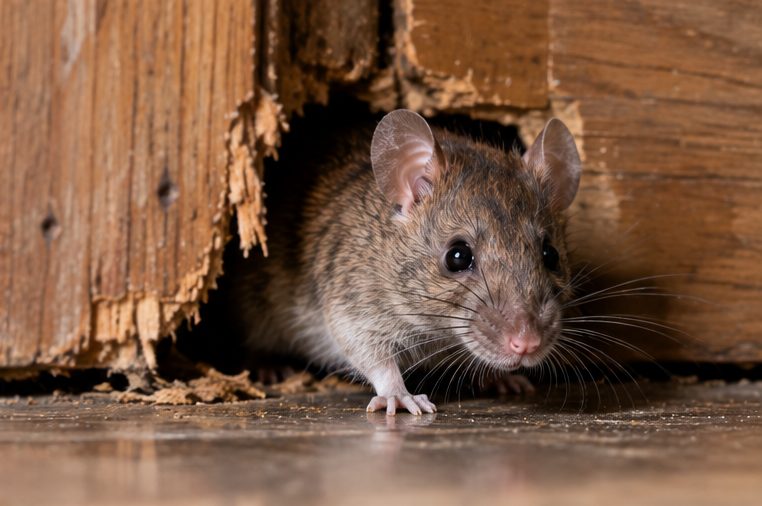
Flats over a parade are reached by their own door between two shopfronts, and the stair behind it is often narrow and used for storing whatever will not fit upstairs. A worn street door threshold, a meter cupboard with unfilled holes around the incoming tails and bin bags left at the bottom of the stairs overnight give mice a reason to stay and a route to each front door.
Ducts, soil stacks and the back of the building
At the rear of a parade the services climb the outside wall: soil and waste stacks, an extract duct from a kitchen below, later cabling clipped over all of it. Each passes back into the building through a hole cut generously, and each hole is a way from the yard into a floor or wall. How mice get in goes through the openings in order, and rat control in Cricklewood covers what else uses that yard.
The Hallway a Converted House Kept
Behind the Broadway, houses split into flats generally kept the original front door, the hall and the stairs, and that is the one part of the building no resident can treat or seal without the freeholder's say-so. If droppings turn up on that floor or in the meter cupboard, send the managing agent a message with a photograph and a date, then book what is inside your own front door. Whether mice travel between flats explains why one flat treated on its own can take longer.
When the Weather Turns in the Terraces
A whole house away from the shops has a different pattern: quiet all summer, then scratching in the first properly cold week of the year. Mice that spent the warm months in a garden, a shed or a garage come in low — under a back door, at a rear extension, behind the kickboards of a kitchen built onto the back of the house. It is rarely a new route: it is the one that was open last October and never closed, which is most of the answer to why mice keep coming back.
Where to Look in a First-Floor Flat
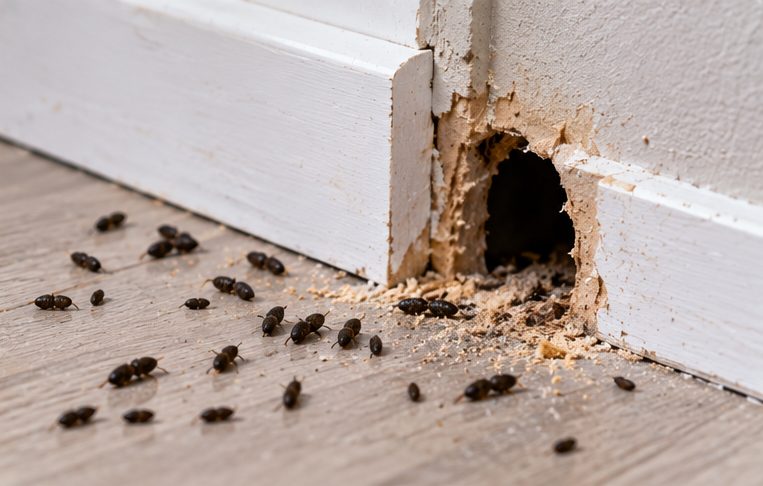
- Droppings at the back of the cupboard under the sink and along the front edge of the kickboards
- Nibbled packets of rice, cereal or dry pet food at the back of a food cupboard
- Droppings on the stair carpet, in the meter cupboard or on the landing outside your door
- Scratching in the floor rather than the ceiling, in the evening, over the unit below
The signs of mice describes each of those properly. Larger tapered droppings mean a different booking; something flatter and faster moving at night above a food business means cockroach control in Cricklewood.
Worth Doing This Week
- Move cereal, rice and pet food into tins or hard plastic tubs with a firm lid
- Clean under the cooker and behind the fridge, where crumbs collect out of sight
- Ask the other flats whether they are finding droppings too, and tell your landlord if you rent
- Leave the holes as they are for now: sealing a route while mice are active can shut one inside a floor
Around the Visit
When you book
Say whether it is a flat over a shop, a flat in a converted house or a whole house, which floor you are on, and what trades below or beside you. Mention which rooms the droppings are in, whether the stair or meter cupboard has them too, and any recent work in the building. Book mouse control with that and the first look round is a short one.
Before and after
Clear the cupboard under the sink, the food cupboards and the floor in front of the units, and make sure the meter cupboard can be opened. How long it runs depends on the building and on whether mice are still arriving from elsewhere in it, as this guide sets out.
Keeping Mice Out of a Flat Above a Shop
The openings that matter here are mostly in the floor and the party wall rather than the front of the building: the gaps around a sink waste and a heating pipe, the open end of boxed-in pipework, the space behind the kitchen plinth and the threshold of your own entrance door onto the stair. Small reachable ones are what rodent proofing in Cricklewood is for, and mouse-proofing a property covers the rest. Chewed cable behind an appliance wants an electrician, for the reason mice, wiring and pipes gives. Mouse Control Brent covers the borough, and neighbouring Kilburn looks at shared houses let room by room.